- Home
- Fashion
HELLO! India Exclusive: Prabal Gurung says, "No longer is East meeting the West. It is West meeting the East"
Prabal Gurung speaks exclusively to HELLO! India on South Asia's influence in the world of fashion, changes in the fashion industry since the 90s and the life lessons he has learned along the way
offline
Share this:
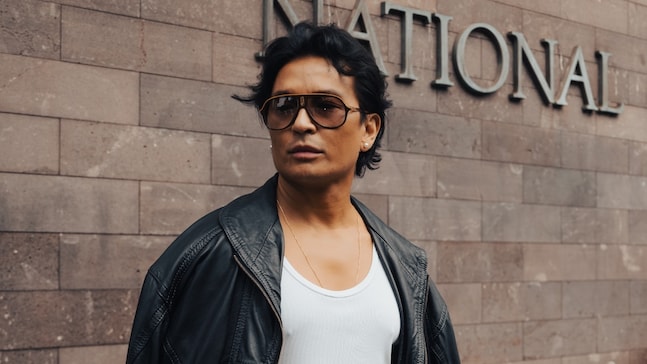
Of all the success stories that exist in fashion today, there is none quite like Prabal Gurung's. Born in Singapore to parents from Nepal, the designer was raised in Kathmandu and educated at Delhi's prestigious NIFT academy. From there on out, he flew the coop to travel through Australia and England and then the Big Apple, where he soared with a degree from Parsons and design stints with Donna Karan and Manish Arora. 2009 saw the launch of his eponymous label, which has gone on to dress Michelle Obama, Kamala Harris and Kate Middleton amongst other notable global names. Today, Gurung's is a name recognised even by the fashion-adjacent. As the Vice Chair of the CFDA and most recently, Keynote Speaker and International Guest of Honour at the 30th anniversary edition of the PayPal Melbourne Fashion Festival 2026, revisiting his journey is integral in times when South Asia has influenced the global fashion industry as greatly as it has. In an exclusive conversation with HELLO! India's Associate Editor, Dayle Pereira-Alemao, Prabal Gurung speaks about India's influence in the world of fashion, the changes in the industry he has been in since the 90s and the life lessons he has learned along the way.
(Also Read: HELLO! India Exclusive: After Milan Fashion Week 2026 showcase, Dhruv Kapoor on reimagining the familiar and designing for real life)
"Creativity was a part of our DNA"
From more diverse inspiration to body standards, the fashion industry today has seen a great transition since Prabal's introduction to it in the 90s. On the differences he has noticed, the designer exclaims, "Oh my god! It has changed so much. It is so different", and recalls, "I remember when I was in India. Being part of that continent with Nepal, India and that part of the world, we grew up celebrating life. Craft and creativity was such a huge part of like our DNA". That very South Asian creativity has found a fan following across Western fashion, often leading to popular, albeit often uncredited, trends. The infamous Prada juttis, dupattas being touted as Scandinavian scarves and Ralph Lauren's take on jhumkas are only a handful of them. On its rise, its credit where due and how his own South Asian origin influenced his work, he states, "It is extremely important. You can't tell a story of creativity and culture when majority of the craftsmanship happens in that continent and in that region. I think if you truly want to celebrate inclusion, everyone should be part of it. The heritage and the history of India and its craftsmanship has undeniably influence globally, it's just the right thing to do".
"For anyone intrigued by my journey to feel inspired is my goal"
Prabal's journey is incomparable to any other international designer in the sphere today. Not only has he grown through various phases and taken on challenges within a then-female-dominated industry that was taken rather lightly, he gives his origins due credit throughout the process. He speaks on his role as a South Asian change maker and what changed through the years, saying, "The biggest shift in the global fashion industry is the idea of collaboration—different parts of the world coming together. No longer does one culture seem so alienating that you are afraid or you are piece-mealing it. Now you can do the research, you can have a conversation. What you soon discover is not about the culture but also your own level of empathy; to really go deep and not just celebrate the culture of your own but also celebrate who you are as a person. [For] anyone who I'm interacting with or anyone who happens to be intrigued by the story and my journey to feel inspired and feel more seen; that's my goal and that they're more than enough".
"The journey of discovering myself started in Melbourne"
After spending years finding his feet in Australia and now returning to the continent as the Keynote Speaker and International Guest of Honour PayPal Melbourne Fashion Festival 2026, it's fair to say that life truly does come full circle. Prabal speaks fondly of his memories Down Under, saying, "Melbourne has such a special place in my heart. It is where I fully came alive. Fashion has given me my identity in so many ways which are public-facing but I would say my personal journey of discovering myself started here. Coming back to the city—this place and its people—it's been amazing. I always say an architecture or monuments can build a city, but what gives [it] its soul and character is people".
"Follow your truth"
Prabal's journey can shape the stories of so many more who are making an identity for themselves and navigating life across continents. He speaks on the life lessons he has picked up along the way, saying, "I don't know if success is a definition. What I believe is the courage to be yourself [and] the conviction to follow your truth is the only way to be. I never thought talking about it, celebrating or wearing it was anything extraordinary because it was just who we were. But when I came to the West and when I came to America, at that time, years back, wearing your heritage was almost a way of being singled out. What I also realised was there were so many friends from our part of the world, because of the need [for] survival, were trying to assimilate and [thereby] reduce and diminish themselves. I came in there guns blazing to be completely honest because I didn't know how else to be".
"No longer is East meeting the West, it is West meeting the East"
After speaking with candour to HELLO! India about everything from identity to inspiration, Gurung touched upon importance; how its cross-cultural and communal representation seeps through on a global level. "I was extremely proud of the places that I've lived at and the places that I've been at. I wanted to not hide anymore from where my showing up [as] my unapologetic self, [which has] become a resistance to now, a celebration. It is an incredibly exciting place to be and time to be alive because no longer is East meeting the West. It is West meeting the East," he concludes.
Advertisement