- Home
- Food
HELLO! India Exclusive: Chef Deepanker Khosla shares his recipe for success
In an exclusive chat with the culinary genius behind the Michelin-starred Haoma in Bangkok, HELLO! digs into his recipe for success, and the flavours that led him to gastronomic heights
offline
Share this:
How does a small town boy from Prayagraj, Uttar Pradesh, become one of Thailand’s most celebrated chefs? The answer is simple: he had both the vision and ambition to achieve his grandiose goals in exactly the manner he envisaged them.
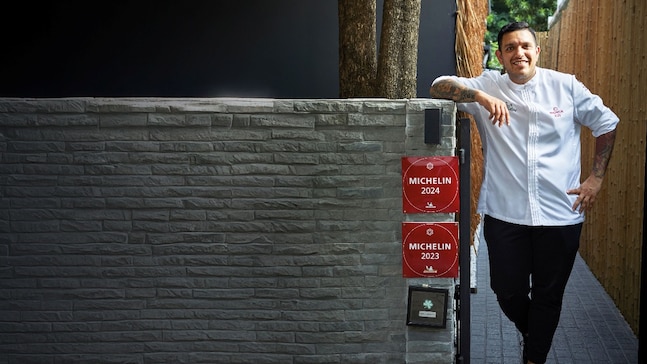
Today, Chef Deepanker Khosla runs Michelin-starred restaurant Haoma, one of the best in the business in Bangkok. The first step towards his dreams led him to study the culinary arts at the famed Manipal University near Udupi, Karnataka. Soon after graduation, he was selected by ITC Hotels, where he pursued a management programme. He later worked with the group in Chennai, Jaipur and Mumbai, before moving to Bangkok.
We speak as the chef preps for his first pop-up at the Sheraton Grand Bengaluru Whitefield & Convention Centre. As he whips up an eight-course meal for select guests, he passionately points out the ingredients he’s using, while highlighting the history behind each dish. Amid the multitasking, we ask him what Haoma means.
“Elixir of life,” he explains. “It’s inspired by the Sagar Manthan [sculpture] at the Bangkok airport, which seeks its artistic vision from Hindu philosophy. It’s believed that the Maha Kumbh Mela in Prayagraj has its origins in the Sagar Manthan mythology. That’s how the name ‘Haoma’ came about. I even have a tattoo of the flower of life on my arms,” he says, pointing at the ink that denotes the same credo.
“In Zoroastrian faith, the flower of life blossoms on the tree of life. As a kid, my mum used to be into sacred geometry and was influenced by these elements. I even have it tattooed on my back and legs.”
Further foraying into becoming a restaurateur, Deepanker joined Fraser Suites Sukhumvit in Bangkok as Executive Chef, running a couple of eateries for them. “I even opened Charcoal, an Indian fine-dining restaurant, for the brand in the city; I managed it for two years. In 2017, after gaining six years of grassroots experience and learning from the mistakes I made on other people’s money, I decided to branch out on my own.” Deepanker’s mantra was simple: to grow slowly and organically. So soon after, he ventured into the food truck business that enabled him to combine his two passions of travelling and cooking with a single purpose. He wanted to save up enough to serve Indo-Mexican fusion food. Think butter chicken with rice burritos!
“I remember parking my truck at Angkor Wat, where many tourists would ask for mango lassi, or an Indian breakfast every morning. It brought me a lot of success.” As things progressed, however, the chef never lost sight of his ultimate goal, and instinctively knew when it was time to get back on track. “I returned to Bangkok and opened Haoma as a 16 seat casual restaurant at Sukhumvit Soi 31 street. As the restaurant was located in the last house of the road, people would ask me how I would succeed,” says Deepanker, who had a clear-cut strategy in mind. “I had seen people drive four to five hours to eat at destination restaurants in France and Spain. So I knew they would visit my restaurant. We hustled hard, and here we are today!”
There are some 800 Michelin-starred restaurants in the world, and only eight of them are Indian. Chef Deepanker is one of the privileged few who earned this honour for Haoma in 2022.
“I was only 30 years old at the time, the youngest Indian chef to be bestowed with this honour,” he beams. “In 2023, we were also the first Indian restaurant to have been awarded the Michelin green star in recognition of our efforts in sustainability.” The conversation gravitates towards his personal life. His wife Chandini is a restaurateur, as well, and he loves to spend time with their three-year-old daughter till he leaves for work at 11 am. Serendipitiously, Deepanker met his wife when she was in the midst of constructing her own restaurant, Ministry of Crab, a franchise of the famed chain in Sri Lanka.
"I remember being worried those days about facing competition, as we were both on the same street. Today, we joke that if one can’t buy their competition, they marry them!” he laughs heartily. Ask him if he has any favourite restaurants in India, he promptly says Dum Pukht in New Delhi and the 200-year old Madina Hotel in Prayagraj. “When I visit my hometown, my second meal is always at the place. I’ve been eating their nihari since I was seven!” Currently on a high juggling between two restaurants and family, Chef Deepanker is content with everything, balancing his worlds with an equanimity that only comes from a life well-lived!
Text by Nayare Ali
This story was featured in the Vol 1. Issue 6 of HELLO! India. For more exclusive stories, subscribe to the magazine here.
Advertisement