- Home
- Lifestyle
Italian legacy meets Indian heritage at Minotti's store in Bengaluru
A celebration of craftsmanship, culture and contemporary living as Minotti celebrates one year in the city
offline
Share this:
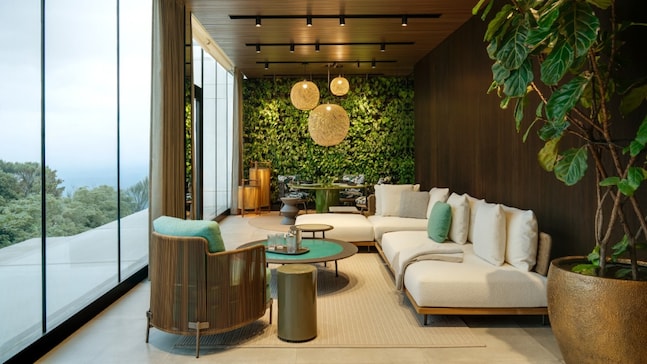
It was a classic nippy Bengaluru evening when a bunch of design aficionados gathered to celebrate a milestone - the prominent Italian furniture company Minotti launched it flagship store in the city. In collaboration with Amber Home Interiors, marked a new chapter in Minotti’s presence in India.
The soiree, hosted by Bhaskar and Sneha Sarda, co-founders of Amber Home Interiors was a luxurious amalgamation of food, fine drinks and cutting-edge furniture. Sumptuous hors d’oeuvres were served alongside a tour of Minotti’s ergonomic seating that combined timeless design with indulgent comfort. The entire space showcased the brand’s aesthetic through settings designed to evoke an authentic home experience.
Bringing the Italian touch to the evening was the presence of Alessandro and Susanna Minotti from the original Minotti family. Bhaskar and Alessandro gave guests a walkthrough of the space that exuded international style with a bespoke approach, embodying Minotti’s philosophy and the values of Made in Italy within the Indian design landscape.
HELLO! caught up with Alessandro and Susanna Minotti, who shared their vision for the brand in India. Excerpts from the interview below.
HELLO! India: Alessandro and Susanna - you have a rich legacy to be proud of. What was it like growing up amidst stories of Minotti?
A: Minotti was never just a company – it was a daily commitment and conversation about design culture, craftsmanship and responsibility. We learned very early that legacy is not something you inherit passively; it is something you hold and must constantly evolve.
S: Design, materials, proportions – they were part of our everyday life. I was not simply surrounded by furniture, but by a way of thinking about living: how objects relate to one another, how light defines volumes, how materials convey emotion. This approach naturally shaped my sensitivity over time, and what I truly learned within the company was how to transform sensitivity into vision, and vision into strategy, translating ideas into concrete, coherent experiences that can speak to the markets while remaining deeply rooted in our identity.
HELLO! India: Did you always know you would follow the family’s footsteps?
A: We were encouraged to find our own path first, to live independent experiences and develop our own perspectives. Joining the company was therefore a conscious choice. That freedom allowed us to develop a stronger sense of responsibility, greater awareness and a fresh outlook on how we could contribute meaningfully to the company’s growth.
S: Over time, I realised that contributing to the brand’s evolution felt authentic to who I am and, through my studies in design and my professional path, this intuition gradually became more structured. It felt like a natural continuation of a story we deeply believe in – less about entering a predefined role and more about stepping into a living system – with the desire to evolve it while respecting its roots.
HELLO! India: As custodians of a family-led design house, how do conversations around new markets happen at the dinner table?
A: Inevitably, business enters any conversations — but always from a strategic and cultural perspective. We don’t look at markets just in terms of numbers, but in terms of long-term relationships, shared values and meaningful alignment with our identity.
S: There is always a dialogue, we speak about people, about partners, places. When talking about markets, we reflect not only on their potential, but also on how our identity can engage respectfully with different local sensibilities and cultural contexts, to create connections that feel authentic and mutually enriching.
HELLO! India: Minotti spaces around the world feel very distinctive yet intimate — how do you ensure each new store still feels personal and not just global?
A: Consistency is essential, but standardisation is not our goal. Each flagship reflects a shared architectural language, yet it is interpreted in dialogue with the local context.
S: We work carefully on the atmosphere – light, materials, decoration and art. Even within a global identity, we strive to create spaces that feel authentic to their cultural landscape. We listen, observe and try to understand how people live, in order to design showrooms that offer unique brand experiences worldwide.
HELLO! India: India has a deeply layered relationship with home and hospitality — did that cultural warmth influence how you approached this store experience?
A: India has a deeply rooted culture of hospitality and social gathering, where the home plays a central role as a space for connection and shared experiences. This resonates strongly with our vision of living environments – not simply as functional settings, but as places designed to foster conviviality, conversation and a sense of belonging.
S: We wanted the store to feel open, welcoming and immersive, reflecting that cultural warmth. The way people in India inhabit their homes – with openness and attention to guests – aligns beautifully with our philosophy of living.
HELLO! India: What kind of Indian homeowner or design personality do you feel most connected to today?
A: We are observing a new generation of globally aware clients – well-travelled, culturally curious and deeply appreciative of craftsmanship and high quality. They are less interested in fleeting trends and more focused on timeless value, longevity and authenticity. This perspective aligns closely with our philosophy.
S: They are confident people, rooted in their own cultural identity yet international in their outlook. Highly attentive to detail, they approach the home as a personal narrative.
HELLO! India: Travel often shapes design perspective — did anything you saw, tasted, or experienced here spark new creative thoughts?
A: India’s contrasts are deeply inspiring – particularly the balance between tradition and modernity, heritage and rapid transformation. That dynamic tension creates a powerful creative energy and observing how these different layers coexist so naturally is always stimulating from a design standpoint.
S: The richness of textures, colours and craftsmanship is extraordinary. There is a tactile and visual intensity that feels refined and expressive. At the same time, the emerging generation of architects here has developed a distinctive voice of its own, embracing new languages and perspectives. That forward-looking approach is particularly inspiring, as it reflects a vibrant, evolving culture.
Advertisement