- Home
- Fashion
HELLO! India Exclusive: It's maximalist or nothing for Farhana Bodi
Shaped by her Indian roots and global exposure in Dubai, the entrepreneur talks fashion, identity, and why she still marshals for maximalism in an age of quiet luxury
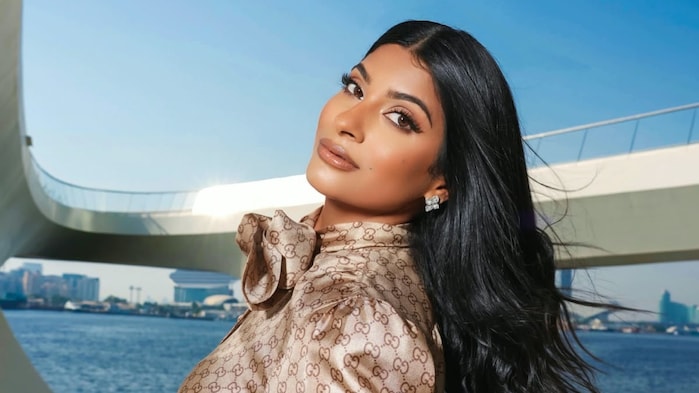
Farhana Bodi has built a career around fashion, visibility, and the world she created around both. Before the top-rated Netflix show Dubai Bling brought her to a global audience, she was already working as a model and developing a distinctive way of dressing. Today, with more than 3 million followers on Instagram, her influence extends well beyond the screen.
Her career now spans fashion, television, social media, and business. Fayore by Farhana Bodi, launched in 2025, channels her resort-glamour aesthetic into statement evening wear and day-to-night pieces, while FH Circle and I Woman of the World extend her work into access, entrepreneurship, and supporting women.
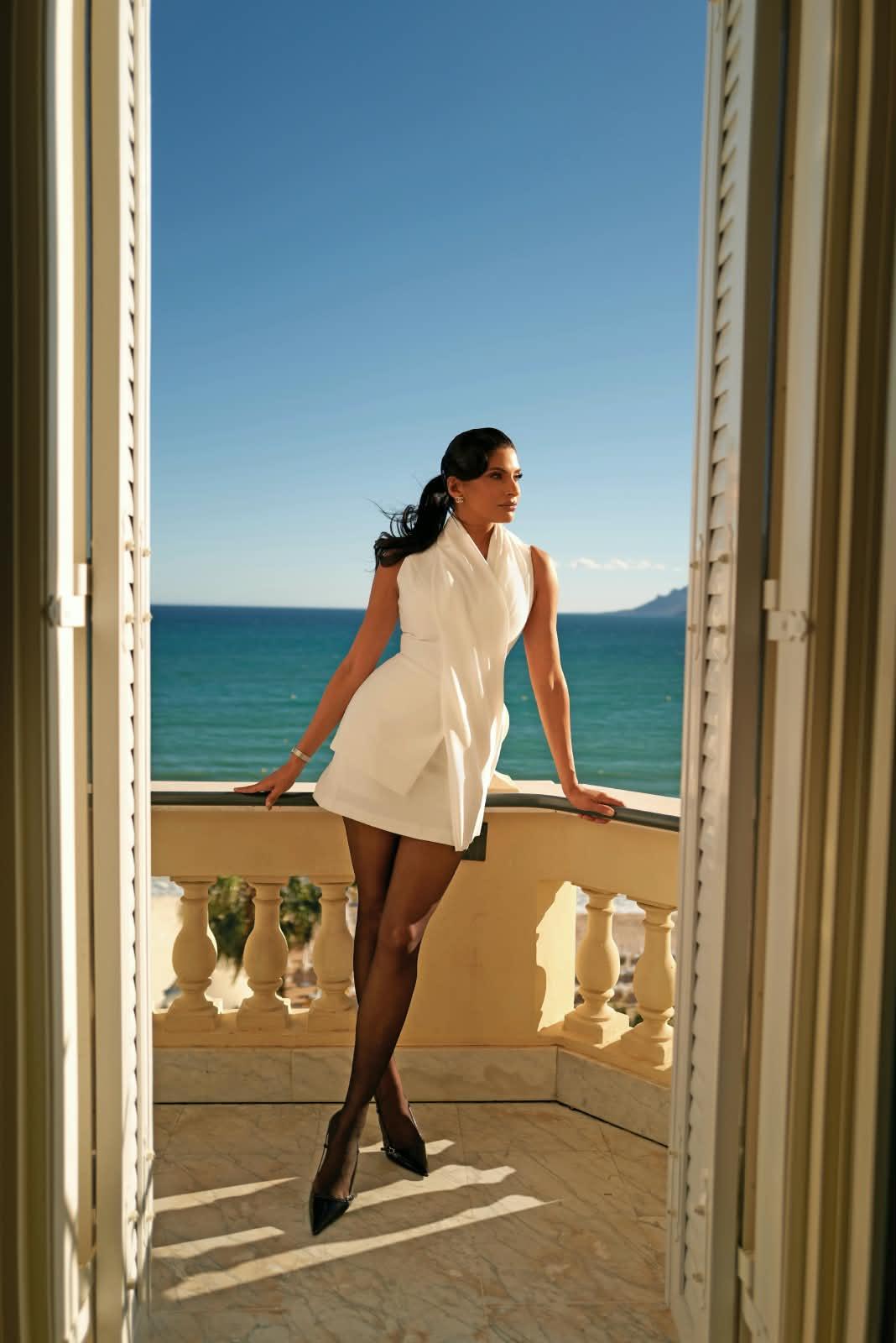
Farhana likes fashion with scale — crystals, couture, jewellery, dramatic silhouettes — and has little interest in the quiet, anonymous dressing that has come to define one strand of contemporary luxury. Her Cannes appearance this year, in a 15-kg custom gown by Dubaibased Atelier Zuhra, embellished with thousands of hand-assembled crystals and drawing on classical Kazakh ornamentation, was pure Farhana: elaborate, considered, and designed to be remembered. This penchant for drama goes back to her childhood.
“I’ve always had that instinct to make an outfit feel like a moment,” she says. “Even when I was younger, I cared about how things looked together and how clothes made me feel. Today, I have the freedom to really play with fashion, though that little girl who loved getting dressed is still very much there.”
Farhana sits at an interesting intersection of fashion and the new luxury economy. She’s part celebrity, part creator, and part tastemaker. She’s no longer simply wearing the clothes; she’s helping determine how they are seen and talked about. And this multi-hyphenate’s understanding of access — who gets invited, where you are seen, and the communities you belong to — speaks to a changing idea of status, particularly in a city like Dubai.
Looking back though, the Indian heritage that she’s grown up with is quite important in her journey. Colour, jewellery, and occasion dressing were part of her visual vocabulary in her formative years.“My earliest fashion memories are really connected to India — the colour, the fabrics, the jewellery, the way women would dress for celebrations,” she says. “There was always such a sense of occasion around getting dressed… I think that’s where I first understood that clothes could communicate something without you saying a word.”
For this self-made vanguard, that connection has remained central. She adds, “Fashion has never just been about looking good; it’s always been about how you feel when you walk into a room.”
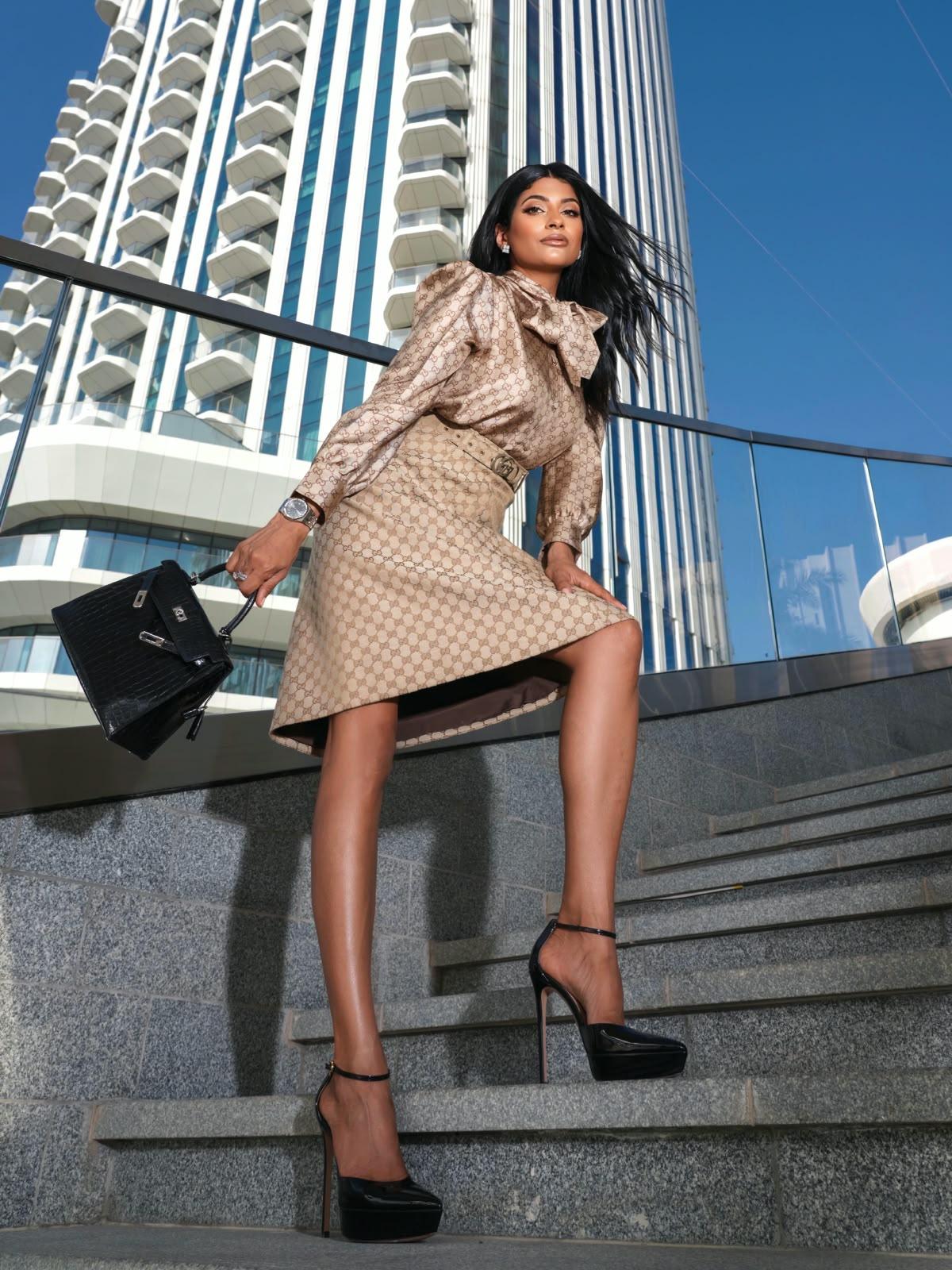
HELLO! India: You began your career as a model, long before Dubai Bling made you a household name. And now you operate in a world where your own image is a media platform. How has that shift changed your understanding of who gets to create desire?
Farhana Bodi: When I started modelling, I was part of someone else’s vision. You were booked for a campaign, photographed and styled, and then the image was out in the world.Today, I have my own platform, my own community, and my own voice. That completely changes the relationship with desire because I’m not just presenting a product — I’m telling people why I connect with it, how I wear it, and what it means to me. I think that’s what has changed most. People now don’t just want to see the product. They want to see the person, the story, and the world around it.
HELLO! India: Do you think personal style has become a form of social capital? If so, what does it buy you that money alone cannot?
Farhana Bodi: Definitely. Personal style tells people who you are before you even speak. Money can buy beautiful things, but it can’t buy taste, personality or the confidence to make something your own. It also gives you something very powerful: recognition. When you have a strong point of view, people remember you. And in a world where everyone is competing for attention, being memorable is its own kind of currency.
HELLO! India: In the digital age, has being seen in the right places with the right people become more valuable than owning the right things? Has access become the new luxury status symbol?
Farhana Bodi: Absolutely. We live in a world where you can buy almost anything if you have enough money. But being invited into the right room, having genuine relationships, knowing the right people, and being part of a community — those things can’t simply be purchased. That’s actually a big part of why I created FH Circle. I noticed the gap between influence and access. Today, I think the real luxury is not just what you own but who you have access to and what you can create with that access.
HELLO! India: Fashion once manufactured desire through magazines, runways, and advertising. Today, people like you can shape desire directly through their own platforms. What kind of responsibility does such influence come with?
Farhana Bodi: Influence comes with a responsibility because people are trusting you with their attention. I’ve always wanted my platform to be about more than just showing people what I’m wearing or buying. I want to introduce people to brands, experiences, ideas, and people I genuinely believe in. For me, the most valuable influence is when someone discovers something through you, and it actually adds to their life. That’s much more powerful than simply creating a desire to buy something.
HELLO! India: At a time when luxury is moving towards restraint, discretion, and quiet craftsmanship, where does maximalism fit?
Farhana Bodi: I don’t think luxury has to look one particular way. Quiet luxury is beautiful, but so is being unapologetically glamorous. I believe luxury is about individuality. Sometimes that means a beautifully cut, understated piece, and sometimes it means a gown covered in crystals that takes hours and hours to create. Maximalism isn’t going anywhere. There will always be women who want to walk into a room and make an entrance. I’m one of them.
HELLO! India: How much of your personal aesthetic comes from your Indian roots, and how much was shaped by your Dubai life?
Farhana Bodi: It’s a combination of both. My Indian roots gave me my love for colour, glamour, jewellery, and a little bit of drama. I grew up understanding that dressing up was something you celebrated Dubai really shaped the way I express that. It encouraged me to be bolder. It’s such a global city — you’re constantly surrounded by different cultures, incredible fashion, and people who aren’t afraid to take risks. Living here gave me the confidence to really own my aesthetic. There’s something about being in a city where glamour is so celebrated. You see women from every corner of the world expressing themselves through fashion, and there’s a real freedom to it.
The city also taught me that you don’t have to choose between being culturally rooted and being international. You can be both. You can honour where you come from while creating your own identity. It taught me to think globally, to be more entrepreneurial, and to understand that there is no ceiling on what you can build.
HELLO! India: Are we finally seeing West Asia recognised not simply as a lucrative luxury market but as a source of cultural and creative influence?
Farhana Bodi: Absolutely. The conversation has already changed. The region is no longer simply a place where luxury brands come to sell. It’s becoming a place where ideas, culture, experiences, and aesthetics are being created.
Dubai, in particular, has become incredibly influential because it brings together so many different cultures. We’re going to see much more talent from here not just consuming global fashion but actually shaping it.
Dubai and India occupy very different but increasingly influential positions in global fashion. How do you see their roles evolving, and what do you think one can learn from the other? I see Dubai and India as incredibly complementary. India has this wonderful depth of culture, craft, heritage, and design. Dubai has the infrastructure, international connectivity, and the ability to bring people from all over the world into one place. India can learn from Dubai’s global positioning and speed, while Dubai can learn from India’s depth of craftsmanship and cultural storytelling. And I love being between both worlds. That’s where a lot of my own identity and creative perspective comes from.
This story was featured in the Vol 1. Issue 10 of HELLO! India. For more exclusive stories, subscribe to the magazine here.
Continue Reading