- Home
- Fashion
HELLO! India Exclusive: Tarun Tahiliani on a three-decade long legacy of mastering the art of the drape
At a time when Indian fashion has come into its own, the couturier looks back on 30 years of building a luxury fashion house rooted in drape, fit, and craftsmanship — toasted this year with a landmark showcase in Hyderabad that brought his ‘India Modern’ philosophy into sharp focus

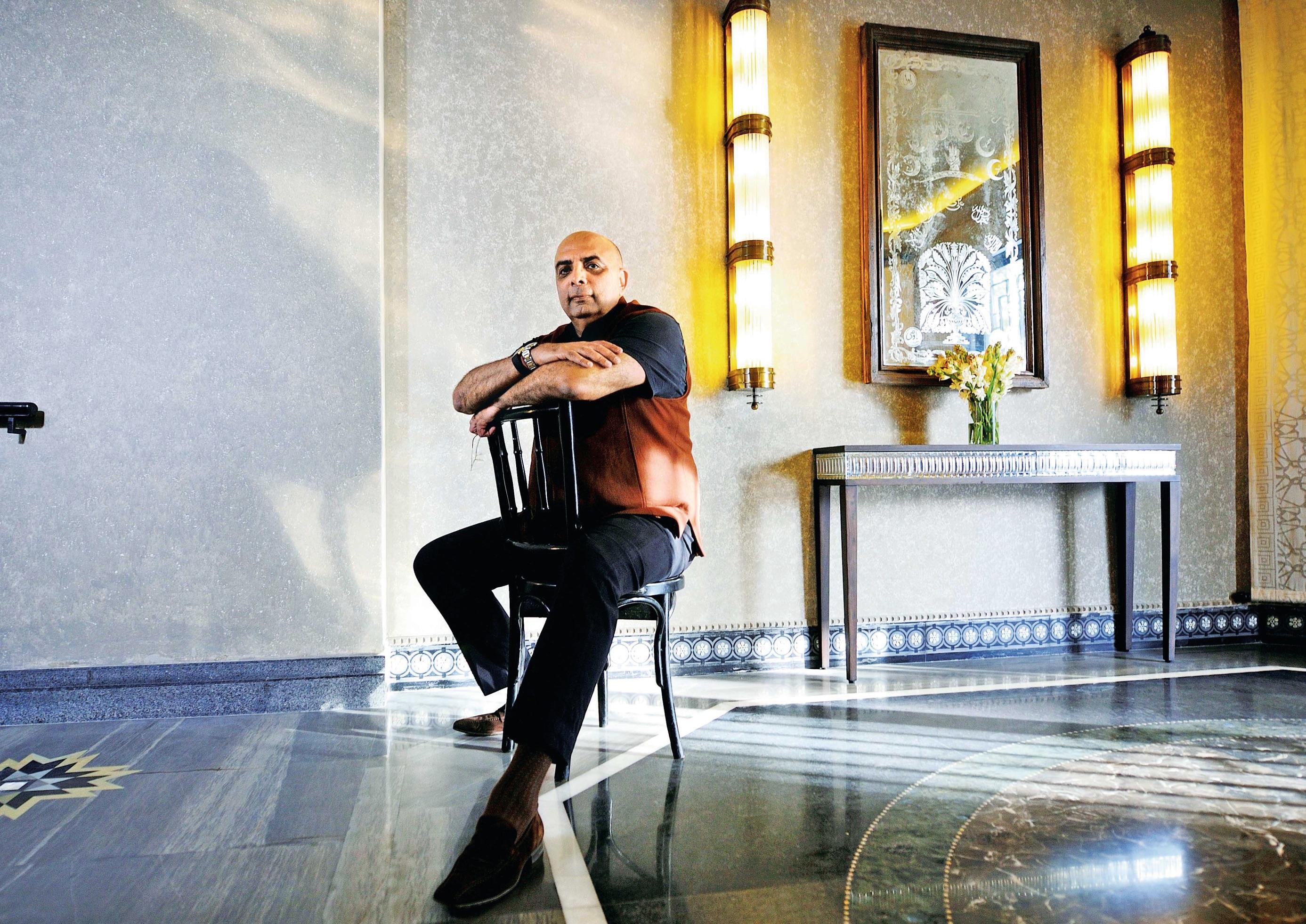
An audience with Tarun Tahiliani is a little like meeting the Pope — if the Vatican were an atelier and doctrine were replaced by fit. Not because he is unapproachable (he isn’t), or overly reverent (he laughs easily), but because he understands the inner workings of fashion with the assurance of someone who has lived inside it for decades. He knows what holds, what collapses, and what must be practised daily if it is to survive. Thirty years into building one of India’s most influential luxury fashion houses, Tarun speaks with the calm of someone who no longer needs to prove anything. He does not reach for slogans. He reaches for memory, process, and the body.
“Fashion is a science,” he says, one that’s been tested repeatedly. When Tarun first ventured into design, fashion was barely recognised as a profession in India. “My generation grew up without the idea of being a designer. You were indoctrinated into believing you had to go to an IIT or Harvard.”
He went to business school largely to keep his father happy, worked in the family business, and sold oilfield equipment. His relationship with fashion developed gradually — through an instinctive fascination with drape, with how sarees were worn and re-worn, adapted instinctively without anyone labelling it design. With India’s economic liberalisation in the early 1990s came greater exposure to global brands, lifestyles, and consumption. Luxury entered public consciousness in a way it hadn’t before. Tarun emerged at that moment, but instinct alone wasn’t enough.
“If I wanted to produce what was in my head, I had to go and study.”
IN THE MAKING
At the Fashion Institute of Technology in New York City, the bubble around fashion burst early. “Every morning was draping. After lunch, cut-making or illustration, then artistry. You went in at eight in the morning and came out at one at night — sometimes the next night.” Four years of technical education compressed into one relentless year.
Speed. Precision. Discipline.
“It taught me that inspiration means nothing if you can’t execute.”
Those years sharpened his admiration for designers who understood structure. ‘Through my work, I discovered this country. I was very anglicised, always looking West. Fashion brought me back’ as language. John Galliano, for narrative excess anchored by cut. Yves Saint Laurent, for translating social change into clothes women could actually live in. Giorgio Armani, for liberating the body through comfort. Different temperaments, different worlds united by a shared understanding that when it comes to clothes, form and fit are fundamental.
When Tarun returned to India in the mid ’90s — after a brief, unsatisfying attempt to establish himself in New York — he returned obsessed with structure. “Embroidery means nothing if a garment doesn’t sit right. If it pinches or pulls, that’s not design. That’s decoration.”
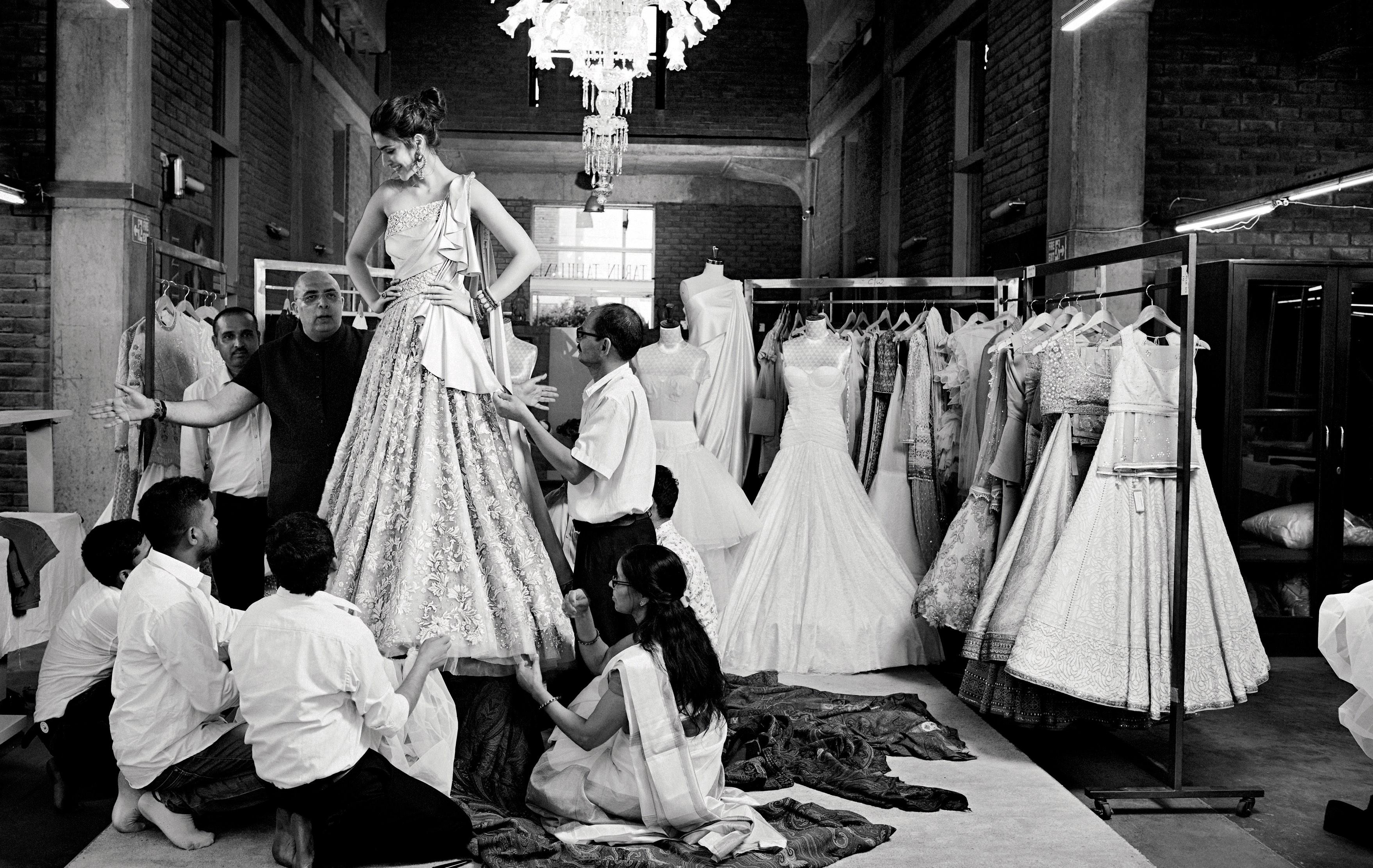
This insistence reshaped Indian occasion wear. Tarun did not romanticise drape; he controlled it. His sarees — now so deeply absorbed into the mainstream that their original intelligence is often overlooked — were engineered to behave consistently. Pleats disciplined into place. Pallus retained their exacting shape. What looked fluid was carefully supported underneath. Corsetry, in his work, was never about restriction. It functioned as scaffolding — allowing fabric to skim rather than cling, to move rather than fight the body. Lehengas were cut on the bias to move naturally with the body. Cholis were shaped to provide support without restriction. You could sit. You could dance. You could last an entire evening in them.
“I still ask the same questions during fittings,” he says. “Can you walk? Can you sit? Is this comfortable?” For Tarun, comfort isn’t dilution; it’s design logic. He points to history to make his case. Chanel endured because women could live in those clothes. Armani because men could breathe in them. Sculptural brilliance alone, he suggests, has never been enough.
THE SHAPE OF CONTINUITY
Delhi became his base. Around 1994-95, the studio found coherence. That is the moment he marks as the real beginning of his practice — 30 years shaped by refinement rather than reinvention. Along the way, he watched an Indian fashion ecosystem slowly take shape: peers learning in public, mistakes made openly, and a shared vocabulary built over time.
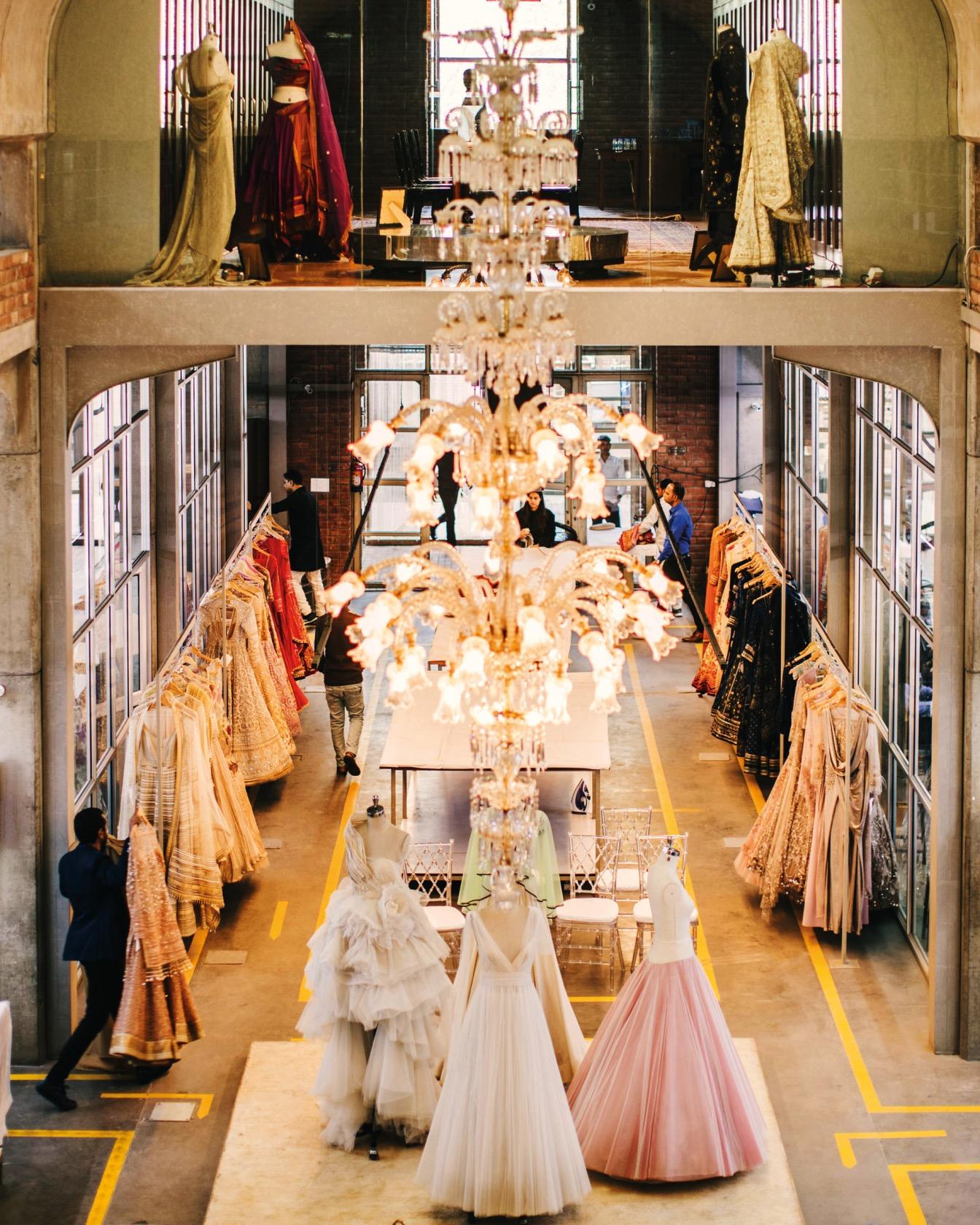
There is also a lineage within which Tarun situates himself — one that moves easily between Paris, Milan and Delhi. These references are not name-drops so much as coordinates. At a time when Indian fashion was still searching for its bearings, they offered orientation. Indian designers of his generation learnt without precedent. Studios doubled as classrooms. Fit sessions stretched endlessly. Garments were cut, rejected, and recut. Over time, expectations shifted. Indian couture allowed movement and ease, and embellishment secondary to structure. The change came through repetition and work.
WHERE IT ALL TOOK FORM
That long arc came into sharp focus earlier this year in Hyderabad, where Tarun marked the milestone with a large-scale showcase at the British Residency. Palladian in form yet Indian in spirit, the building mirrored his longstanding approach: a colonial structure constructed by Indian craftspeople, form meeting fluidity. The evening unfolded as a walk through his working mind. Draped garments were suspended as pure form. Toile mannequins showed how the garments were constructed before any decoration was added. Choli busts traced how one of Indian fashion’s most charged garments had been rethought through corsetry and internal structure. Fit came first; surface followed.
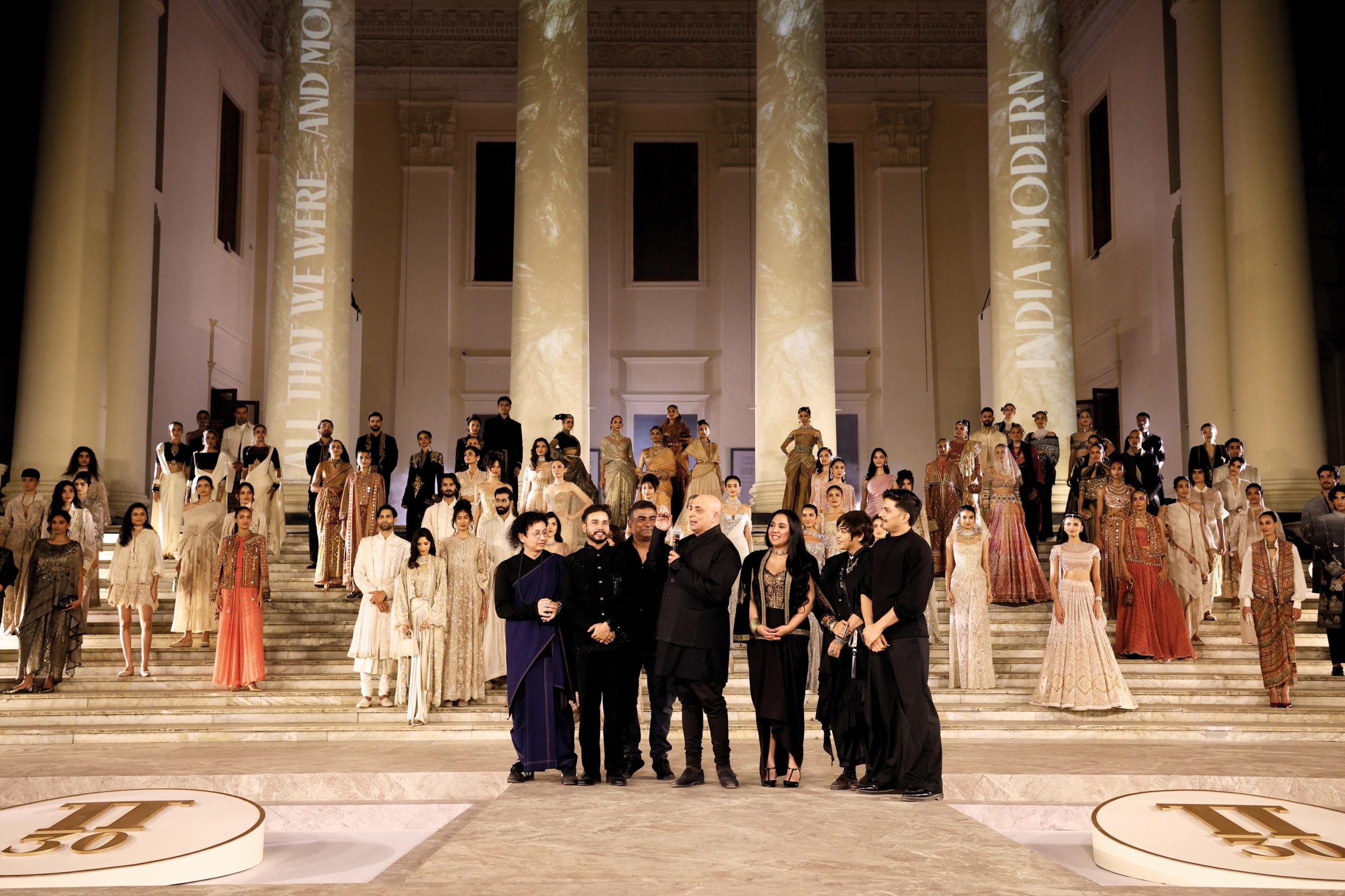
When the runway emerged in the Residency’s expansive courtyard, the clothes carried that same discipline. Corseted silhouettes nodded to historical proportions without imitation. Mughal colours — madder, ivory, gold — appeared controlled. Rabari embroidery sat firmly within couture, unapologetic and assured. Then came the quieter turn: OTT, his luxury prêt line, where layering, ease and movement spoke to Indian lives lived across cities, time zones and expectations. “It wasn’t about the past,” Tarun says of the showcase. “Everything was new. Certain pillars remain, but it’s about showing where Indian fashion is today.”
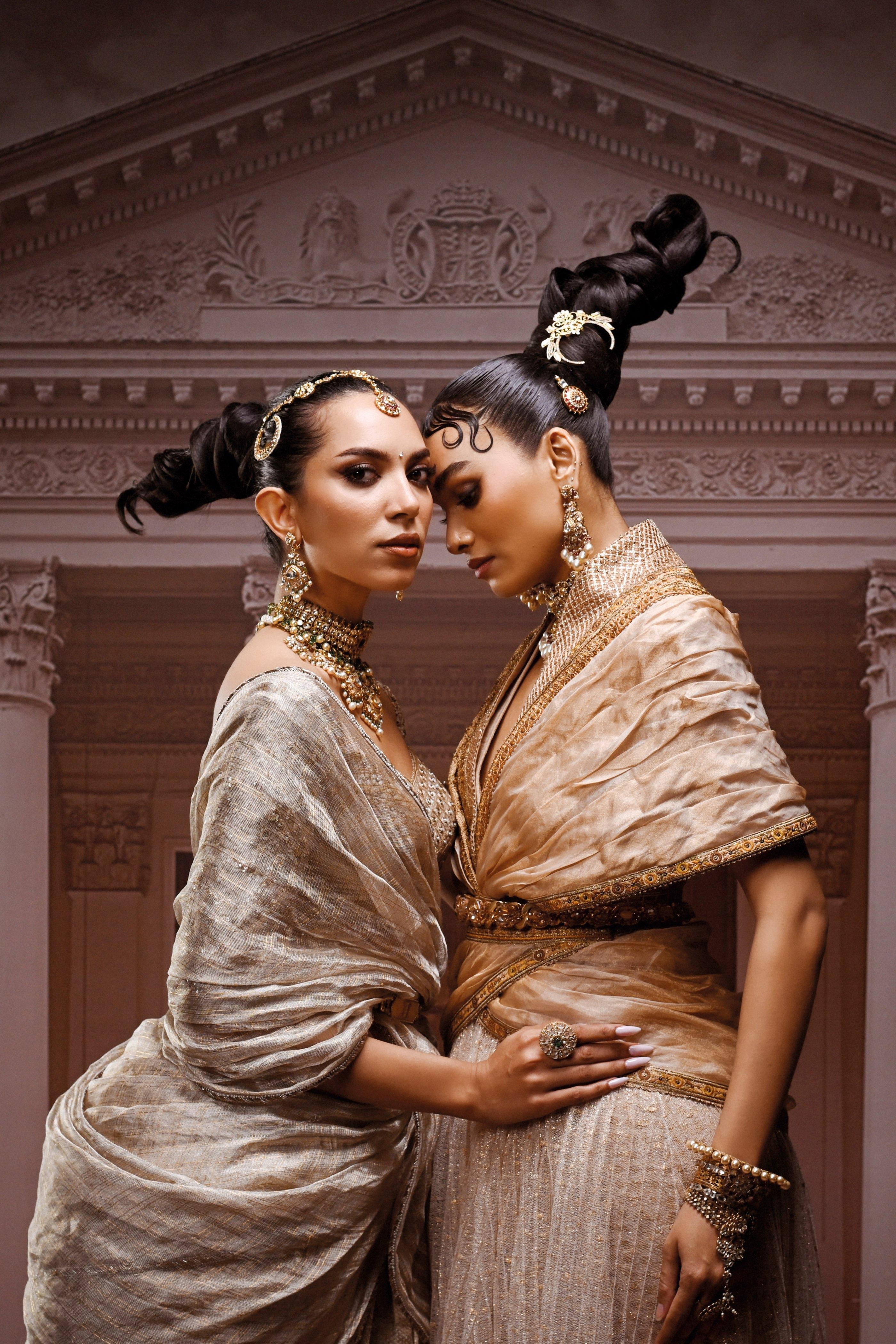
Which is markedly different from when he began. Men now care about cut and silhouette. Women gravitate easily towards both Indian and Western wardrobes. “People switch between languages,” he adds. “Style works the same way.” Bridalwear remains central to his universe, but its tone has shifted. Grandeur is no longer the sole objective. Today’s bride wants individuality and longevity — something that holds up beyond the myriad photographs. “You may suffer through the wedding,” he says, smiling, “but you should be able to wear the garment again.”
Asked what still troubles him after three decades, Tarun speaks about systems — about infrastructure, about how difficult it remains to build patiently and honestly at scale. Yet he remains confident in skill. “Indians know how to cut, fit, and make,” he says. “AI can draw. It can’t make clothes fit.” When the conversation turns personal, he remains unsentimental. “What goes up must come down,” he shrugs. “Ego always has a price.” Fashion, he admits, gave him something unexpected: a relationship with India itself. He explains: “I was very anglicised. Always looking towards the West. Through my work, I discovered this country.”
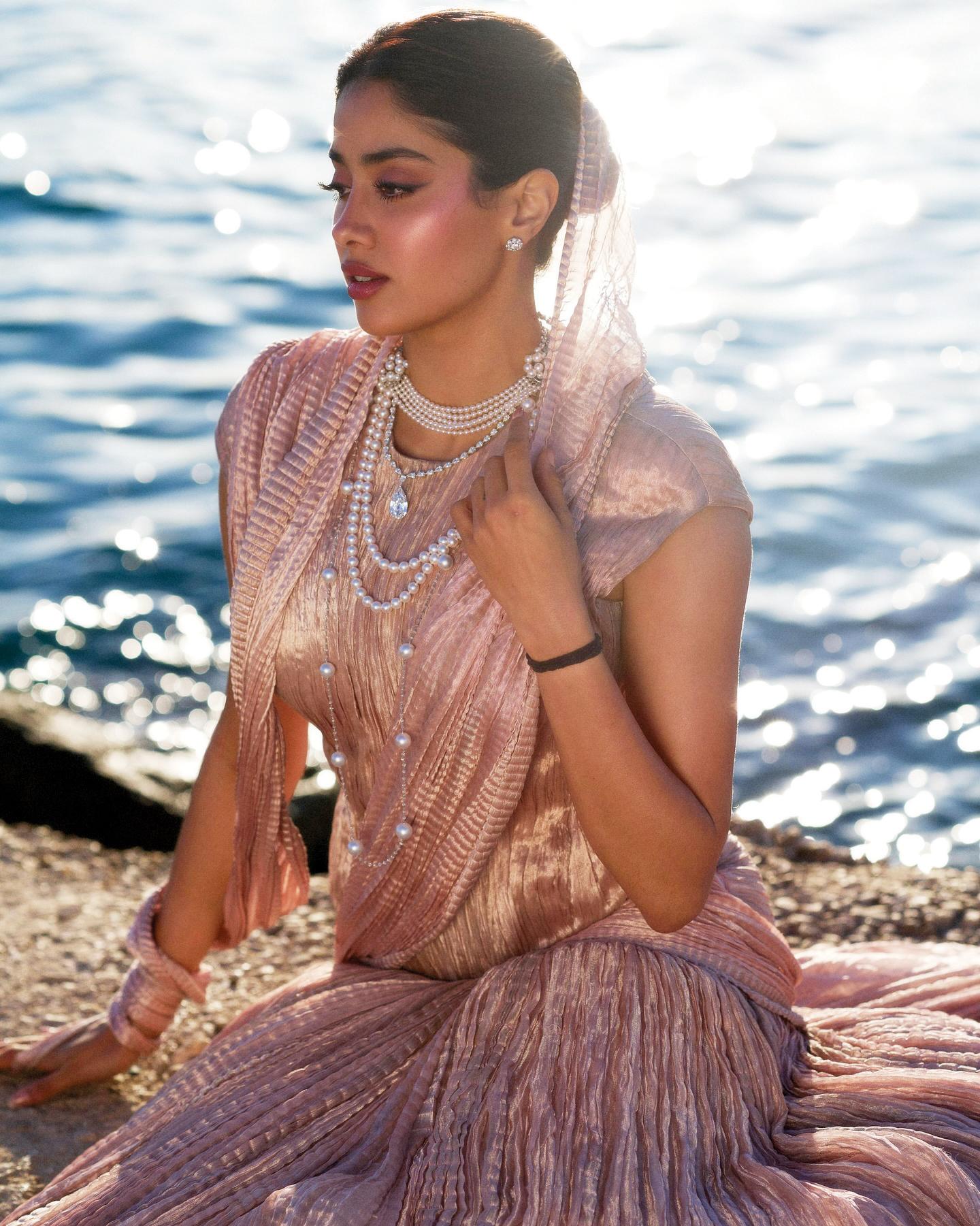
As he looks ahead, the ambition is focused. He wants to push a contemporary idea of India outward — confident, sensual, and technically assured. Not louder, just sharper. Thirty years in, Tarun still speaks like someone in the middle of the work. He built the brand gradually, refining decisions over time. And he continues to walk through it, listening closely for what needs adjusting next…
(Also read: HELLO! India Exclusive: How Lovebirds found its wings)
A TÊTE-À-TÊTE WITH TT
Favourite film: The Hours.
Favourite food: Too many! I love sweets. Strawberry juice.
Favourite dessert: Mishri from Lucknow.
Favourite place to visit: Italy.
Perfect night out: One or two friends. No big parties.
The best way you switch off: Playing the piano — it forces focus.
Designers you admire: John Galliano, Yves Saint Laurent, Alexander McQueen and Giorgio Armani.
Continue Reading