- Home
- Fashion
India Couture Week 2026's weekend rounds up artistically with a play of colour and structure
The weekend showcase at the India Couture Week 2026 brings colour, contemporary designs, and craftsmanship to the forefront with artistic display

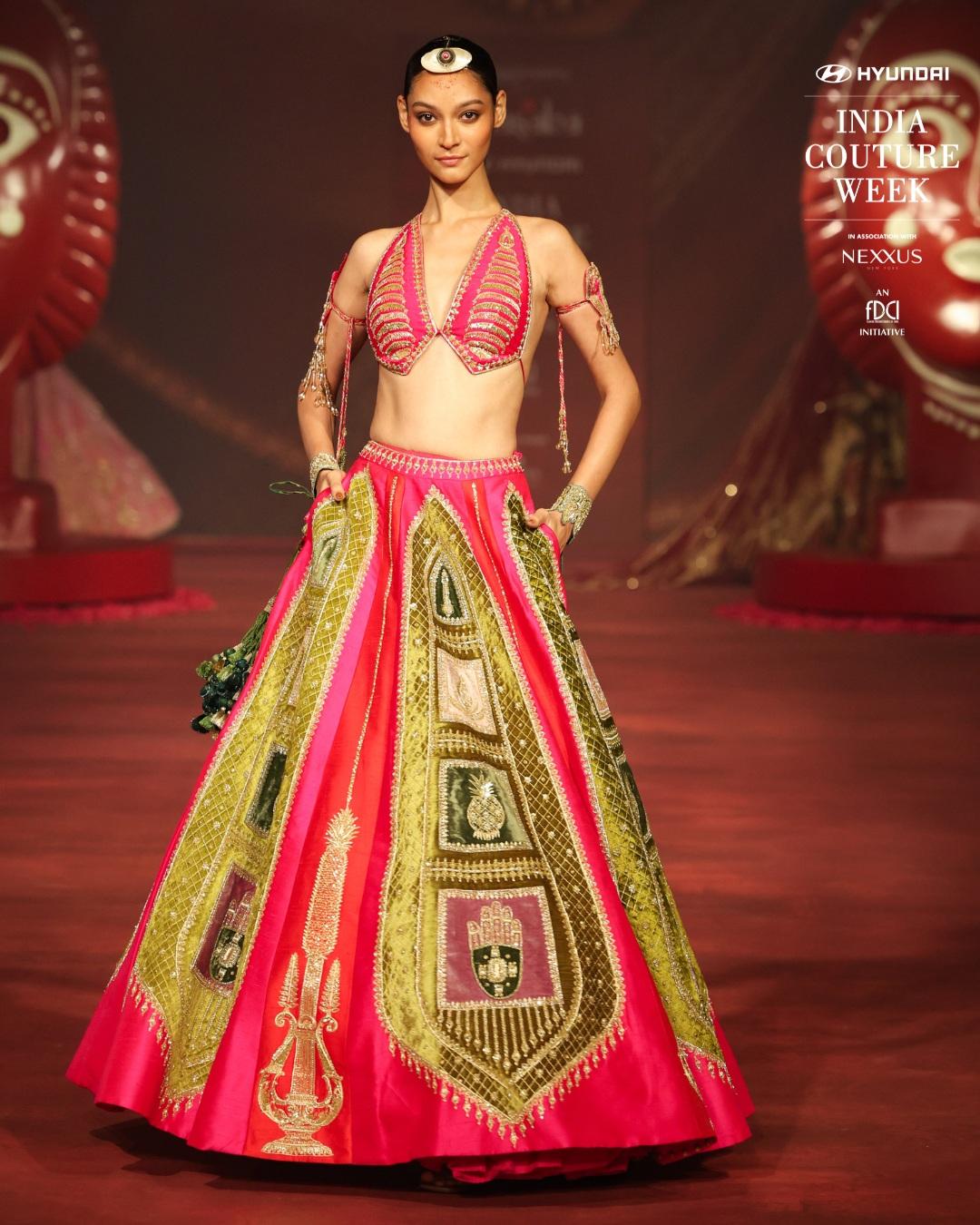
The weekend round-up of the ongoing India Couture Week was lit up with glamour and glitz. After six years, House of Masaba returns to the runway with its first-ever bridal showcase - a collection rooted in heritage, drenched in colour, and liberated by joy, as the first show of the evening. More than a bridal debut, it marks the beginning of a new chapter for the brand, reimagining what bridal can look and feel like through the unmistakable lens of Masaba.
Her collection, Chardi Kala, House of Masaba's showcase celebrated India through an irreverent visual language - bold prints inspired by our culture, everyday nostalgia, folklore, pop references, and the joyful chaos of Indian life. A language that was proudly Indian and unapologetically original, and lest we say, very true to Masaba. Indo-western silhouettes, bridal lehengas, beaded blouses and corsets and an eclectic mix of accessories that have personalities of their own come to the floor. Veteran model Madhu Sapre strutted the runway in a red ensemble doused in golden motifs and a headgear made for icons, to support the brand.
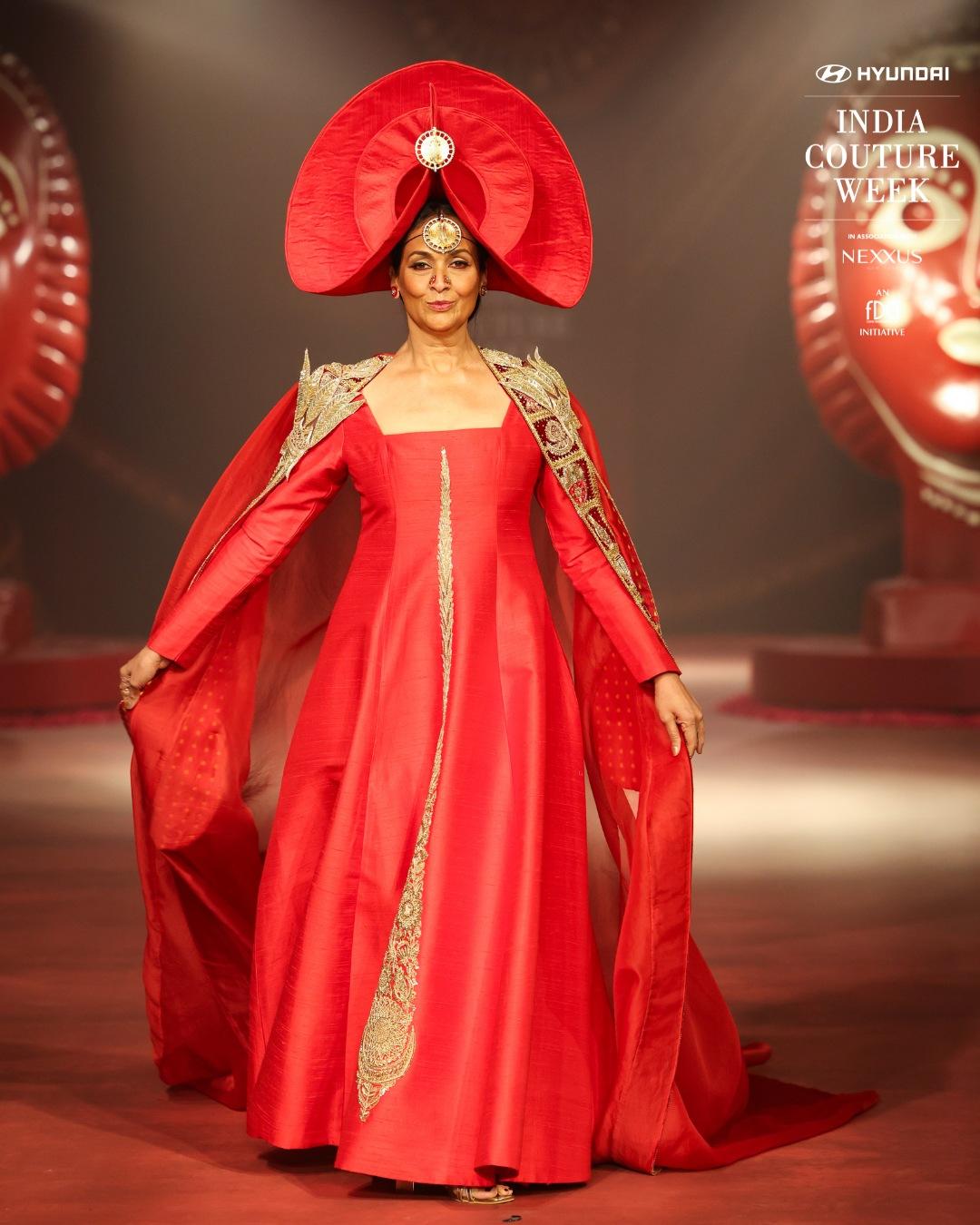
The journey begins in the sacred landscapes of India before drifting into the blue-green waters of Antigua and the vibrant tropics of the Caribbean. Bridal seamlessly transforms into resort bridal. Ceremony gives way to celebration. It is designed for the woman who has arrived - confident in who she is, deeply rooted in where she comes from, and carrying those roots with her across the world.
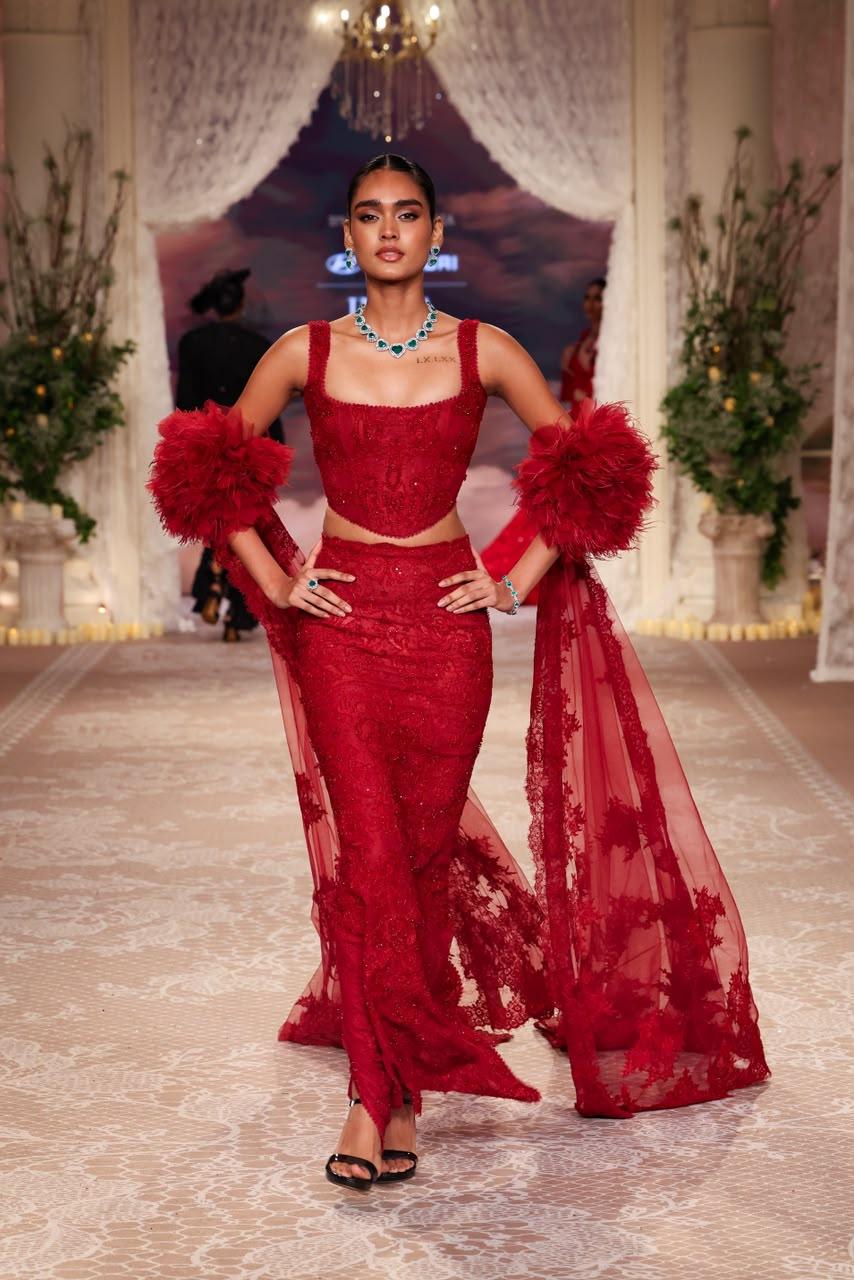
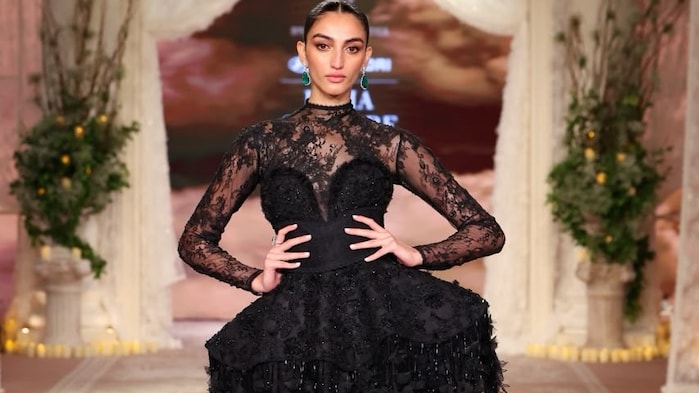
Lace is where ROSEROOM began, and on Sunday evening at The Pavilion, Taj Palace, New Delhi, Isha Jajodia showed what years of working with it have taught her. Softly, Strong is the House’s fourth consecutive collection for Hyundai India Couture Week, in association with Nexxus New York, and the first in which every technique the atelier has learned appears in a single room.
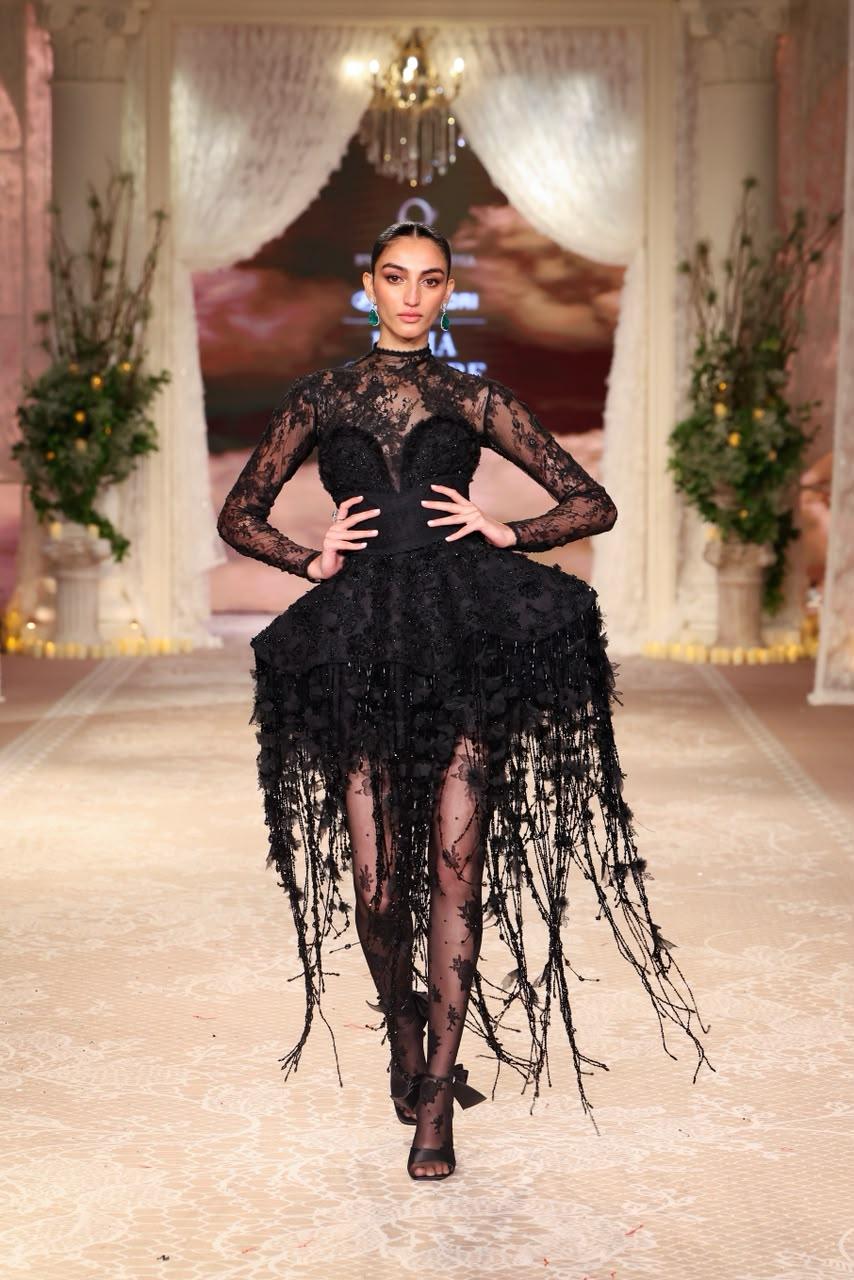
Chantilly, corded and guipure laces were layered against one another and then worked further by hand: appliqué set into the ground, florals built in three dimensions, transparencies anchored with pearls and Swarovski crystals. The season introduces clay to the House vocabulary, moulded by hand into floral motifs and sculptural detail and set into lace so that the two read as one material. The references are European romanticism, French architecture and vintage femininity, held to Indian craftsmanship, which remains the only tradition capable of executing them at this level. Softly, Strong represents many thousands of hours of handwork carried out across ROSEROOM's ateliers over many months.
Rimzim Dadu unveiled INLAE, her latest couture collection, at Hyundai India Couture Week 2026 in association with Nexxus New York, on 26 July 2026 at Taj Palace, New Delhi. Named after the centuries-old art of inlay, INLAE draws inspiration from the precision of Mughal inlay work while reinterpreting its principles through an entirely contemporary material language. Continuing her pioneering exploration of material innovation, INLAE examines the relationship between light, material and craftsmanship through the iridescence of mother-of-pearl, the precision of Mughal inlay work and the artistry of historic Indian jewellery. The collection extends Rimzim Dadu's ongoing pursuit of creating new textile languages that challenge conventional ideas of couture.
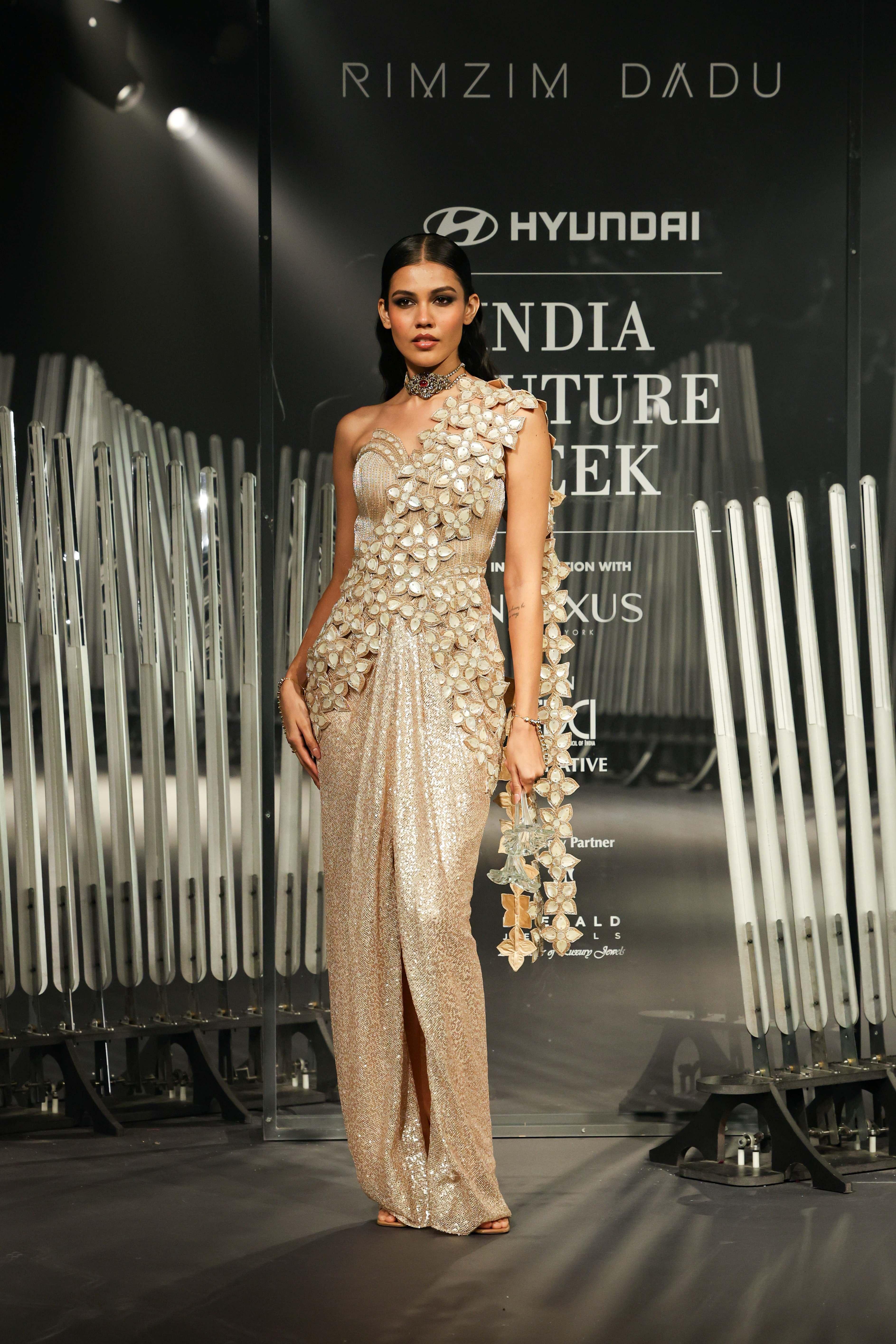
At the heart of the collection lies mother-of-pearl, a material long admired for its quiet luminosity and ever-changing play of light. Rather than using it as ornamentation, Rimzim reimagines it as an intrinsic element of couture, translating its organic beauty into garments that are simultaneously sculptural and fluid.
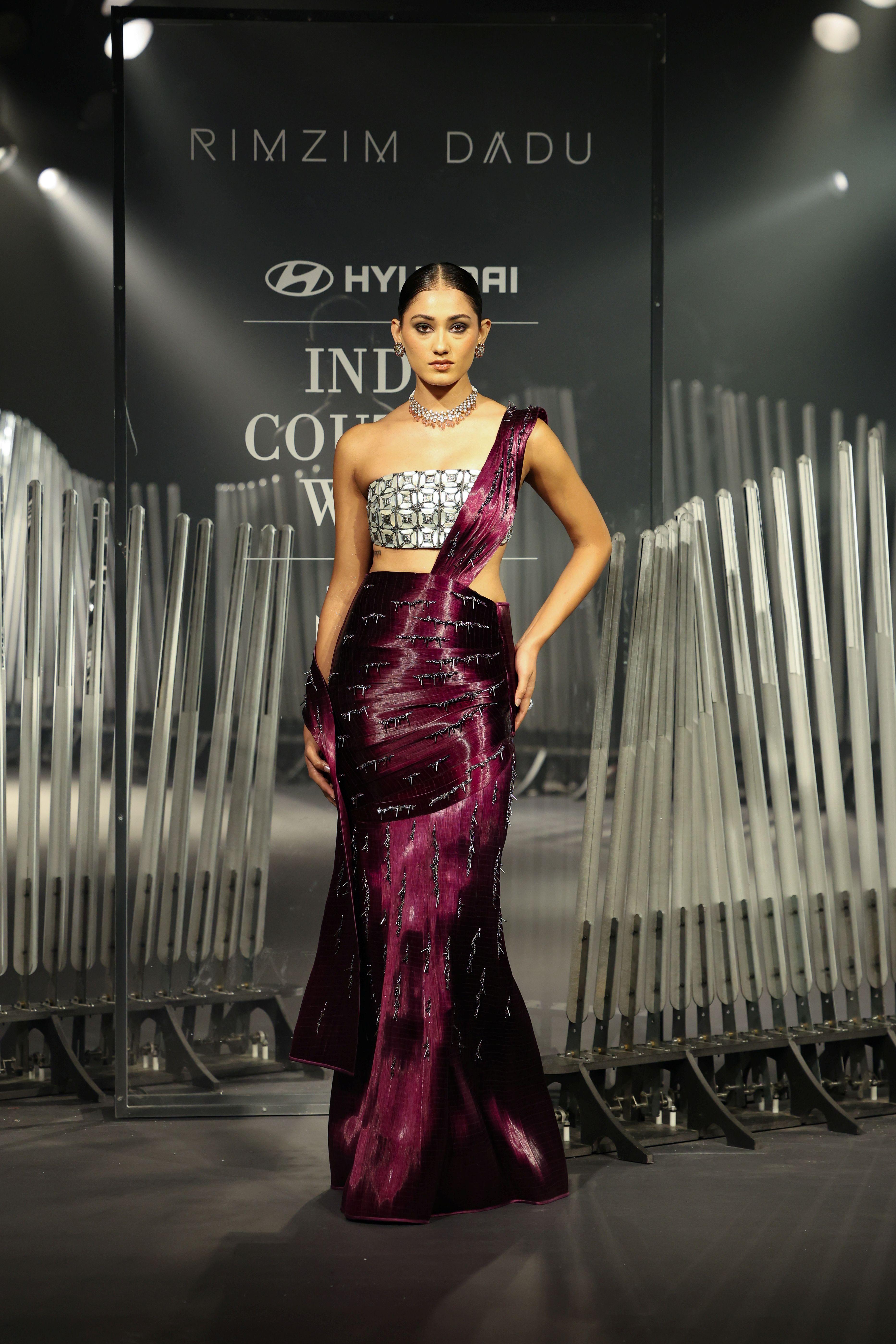
INLAE introduces a new dialogue between the strength of steel and the delicacy of mother-of-pearl, expanding the expressive possibilities of both materials, Comprising approximately 45 looks, the collection reimagines Rimzim Dadu's signature structured sarees, sculptural fringe skirts, cropped bandhgalas and tailored bombers through this newly developed material vocabulary. Each hero piece is the culmination of more than a month of collaborative handwork, with teams of artisans dedicated to a single garment. Central to the collection is an extensive period of research and material innovation, during which the atelier developed entirely new methods of translating mother-of-pearl onto textile. Delicately engineered into intricate grid structures, the material adapts to the fluidity of the body while preserving its luminous, sculptural character, transforming a traditionally rigid surface into one that moves with remarkable ease.
Continue Reading