- Home
- Fashion
Textile showcase ‘Woven Whispers’ marks International Saree Day in Delhi
An insightful panel discussion, art installation, and a fashion show were the highlights of the event, organised by the FDCI, FICCI FLO and Ministry of Textiles
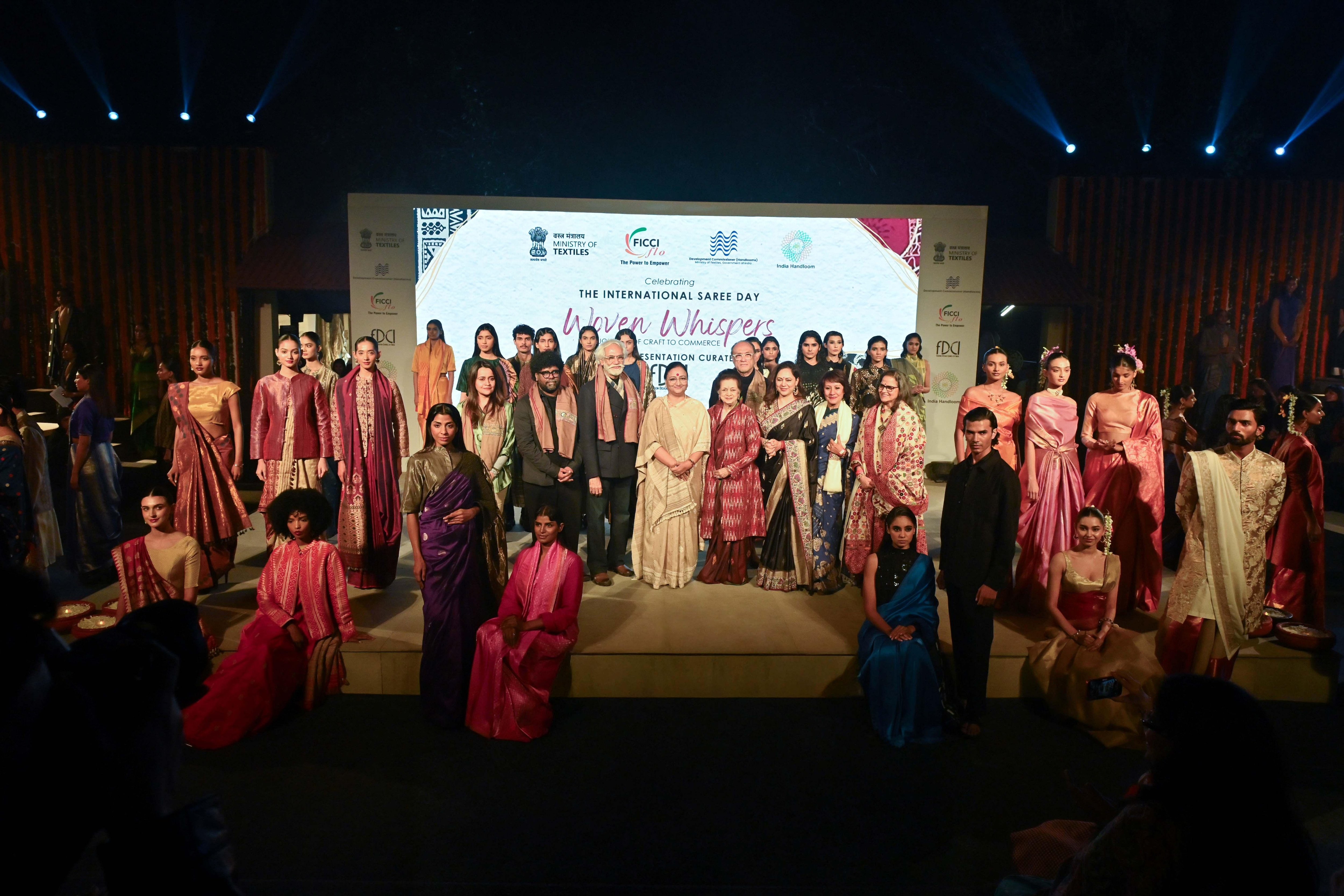
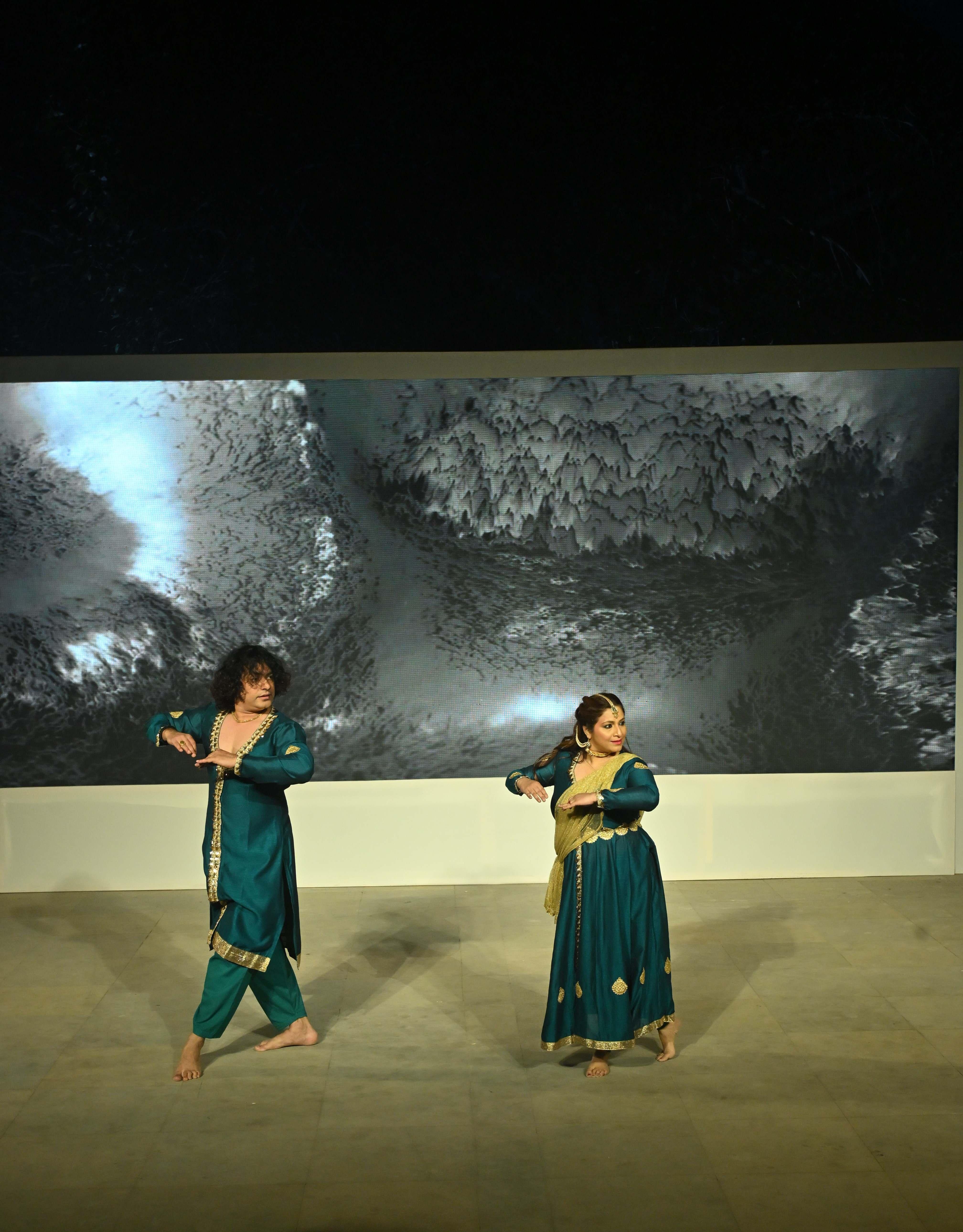
On a chilly Sunday evening in Delhi, the amphitheatre at the National Crafts Museum & Hastakala Academy was abuzz with appreciators of the foremost symbol of Indian women’s fashion — the saree. To mark the occasion of International Saree Day, ‘Woven Whispers,’ a textile presentation, was organised to celebrate the timeless legacy of the drape.
‘Woven Whispers’ showcased the seamless integration of traditional weaving techniques with contemporary design, innovation, and market access. Brought together as a tri-partner initiative by the Development Commissioner (Handlooms), Ministry of Textiles, FICCI FLO, and the Fashion Design Council of India (FDCI), the initiative focussed on empowering female artisans and weavers, strengthening artisan livelihoods, and fostering meaningful collaborations between craft clusters, designers, industry leaders, policymakers, and global stakeholders.
“‘Woven Whispers’ reflects a shared commitment to honour India’s living handloom heritage while creating sustainable, women-led economic opportunities,” shares Kuwarani Ritu Singh of Jammu & Kashmir, a member of the FICCI FLO leadership and organising team. “The collective collaboration between the government, industry stakeholders, designers, artisans, weavers, media and international representatives strengthens our resolve to take Indian handlooms confidently from craft to global commerce.”
CRAFT TO COMMERCE
A key highlight of the programme was an insightful panel discussion among leaders from India’s handloom ecosystem. On the panel were Founder of Palam Silks (Nalli Sarees) Jeyasree Ravi; Textile Specialist at Good Earth Isha Manchanda; Textile Designer and Founder of Vriksh Gunjan Jain; and Rta Kapur Chishti, a saree historian and textile scholar.
Moderated by Manish Saksena, Business Lead at Aadyam Handwoven (Aditya Birla Group), the dialogue explored innovations led by women, sustainability, market access, and the economic future of handloom clusters, offering valuable insights into building resilient, scalable, and ethically grounded craft-based enterprises.
The experience was further enriched by ‘Weaves of India,’ an art installation, presenting regional textiles as contemporary visual narratives.
A TEXTILE SHOWCASE
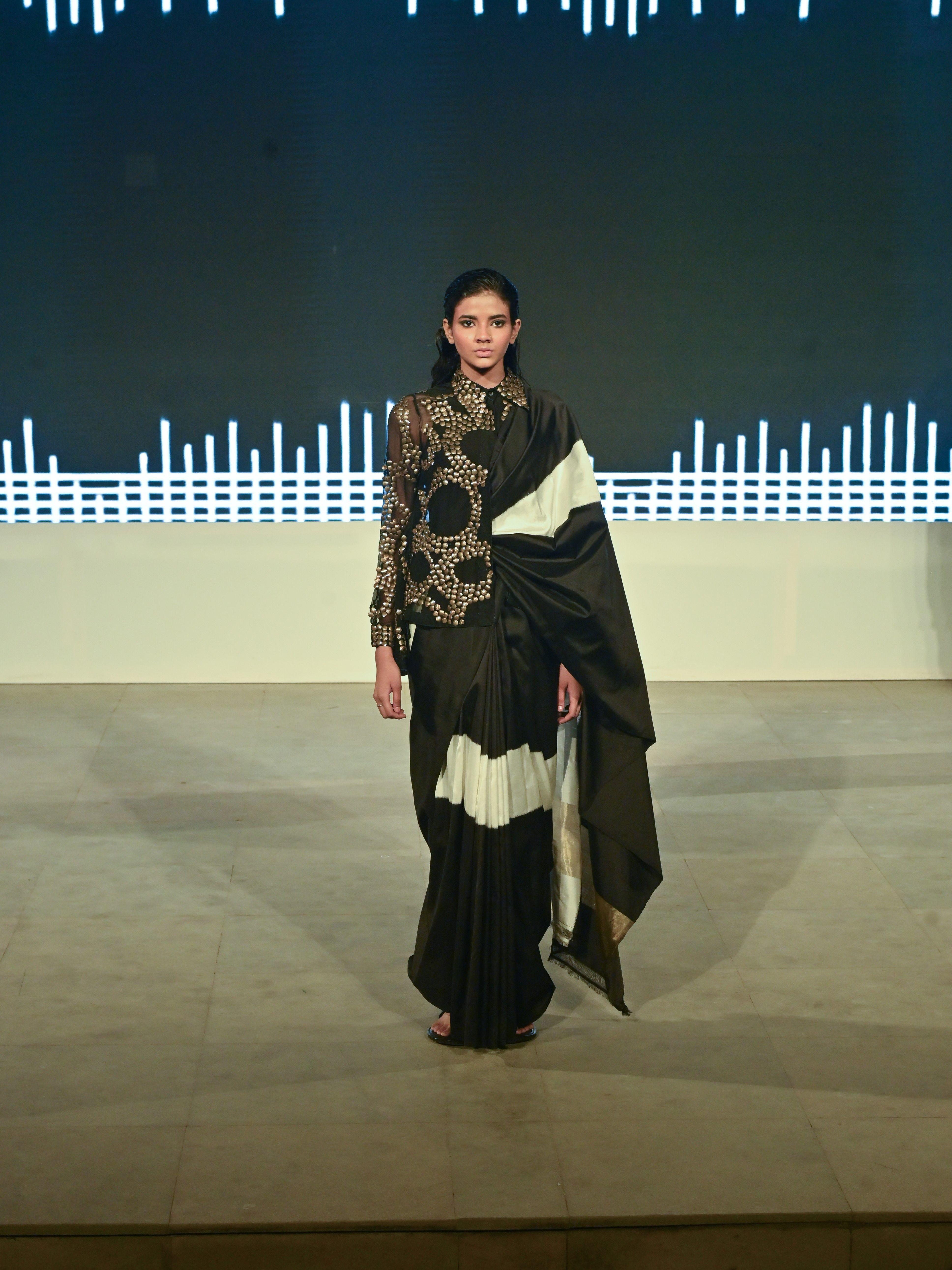
Under the theme ‘The Loom Speaks,’ the FDCI-curated fashion show unfolded as a tribute to handloom as a living, evolving design language, presented with modern silhouettes while preserving their cultural authenticity and ethical value.
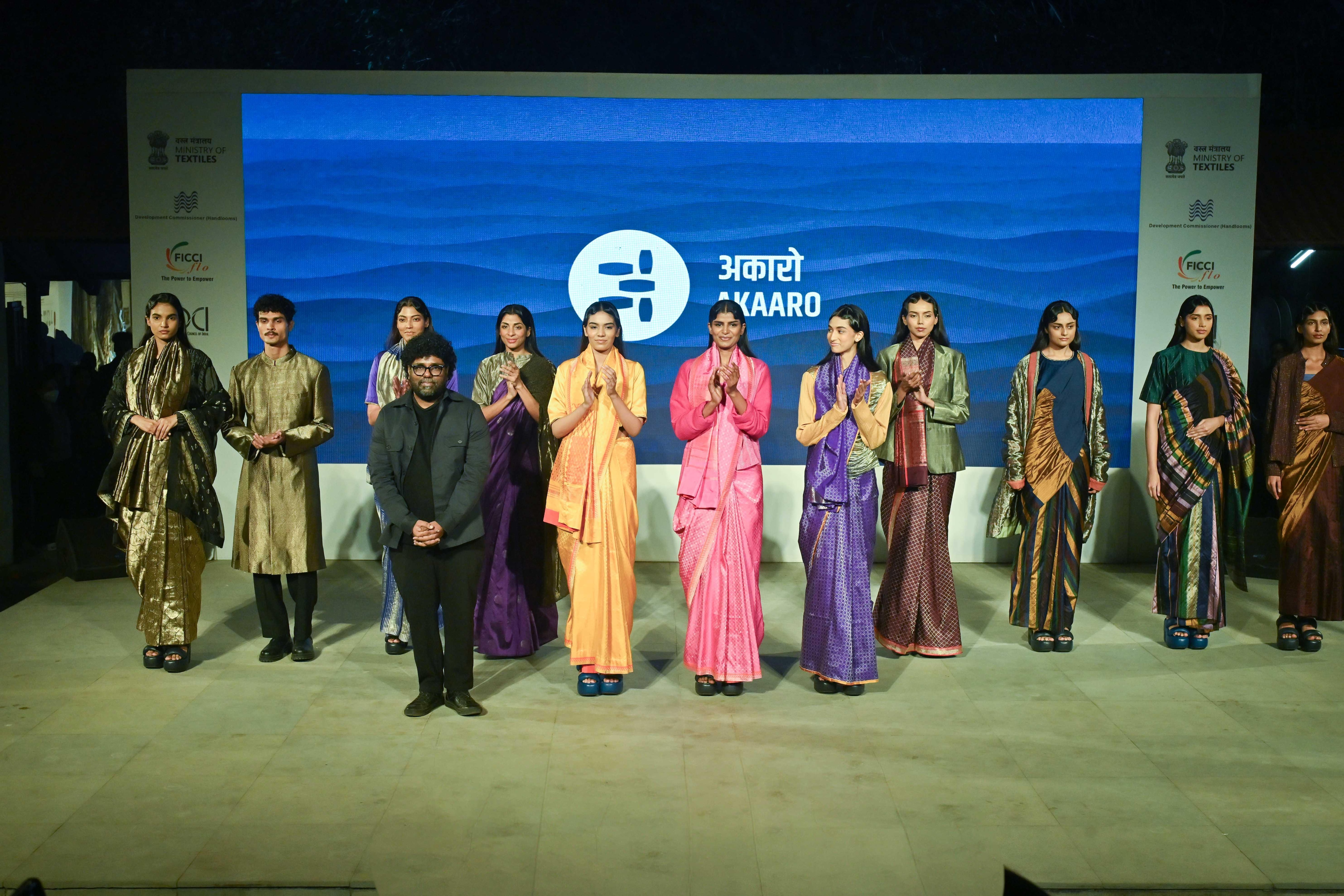
Lahé Looms by Jahnabi Phookan kicked off the presentation with Assam’s indigenous silks and community-led weaving, followed by Akaaro by Gaurav Jai Gupta, who showcased engineered weaves that merged Banarasi craftsmanship with modern structure.
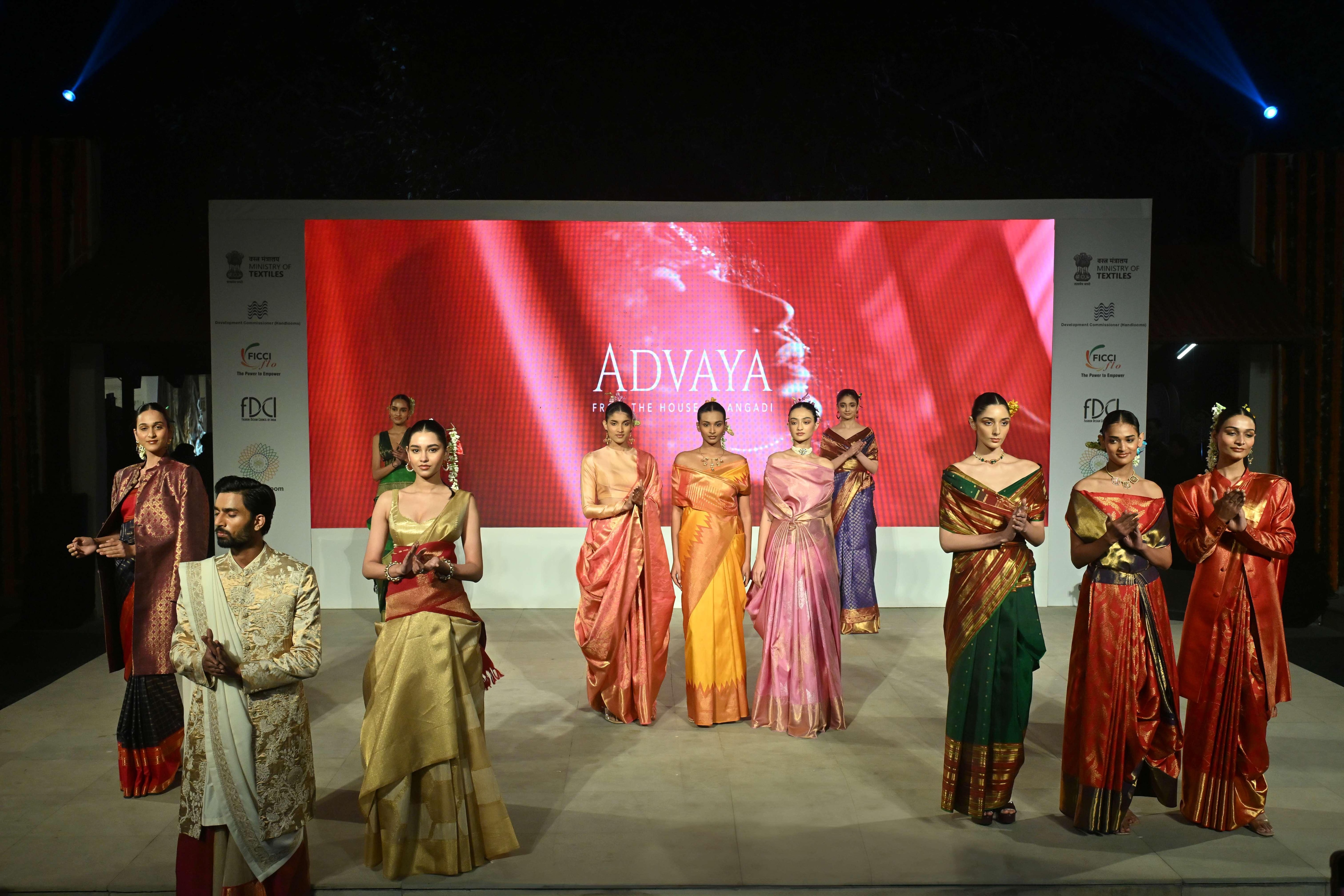
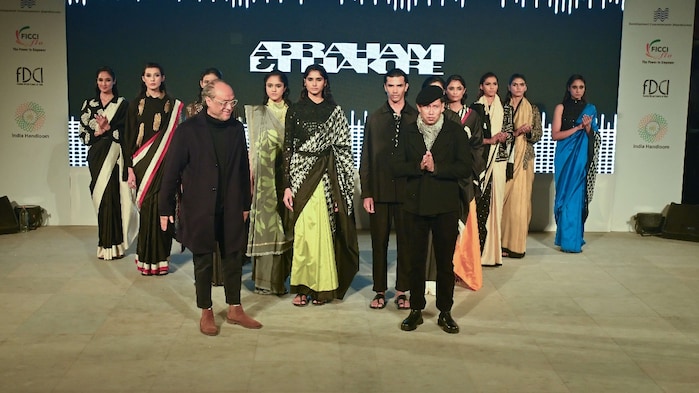
Next, Advaya’s show highlighted heirloom-quality handwoven textiles, defined by nuanced textures, artisanal detailing and a contemporary sensibility, elevated even further with unconventional draping. Abraham & Thakore closed the show in their signature style with a refined exploration of ikat through archival reinterpretations.
EMINENT GUESTS
Chief Guest Dr. Malika Nadda, Chairperson of the Asia-Pacific Advisory Council of the Special Olympics Organisation; FDCI Chairman Sunil Sethi; FICCI FLO National President Poonam Sharma; and FICCI FLO National Treasurer Smriti Puri; along with Governing Body Members and Day Chair Ambar Pariddi Sahai were among the many personalities involved in ‘Woven Whispers.’ Besides eminent leaders from media, entrepreneurship, culture, and design, several ambassadors and senior diplomatic representatives participated in the event, reflecting growing international interest in India’s handloom traditions, sustainability practices, and craft enterprises led by women.
“A saree and handloom are the canvases with which an artist paints a unique story of tradition, culture and history,” says Poonam Sharma, National President, FICCI FLO. “The beauty of a saree lies in its ability to transform a woman with elegance and grace. Let us make sure we carry this forward.”
Continue Reading