- Home
- Lifestyle
A monsoon sonata on Goa's shores
Music found its perfect harmony in the midst of Goa’s monsoon season, surrounded by sea and lush tropical landscape
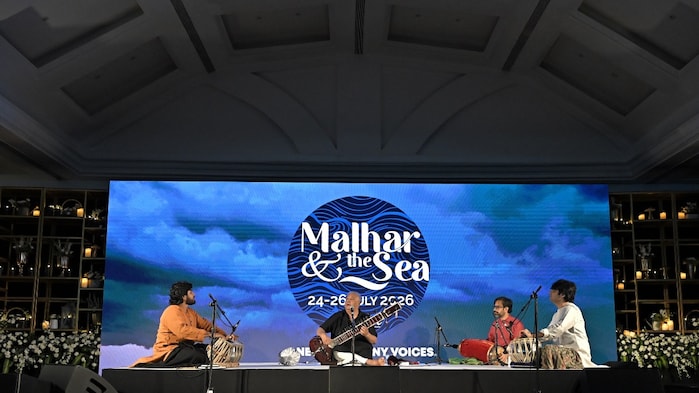
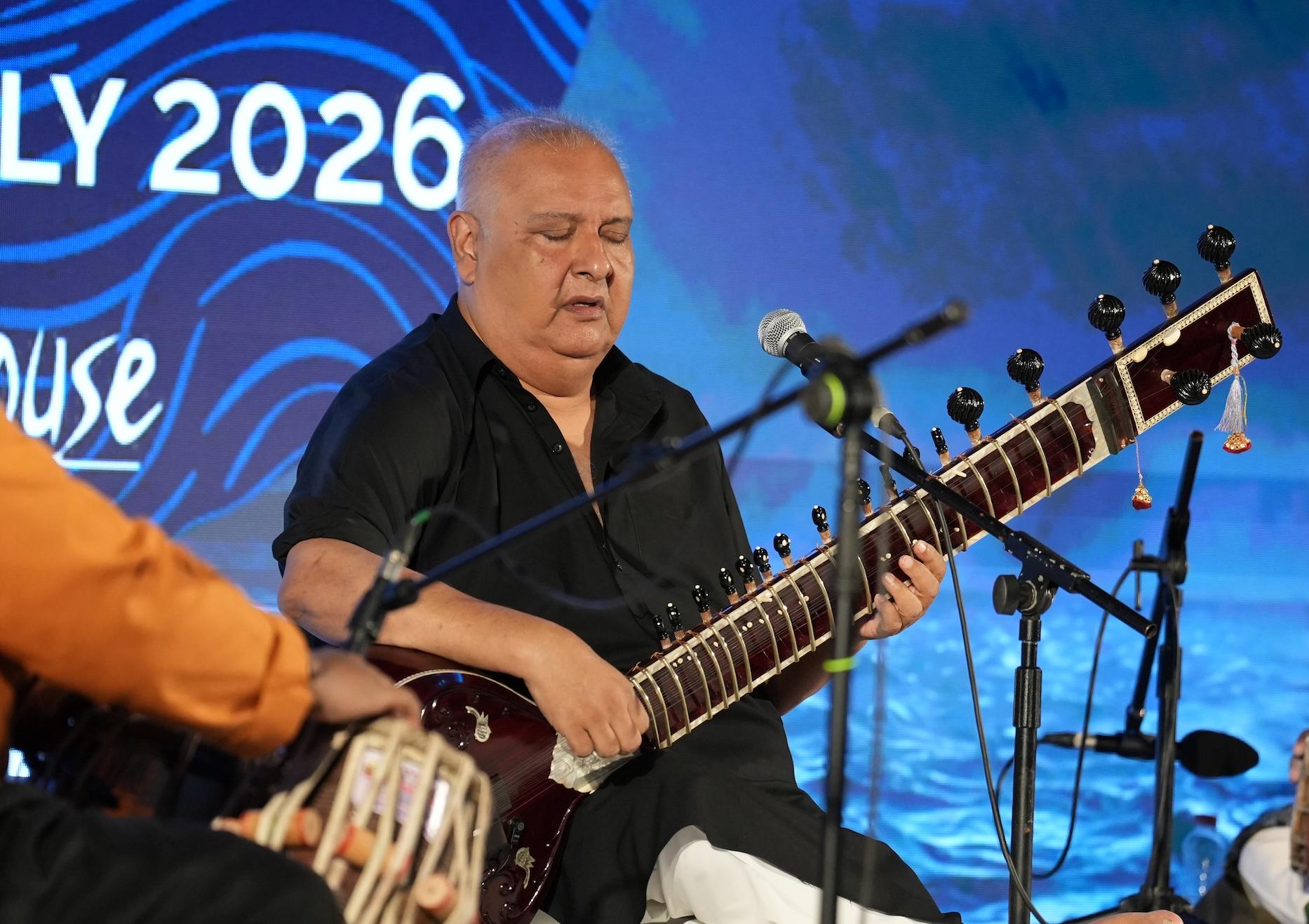
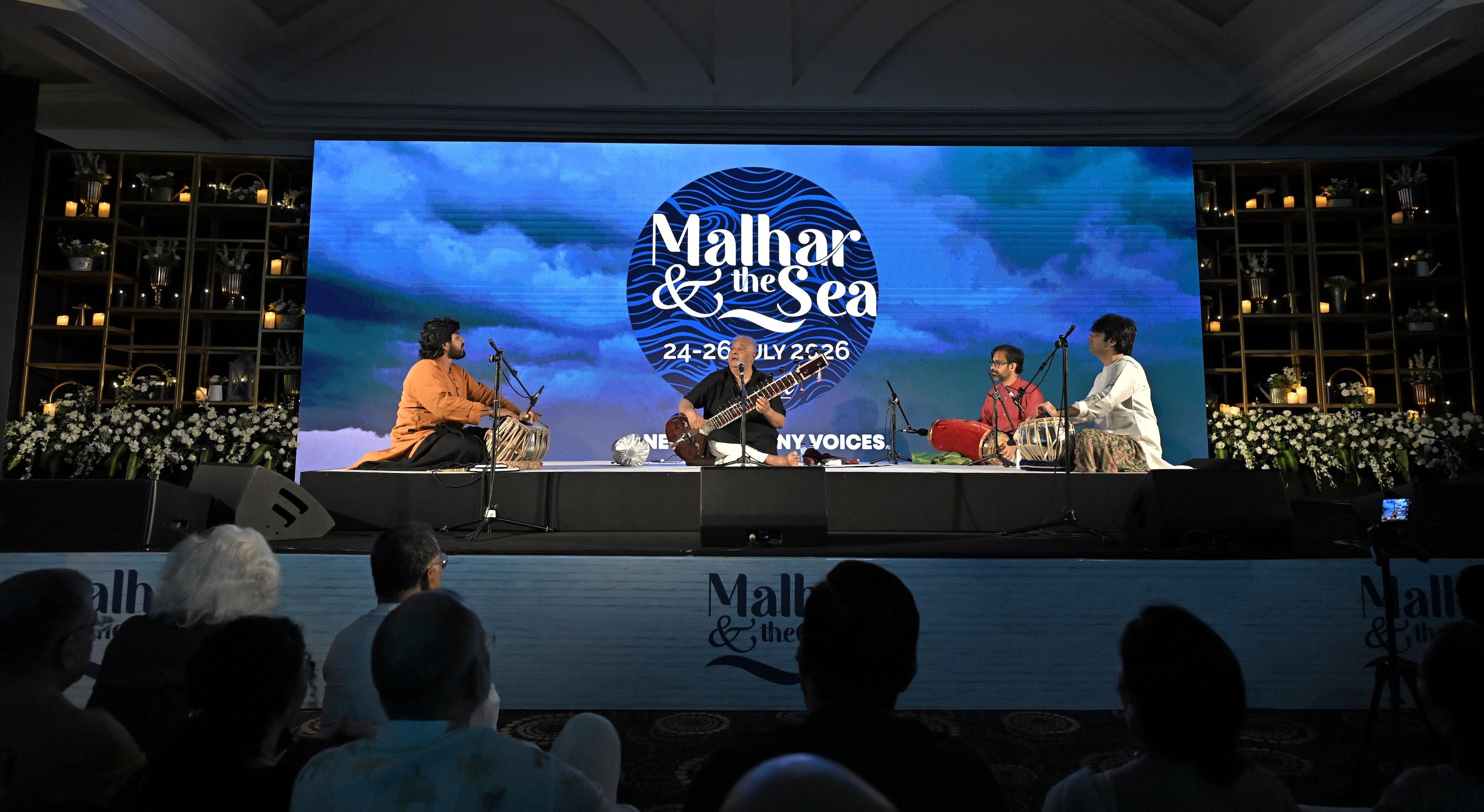
Imagine Goa in the monsoon: rain-washed greenery, heavy skies, the sea somewhere beyond the resort and that particular sense of time slowing down that comes with the season. Now imagine Ustad Shujaat Khan’s robust voice echoing through an auditorium, his sitar in perfect sangat with the rain outside. The breeze carries a whiff of the salty sea, completing the sense-scape of a monsoon sonata. Welcome to Malhar & The Sea; which is the most appropriately-named music festival. Held at the sea-hemmed Taj Exotica Resort & Spa in Goa, the three-day event presented by Showhouse—known for bringing new and innovative concepts to India across theatre, music and the performing arts—saw Hindustani classical, Sufi music and ghazals share the stage with nature’s own soundtrack.
(Also Read: Hot Off The HELLO! India Press: The embrace of wellness)
For Omer Haidar, Chairman and Managing Director of Showhouse, the idea for Malhar came from a frustration with the way Indian classical music was being presented. Having started Show House more than 40 years ago, he felt the genre was “not getting its due” when it came to “ticketing, branding, advertising”. He also questioned why “nobody will pay more than 500 bucks a ticket” for classical music. “I didn't want to project classical music as a poor man's music,” he says. His answer was to change the format. “If it can be packaged well, it can really become a good premium event.” Malhar was conceived as a destination festival, where the ticket covers a stay at one of Goa’s finest hotels, food, drinks and music, with a deliberately small audience of around 120 to 150 couples. Haidar calls it a “music-ation”. Goa was an equally considered choice. The destination has long been associated with electronic and Western music, but Haidar saw an absence he could fill. “If there is nothing happening, we can be the first mover in that direction,” he says. The idea was to “marry the two—a vacation and music together”.
The residential format, however, has not been without its critics. “We do have a lot of local people buying tickets for this residential festival, and some of them have been very angry with me, saying, ‘My house is only 10 minutes away from your Taj Exotica. Why should I go and stay in the hotel?’” His response is straightforward: “The fun and the idea is to create it as a ‘music-ation’. I can’t be splitting the crowd into a resident audience and a non-resident audience. That doesn’t work at all.” The point, after all, is to experience the festival as a whole rather than simply attend a series of performances—and the third edition made that format its own.
(Also Read: HELLO! India's 20+ essentials to elevate rainy days)
The opening evening of the third edition began with Dhrupad, performed by Ustad Wasifuddin Dagar, before Ranjani and Gayatri—the Raga Sisters—brought their distinctive carnatic vocals and Abhang repertoire to the stage. Danish Husain followed with Main Pal Do Pal Ka Shayar Hoon, a theatrical exploration of the life and poetry of Sahir Ludhianvi. As night settled over Goa, the Tasawwur Ensemble, led by Shivam Bhardwaj, took the festival into the world of Sufi music.
If the first evening established the festival’s classical credentials, the second moved through a wider range of India’s musical traditions. Anup Jalota opened with a morning bhajan recital, followed by Ronkini Gupta’s Khayal and Thumri. The evening began with Ustad Shujaat Khan’s Gaayeki Ang Sitar, rooted in his father Ustad Vilayat Khan’s pioneering approach to making the sitar sing with the emotional fluidity of a human voice. Priyanka Barve followed with Ghazal and Geet, before Wanted Yesterday turned towards the West with a tribute to The Beatles and their enduring connection with India. The final morning was quieter. Breakfast was accompanied by Nadia Rebelo’s Fado Unplugged, an intimate, atmospheric close to two days of music.
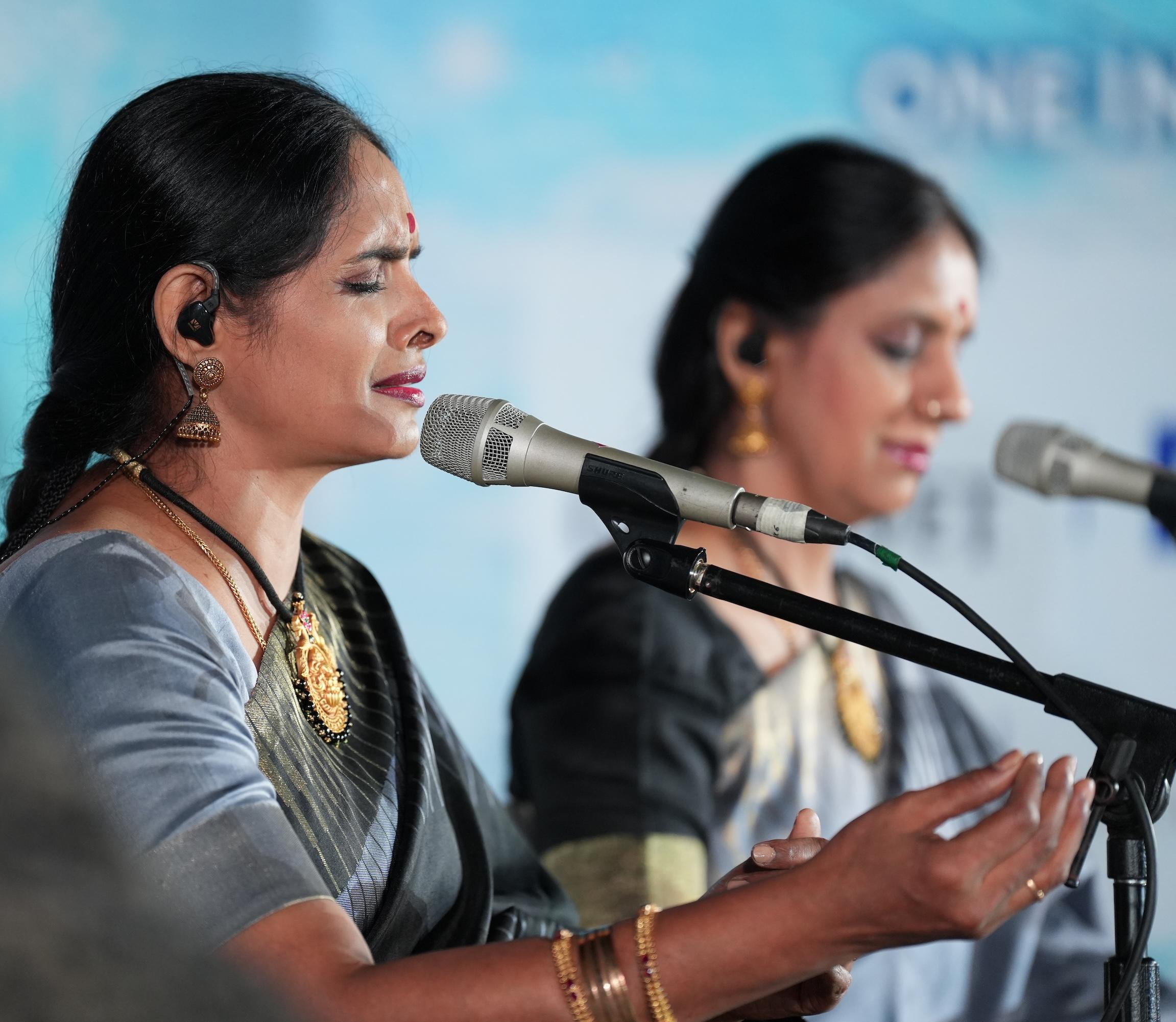
The programming is at the heart of Malhar. “I love curating,” says Haidar, who has spent decades putting together music festivals around particular themes. He believes familiar traditions can be presented differently, with “a bit of twist”—but “not just a twist for the heck of it”. The first edition of the festival was built around jugalbandi across art forms, bringing together Shujaat Khan and Rakesh Chaurasia, Purbayan Chatterjee and Kaushiki Chakraborty, and Ustad Amjad Ali Khan and artist Paresh Maity, who painted live on stage as the sarod played. This year’s theme, One India, Many Voices, brought together khayal, thumri, dhrupad, dhamar, qawwali, ghazal, carnatic vocal music, abhang and folk. “We covered as much of the Indian tradition of Indian classical vocal system,” says Haidar.
But the music was only one part of the experience. Malhar & The Sea was designed to keep the audience and artistes close, allowing conversations to continue after the performances and the evenings to unfold without the usual rush of a music festival. There was food, drinks and the ease of staying at the resort, all folded into the experience. And then there was Goa in the monsoon: the rain, the sea, the greenery and the unhurried pace. For three days, Malhar allowed the music to unfold at the same unhurried pace as Goa in the monsoon.
(Also Read: 12 of India's most restorative getaways)
Continue Reading