- Home
- Lifestyle
HELLO! India Exclusive: Naina and Varun Nagpal on their sibling strength behind Viaanar Homes
The brother-sister duo behind Vianaar Homes is recreating memories, one home at a time in ‘Susegad Goa’
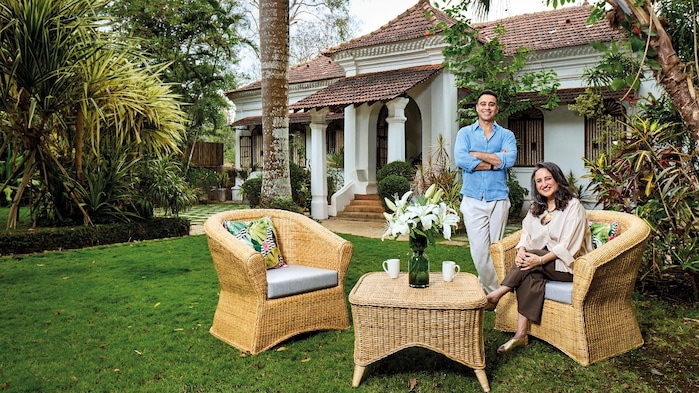

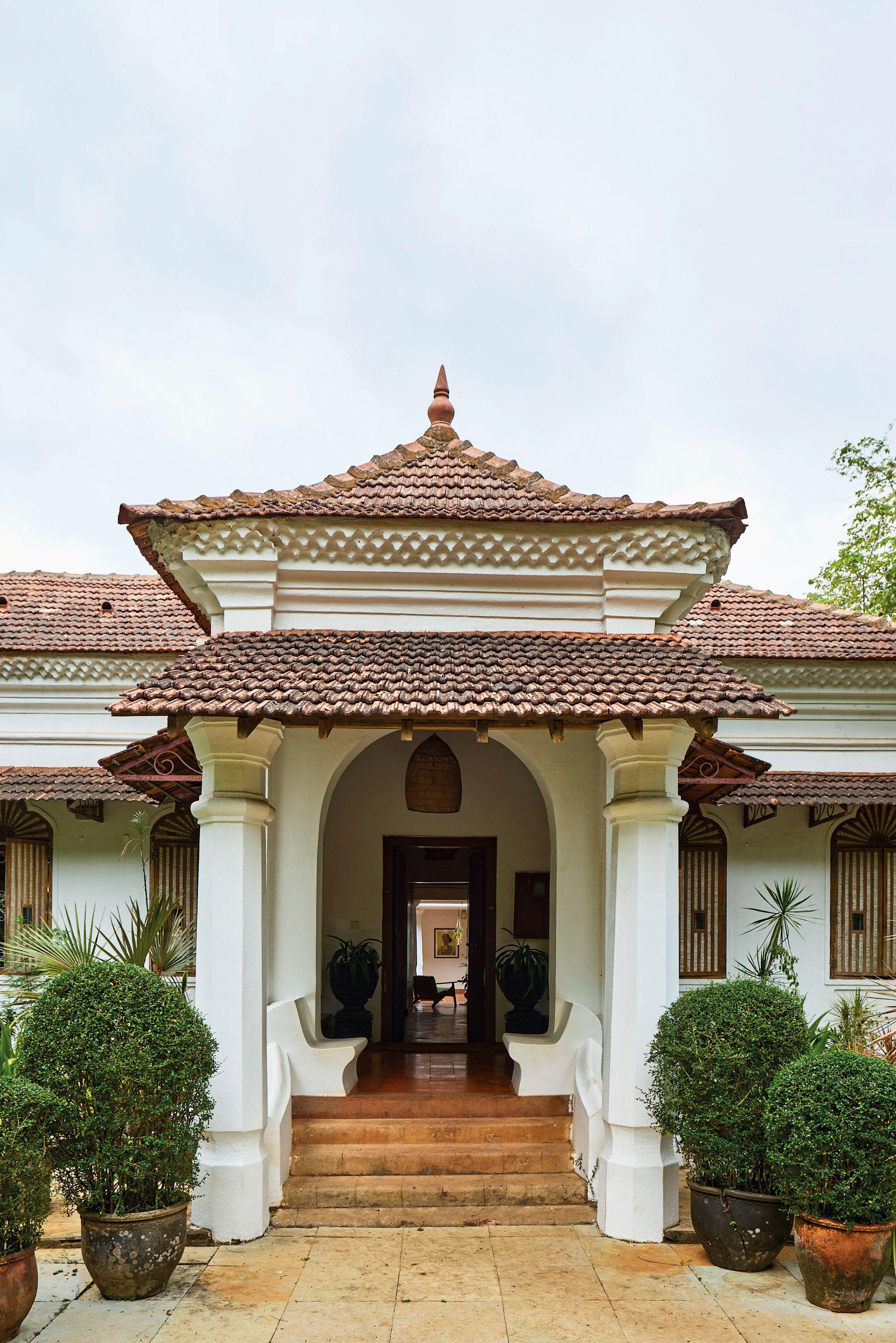
A quintessential Indo-Portuguese Goan house replete with a tile-gabled roof, a balcão, and a glimpse of a courtyard, sits surrounded by a perfectly manicured lawn, a few solitary patches of cumulus clouds lending the right hint of drama to the frame. Two feisty golden retrievers tear through the picture-perfect painting. We later learn they’re named Frida and Dali, after the famous painters, infusing amusement into our reverie.
Inside, the harsh summer rays filtering through the shuttered oystershell windows cast a soft, pearly glow. If it wasn’t for the swanky pool behind the façade, walking into the 150-year-old, meticulously restored villa would have resembled a travel back in time. Beyond lies yet another entirely different world — one populated with mango, coconut, and jackfruit trees, besides shrubs or bougainvillaea, and exotic orchids.
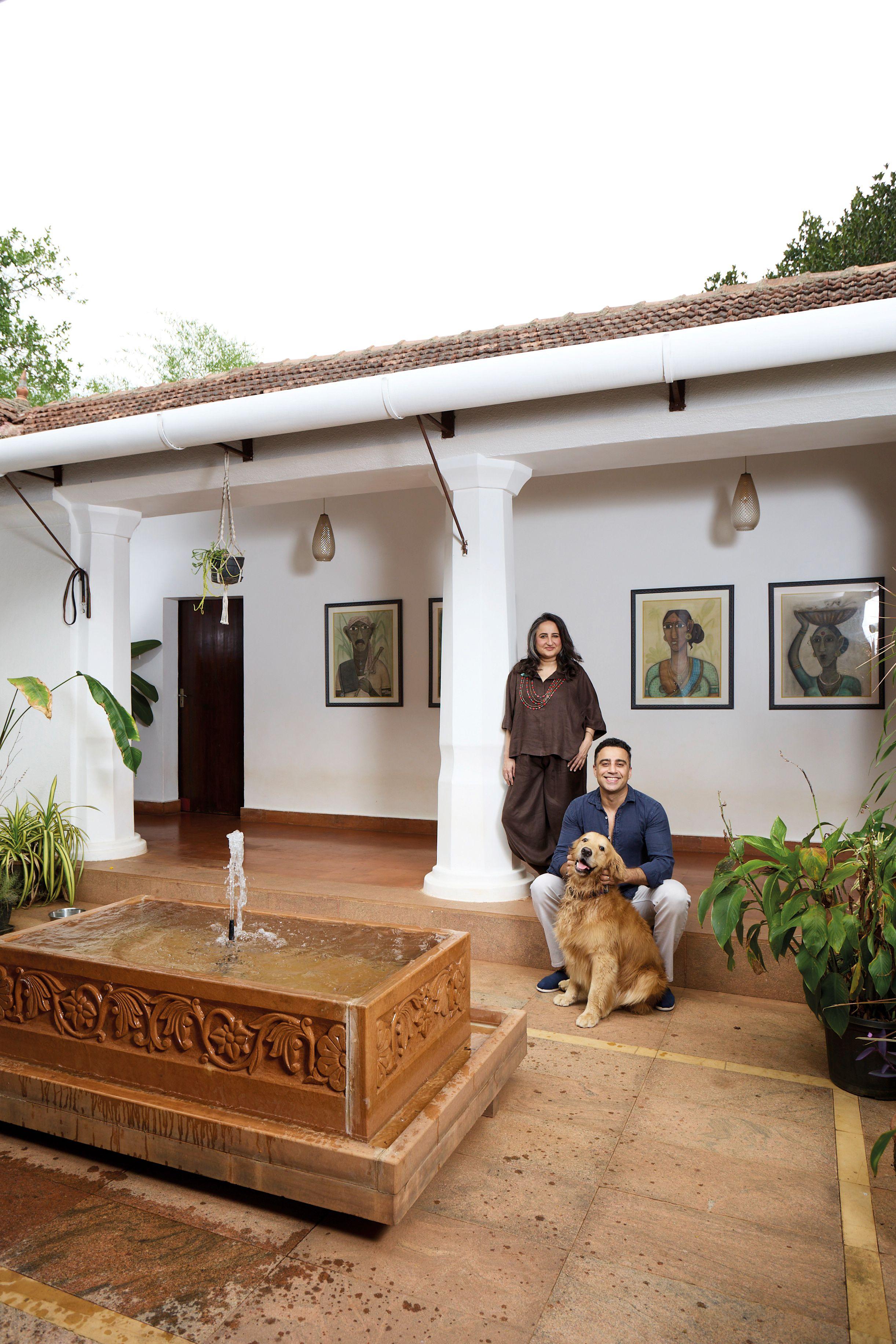
“Goa in summer reminds me of my childhood in Amritsar. We had a massive old house with verandas, a sprawling courtyard, and a kitchen garden, from where we’d source all our vegetables,” says Varun Nagpal, co-founder of Vianaar Homes, a luxury real estate and lifestyle brand he established in Goa with his sister Naina.
At one glance, Varun’s recollection of his childhood home could very well be describing his current villa. Meanwhile, Naina recalls the guava and jamun trees they had and how they’d fight over the ripe fruits. “We were always outdoors, doing something or the other. Varun, do you remember the mark from falling from the fig tree near the driveway?” she says, turning towards her sibling, five-and-a-half years younger to her.
With Varun as an engineer and Naina an architect, they make the perfect team — the 20-year success of their company is a testament to this fact. They’re now focussed on building “second homes” based on memories of their first, albeit with a quintessential Goan zing. Ensconced in these villas inspired by Indo-Portuguese architecture throbs the heart of their Amritsar home.
“We didn’t realise that those everyday moments would later become ‘luxury’ experiences. We started slowly… Once we moved to Delhi, we started craving for space, that proximity to nature,” adds Naina.
BRINGING THE OUTDOORS IN
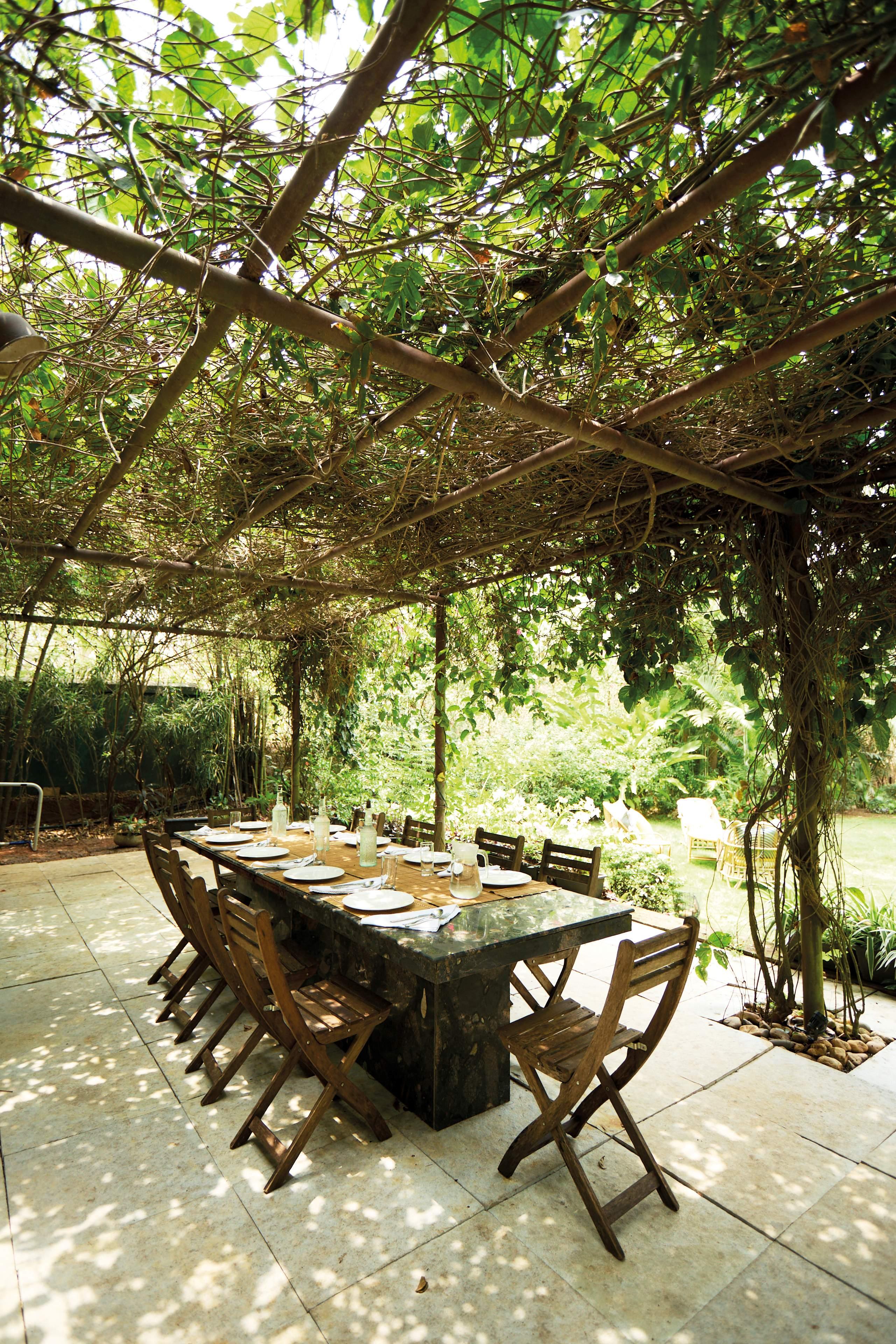
The Nagpals are adept at turning the simple joys of life, once easily available, into luxury experiences that are deeply rooted in nature. These homes, they say, are conceived not as objects placed within an environment but as extensions of it. The idea is simple: architecture must recede, so life can come forward. “Every space is designed to invite the outdoors in — large openings, sliding and folding glass doors, and carefully positioned windows create a seamless dialogue between the interior and the landscape,” Naina explains. “Many of our home spaces dissolve into the garden, allowing light, air, and greenery to become part of the experience. Water, too, plays an integral role. They cool the microclimate, but more importantly, they anchor the emotional rhythm of the home.”
“Materiality is equally intentional. We lean towards finishes that age gracefully — handcrafted terrazzo tiles, Indian Patent Stone, lime-plastered walls, and micro-cement surfaces. These are not just aesthetic choices; they are tactile, breathable, and inherently suited to the Goan climate.” In these villas, life unfolds at an unhurried pace, taking you back to the days of yore. In fact, the Vianaar design philosophy is based on principles of slow living.
“We design not just for space, but for tempo. These homes are meant to slow you down — to create moments of pause, reflection, and quiet connection. There are gentle pauses built into the architecture — reading nooks along stair landings, shaded corners that invite solitude, gardens that are less curated and more discovered. These spaces don’t demand attention but quietly offer themselves,” she adds.
This is where the Goan spirit of susegad comes alive — not as a concept, but as a lived experience.
HOME, SECOND HOME
Today, it’s not about building that one farmhouse you visit perhaps once a year for a family vacation — second homes are cold, hard investment decisions that come hand-in-hand with high capital appreciation.
Buoyed by the post-pandemic normalisation of remote working, and the rising disposable incomes among affluent professionals — combined with a shift towards a more wellness-focussed lifestyle — the second-home segment has become a significant growth driver for the Indian real estate market. In fact, a survey by India Sotheby’s International Realty in 2025 found that 55 per cent of high-net-worth individuals now prioritise second homes.
In their updated avatar, second homes are also generating consistent rental income for owners. And Goa, with its plush gated communities and villas, especially in locations like Nerul, Assagao, and Siolim, has emerged as India’s largest organised second-home market. “People in India love investing in real estate, and traditionally, a lot of them have a second or third house, somewhere or the other. They are now realising that they may be getting a 2 per cent yield on their Gurgaon apartment, but they can sell that place, buy a villa in Goa with a private pool, and get a 45 per cent yield! So they’re moving their investments from cities to Goa, where the capital appreciation is very high, you get to use the house, and also get rental income!” says Varun.
There’s another draw to Vianaar Homes: they ensure the romance of living in a quaint Goan villa is not dented by the banality of daily chores, by taking away the added stress of maintaining your second home. "Folks today are happy to pay a premium as long as they get peace of mind. It’s become essential. Nobody wants to come to their second home to spend half the day cleaning the property!” says Naina. “While most think, ‘Ghar kharidenge,’ they begin to use the place only after cleaning and maintaining it. The thought alone makes it tedious.” “When we say we’ll maintain your properties for you, we mean you don’t have to check whether the AC is working, or whether the house is clean. You can simply walk into your home, leaving all your worries outside the door.”
Varun reveals they never intended to take on maintenance, having started only with some basic services. It was when people began to question them about how the homes would be managed did they realise it was a genuine concern. “People were willing to pay if their needs were met… In a place like Goa, where there’s heavy monsoons, you need to air the home. So, while you’re there, the staff take care of you, and while you’re away, they take care of your home,” he elaborates on one of their USPs.
Soon enough, the siblings introduced hospitality services in their ambit with short-term rentals, given how most properties typically lay vacant, and post-pandemic, tourists were moving away from conventional hotels, opting for alternative accommodations instead. “Since we had already built this ecosystem, it was conducive to start this business,” says Varun.
With this model, not only do they reap the benefits of capital appreciation and a rental yield, they also get to use the properties at their convenience. “It kind of checks all the boxes, doesn’t it?” he quips.
EXTENDING THEIR REACH
After working on various properties in North Goa, Varun and Naina now have their sights set on the South, with a project in Canacona, with “roughly 50 villas and a clubhouse, where families can spend the day doing yoga, or playing padel or pickleball, or hit the gym. That’s the next big thing.” They also have an upcoming project in Kasauli, in collaboration with a few close friends, and another in Sri Lanka.
“I feel it will be on everyone’s radar soon. Sri Lanka is extremely tourist-friendly and attracts a lot of Europeans. In some way, it reminds me of Assagao from the early 2000s,” he trails off.
PHOTOGRAPHS: RYAN MARTIS
CREATIVE DIRECTION & STYLING: ANUSHREE SARDESAI
HAIR & MAKEUP FOR NAINA: RECINDA MARTIS
This story was featured in the Vol 1. Issue 8 of HELLO! India. For more exclusive stories, subscribe to the magazine here.