- Home
- Fashion
HELLO! India Exclusive: The allure and artistry of Anju Modi
This iconic couturier has dedicated her career to cultural preservation. HELLO! looks back at her 40-year journey to see how she breathes new life into India’s artistic heritage
offline
Share this:
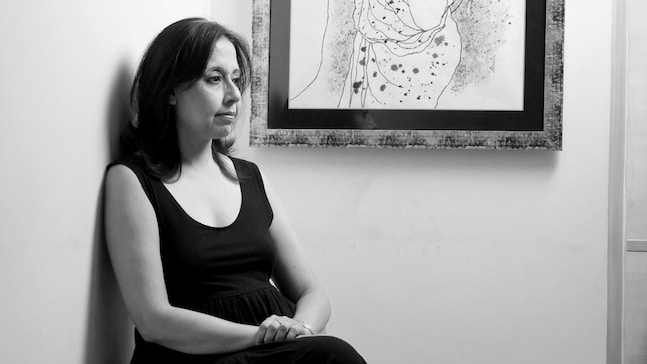
In a quiet corner of Maharani Bagh, an upscale neighbourhood in New Delhi, lies an artistic atelier, flanked by large terracotta urns, a unique tiger installation, and lush creepers. The entrance appears intentionally obscure, hidden from a visitor’s reckoning unless they are familiar with the aesthetics of the name behind it: couturier Anju Modi.
“It’s called The Vault, an archive where I collect my precious belongings — old designs, images of costumes I created for films, books on heritage crafts, titles on iconic fashion artists, and of course, new creations,” Anju describes her new studio as she greets us.
As we notice the swatches of framed fabrics on the textured wall behind her, she explains, “A connoisseur is welcome to experience them languidly. The idea is to preserve beautiful things and pass them on to the next generation.” Intricately adorned with surface embellishments, the silk, khadi, velvet, and brocade miniature canvases reflect the vocabulary of this aesthete — there’s zardozi and kashidakari, applique and crewel work, as well as Sanganeri and gold foil print, to name a few. In a nutshell, it’s a compact but considered representation of the varied weaves and crafts embedded in Anju’s vast repertoire, which this psychology graduate built over the past four decades. Her earnest devotion to authentic Indian artistry has us enthralled. This, she believes, has been the bedrock of our civilisational heritage. Be it our temple architecture, weaves, tribal art, or myriad embroidery techniques, the precision invested by craftspeople has amazed the world and brought pride to us.
“I’m often asked about how I make my designs relevant to contemporary taste. I can’t explain it, but how can something foundationally timeless become irrelevant? Or why would one toy with its personality to suit fleeting trends?” Anju is befuddled.
A deconstruction of India’s cultural history — both documented and otherwise — reveals a treasure trove of centuries-old architectural, textile, music, and craft marvels. “Even before the word ‘fashion’ was coined, our ancestors were creating wonders. While the world is waking up to it now, it’s the best iconography that an ardent craft enthusiast can fall back on. That is what I established in my designs — the Indian element derived from our extensive legacy of art and craft,” explains Anju, defining the foundational soul of her creations that’s steeped in sustainability, empathy, and mindfulness.
LESSONS FROM WANDERLUST
Anju has travelled the length and breadth of India to explore the country’s vast craft legacy. In fact, whenever there’s a lull in the artist’s otherwise creative mind, she packs her bags with sketchpads and books — our couturier is a voracious reader — and wanders off to rejuvenate in nature.
“By following this process for years, I discovered the arts regional to a place,” she shares. These sojourns took her to craft clusters in Venkatgiri, Narayanpet, Coimbatore, Kanchipuram, Balaramapuram, Varanasi, Kutch, Mandvi, and Bhuj, among other small towns and cities. There, she interacted closely with weavers, discussing novel colour and pattern combinations, eventually convincing them to weave sarees for her. With a small collection ready, Anju, in the late ’80s, began selling from a store in Bengaluru.
DESTINATION DELHI
In the years that followed her then relocation to the south, Anju returned to Delhi as the city’s nascent fashion scene found firmer ground with pioneer Rohit Khosla and NIFT graduates like Rohit Bal, JJ Valaya, and Ritu Beri making news. “I rented a barsaati and worked with two tailors. We started with gorgeous handembroidered sarees and gradually experimented with lehenga skirts and anarkalis,” she recalls the skirts with hand-block prints that went on to become bestsellers.
“Villagers across Rajasthan, Madhya Pradesh, and Andhra Pradesh translate the prettiest motifs on fabric using wooden blocks. When we created skirts with Sanganeri, Bagh, and Pedana fabrics, they were statement prêt long before ready-towear had attained a structure in the parlance of fashion.” She soon launched Anjuman, her studio in Friends Colony East. Although it has shut shop since, it remains a highlight of her career simply because it became the one-stop destination in the noughties for fashionistas from across India.
THE CALL OF THE CELLULOID
With her heart and mind entrenched in India’s regal, folk, and regional craft traditions, it was only a matter of time that Anju’s brilliant work found expression on the larger-than-life canvas of cinema. While the transition was serendipitous, the opportunity came knocking when modish celebrities and sartorialists noticed her exemplary creations.
“I put immense thought into the narrative and choreography of my fashion shows, one of which Sonam Kapoor attended. She had starred in Sanjay Leela Bhansali’s Saawariya and knew he was scouting for a costume designer for Goliyon ki Raasleela Ram-Leela. So, she told Sanjay to check my work out. The universe has always blessed me with kind people!” Though her initial ideas matched Sanjay’s vision of interpreting William Shakespeare’s Romeo & Juliet into a romantic tragedy set in the hinterlands of Gujarat, Anju did extensive legwork before executing the prestigious project.
“I took Sanjay to The Calico Museum of Textiles in Ahmedabad, where he became spellbound by the vibrancy of Gujarati tribal crafts. He gave me a free hand to incorporate rustic details that would render an authentic aura to the film.” However, while the designer infused Kutchi and Bhujodi details into the costumes, certain elements in Deepika Padukone and Ranveer Singh’s ensembles highlight how seamlessly the old was blended with the new.
“We designed layered tie-dye skirts for Deepika’s character that danced with her rebelliously romantic nature. For Ranveer’s carefree persona in the movie, we paired kedia kurtas, turbans, and prestitched dhotis with smart coats, and multi-hued belts.” Her next Bhansali assignment, Bajirao Mastani, reflected Anju’s attention to minute details just as much. When she didn’t find the perfect headgear for Ranveer in the movie, she sourced handloom khadi and silks, and dyed them in jewel tones before constructing the perfect Maratha turban for the male protagonist in the historical epic. “For Priyanka Chopra’s Kashibai, we researched the drape styles of the nauvari saree and also read up on Peshwa dhotis.”
BAYING FOR BEAUTY
Born and brought up in the plateaued town of Ranchi, Anju’s knowledge of the crafts came from her natural surroundings and people she grew up with. Those early lessons form the crux of her approach to design. “My ancestors were fiercely patriotic; some were even involved in the National Movement,” the designer shares with pride. “My mother worked with the tribals of Jharkhand to empower them. That instilled a sense of empathy in us. We painted, embroidered, and sang lovely folk songs. Our proclivity towards the arts wasn’t through any institution — the appreciation for fine things and nuances was imbibed.”
These sensibilities form an intrinsic part of the person Anju is. “Beauty and elegance, in any form, must be relished and appreciated. For instance, Georgio Armani’s sensational minimalism… I wouldn’t create those clothes, and he wouldn’t follow my style. But I can never deny how outstanding his aesthetics are!” Then there’s bountiful nature, her perennial source of inspiration. Like the breathtaking amaltas tree in full bloom, under which Anju could spend an entire April afternoon doodling in her sketch book...
This story was featured in the Vol 1. Issue 10 of HELLO! India. For more exclusive stories, subscribe to the magazine here.
Advertisement