- Home
- Food
Exploring the spirituality of Prasadam and its timeless place in Indian cuisine
In the present world influenced by social media trends, more and more are finding solace in India's ancient practices of Prasadam. Not only does it feed one's gut, it is also believed to heal one spiritually; which is now being observed amongst the general public as well as celebrities
offline
Share this:
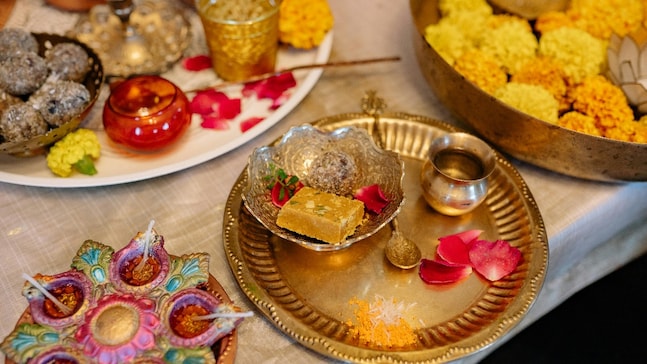
In the present world influenced by social media trends, more and more are finding solace in India's ancient practices of Prasadam. Not only does it feed one's gut, it is also believed to heal one spiritually; which is now being observed amongst the general public as well as celebrities. For years and years, Prasadam has influenced India's culinary landscape by blending tradition, spirituality, devotion, and mindfulness. Prasadam is offered to holy figurines, which is believed to carry their divine blessings, enhancing its status from simply being prasad or food. This marks a fusion of food with spirituality and devotion, making it a sacred practice in India.
(Also Read: Rediscovering India's long-forgotten desserts, from Gujarat to Karnataka)
Prasadam: More than a meal
The tradition of Prasadam is deeply rooted in three religions: Hinduism, Jainism and Sikhism. The word prasadam is derived from the Sanskrit word 'prasada', which means grace or favour, which refers to the food which is first offered to the deity and then subsequently offered to the devotees. These religions believe that once food is offered to the divine, it is blessed and is then imbued with positive energy, which heals the ones having it.
How Ayurveda aligns with Prasadam
If we consider the alignment of Ayurveda with Prasadam, the spiritual food is essentially Sattvic food which is light and spiritually energising to foster clarity in one's mind and actions. It focuses on balanced ingredients and making the best use of seasonal produce. Prasadam is often produced without onion and garlic as they fall under the Ayurvedic categories of Rajasic and Tamasic foods which are believed to hinder celibacy and meditation. Below are some of the most famous Prasadams across India, which are a must-try when visiting these states:
1. Tirupati Laddu at Andhra Pradesh's Tirumala Temple
The Tirupati Laddu has been India's most revered Prasadam of all time. It consists of gram flour, ghee, sugar, nuts and dry fruits and cardamom. In Ayurveda, it is believed to stimulate the senses
2. Mahaprasad at Odisha's Jagannath Temple
It has been cooked in clay pots over a wood fire for a prolonged time and includes rice, dal and vegetables to promote gut health. This slow process of cooking the Mahaprasad preserves the nourishing element of the nutrients put in it and enhances digestion aligning with the Ayurvedic principles.
3. The Panchamrit at Jammu and Kashmir's Vaishno Devi
Panchamrit, a liquid form of sacred prasadam, is made with milk to aid calmness; honey to enhance immunity, ghee for digestion, curd for gut health, and sugar for energy restoration. It is ideal once one reaches Vaishno Devi after trekking their way there. Panchamrit is served as prasad in various other Hindu temples as well with a few enhancements. At the Palani Dhandayuthapani Temple in Tamil Nadu, the ingredients of Panchamrit get a South Indian touch which include banana, ghee, honey, jaggery, and cardamom.
4. Kesar-Pista Milk at Amritsar's Golden Temple
Kesar Pista milk is pistachio-infused milk-based drink served with saffron. It is believed to cool down the body, boost energy levels, and strengthen the immunity levels. According to Ayurveda, saffron is known to improve mood and has powerful antioxidant properties.
The sanctity of food
Ayurvedic and Prasadam traditions have both influenced the following attentive practices:
Cooking with passion: Food that is prepared with thankfulness and serenity has more energy and is easier to digest.
Eating with your hands: It is believed to activate digestive enzymes, therefore improving the body-mind connection. Another principle is chewing slowly, which enhances the absorption process, aiding digestion and making the body aware of the food's energy.
Gratitude: Every meal can be viewed as an offering to the divinity inside oneself, much like Prasadam.
In the present fast-paced world, Prasadam and Ayurveda make a very strong point that food is not only to sustain oneself but also to nourish, heal, and as a sign of devotion and gratitude all at the same time.
(Also Read: India’s culinary landscape has never shone brighter)
Text by Aliza Noor
Edited by Dayle Pereira-Alemao
Advertisement