- Home
- Lifestyle
The most underrated architectural styles you probably didn't even know were sitting in your room
These underrated architectural styles don’t demand attention with grandeur or scale; instead, they whisper stories of a different time, purpose, and way of living
offline
Share this:
We live in an age that rushes to name everything. The moment a space is encountered, it is swiftly categorised - minimal, maximal, eclectic, neo-futuristic, as though language were a net capable of capturing emotion. But the truth is quieter and far more powerful: the spaces that move us most are the ones that escape naming entirely. They compel us into silence before they offer an explanation. They ask us to feel before we analyse. They leave an imprint not on our eyes, but somewhere deeper - in breath, memory, instinct.
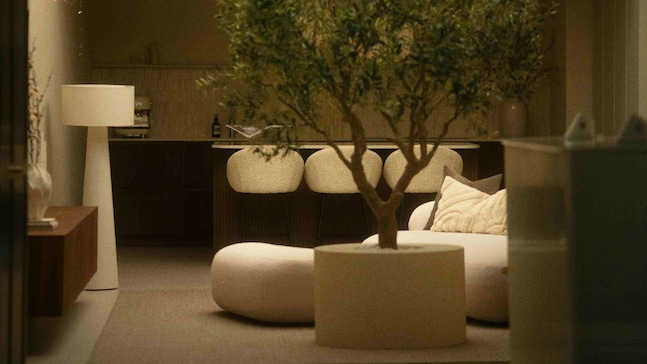
It is within this shift from classification to consciousness that I see the future of design unfolding. The styles that will define the coming years are not “new.” They are already around us, shaping our emotions in subtle ways. What is new is our readiness to recognise them. I call the first expression “Nothing That Feels Like Everything.” It is the design of quiet strength, an architecture that does not perform for attention but creates a profound sense of belonging. There is no spectacle here, no room trying too hard. Light is allowed to fall with intention. Textures speak in hushed tones. Colours are chosen for their ability to calm a restless mind rather than excite it. You may not immediately understand why the space feels complete, but you will sense it - a quiet exhale, a loosening in your shoulders, the recognition of home.
The next direction is deeply personal, almost autobiographical. I call it “Be Yourself and Be Everywhere.” At a time when global aesthetics feel increasingly uniform, homes are rediscovering identity. Not the curated type meant for display, but the honest, layered identity shaped by lived experience. A grandmother’s wooden chest sitting beside a contemporary sculpture. A fragment of travel remembered through material or colour. Photographs, heirlooms and stories folded into the everyday. This is luxury redefined: not the price of an object, but the truth it carries.
Then there is the design language born from curiosity - “Wander and Wonder.” This is architecture that unfolds gently, like turning the pages of a book you never want to finish. Good design reveals itself at once; great design reveals itself over time. A corridor that opens into an unexpected pocket of light. A staircase that offers a moment of pause. Corners that invite you closer. The journey becomes as intentional as the destination, encouraging movement, exploration and childlike delight. It is beauty encountered through discovery.
One of my most cherished directions is “Barefoot and Starstruck.” It is the architecture of grounding and upliftment - elemental, tactile, human. Spaces that invite bare feet to meet cool stone or warm wood. Walls finished in natural lime that carry the honesty of the hand. Skylights that remind us of our smallness beneath a vast, unchanging sky. It is a poetic balance: rooted in earth, reaching for the stars. Architecture that reminds us of what we are made of.
(Also Read: Invite Pantone Colour of the Year, Cloud Dancer, for that minimalistic touch to your home)
And then comes “Ephemeral Eternity.” This is the design that honours the fleeting and the forever at once. The late-afternoon shadows moving across a textured wall. A curtain participating in its own dance each time the wind visits. Flowers that will fade tomorrow yet turn this moment into memory. These spaces do not chase permanence, yet they hold permanence in the way they make us feel. They teach us that longevity is not only about durability; it is also about emotional resonance.
Across these emerging expressions, a quiet revolution is underway. We are returning to architecture that does not seek validation. We are choosing spaces that prioritise belonging over branding. We are learning to trust the wisdom of instinct, a way of knowing that precedes language.
Awe, wonder, beauty, these are not luxuries. They are necessities. They restore our sense of self, reconnect us with something essential, and remind us why we build in the first place. The future of design will not be measured by how neatly it fits into a category. It will be measured by how deeply it can be experienced, how gently it can shift a state of mind, how silently it can stay with us long after we leave.
Perhaps the most extraordinary spaces of tomorrow will be the ones that resist captions entirely, the ones that live in our breath, our bones, our soft and private recollections. Because the greatest design style of all is the one that reminds us, unmistakably and beautifully, that we are alive.
(Also Read: HELLO! Exclusive: The future of design)
Text by Husna Rahaman, Architect & Founder, Fulcrum Studio
Advertisement