- Home
- Celebrities
HELLO! India Exclusive: How Nicholas Galitzine embraced "vulnerability, sensitivity and some pretty sweet muscles" as He-Man
He-Man may have previously represented a very traditional concept of alpha masculinity but Nicholas Galitzine’s He-Man argues that vulnerability and masculinity are not opposing forces...they’re partners, which HELLO! India delves into with exclusive thoughts from the actor
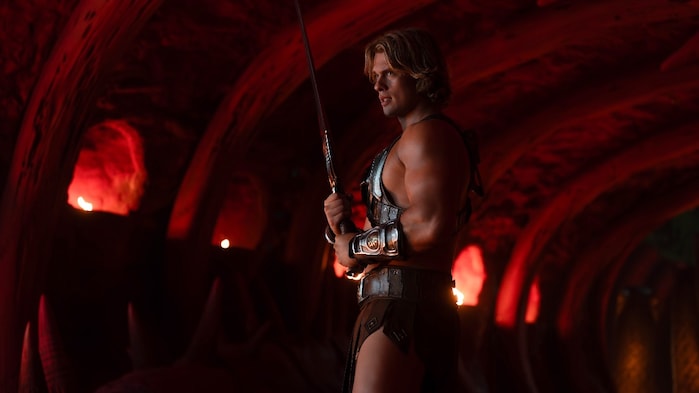
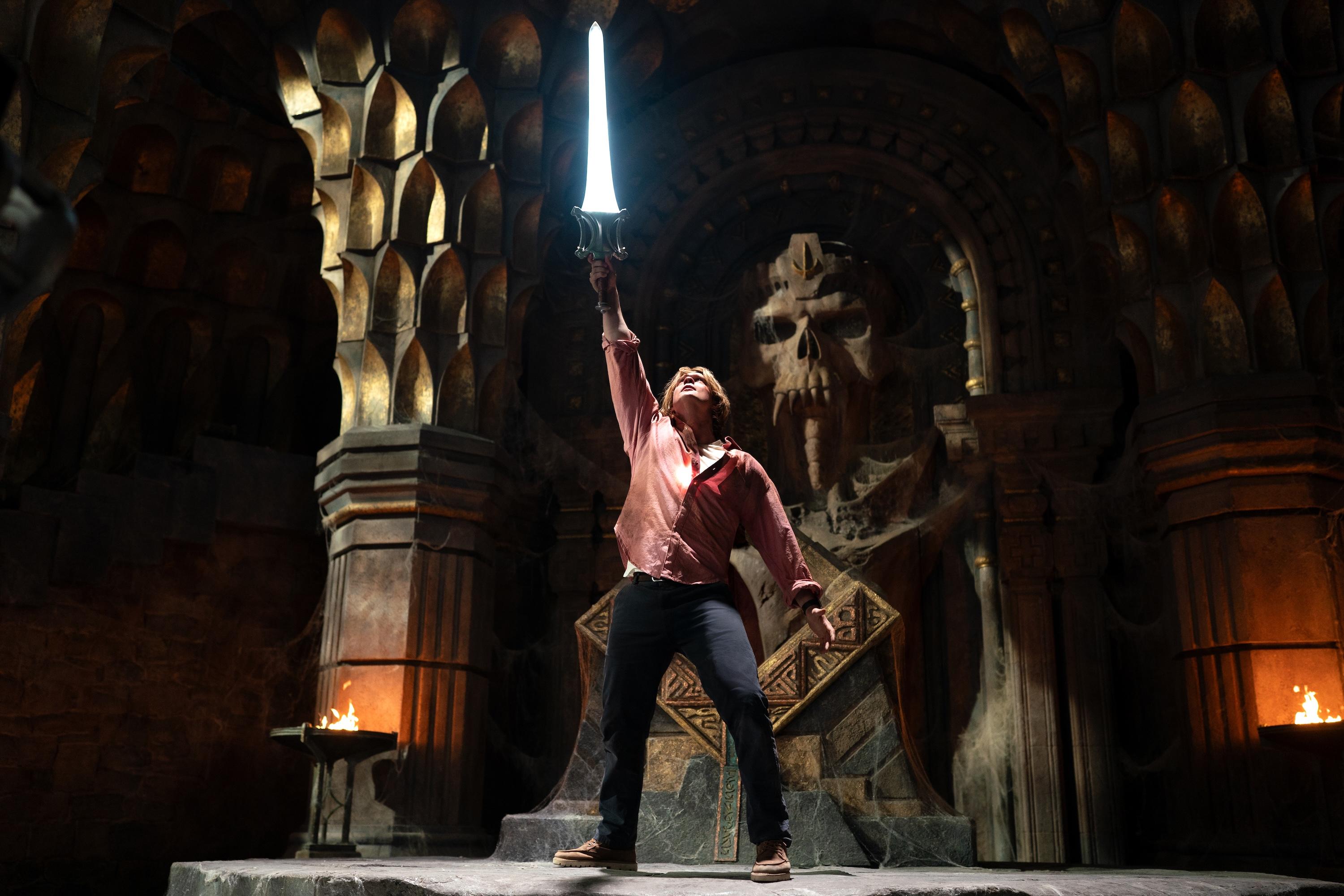
He-Man has always represented a very traditional concept of alpha masculinity. He was the action figure with broad shoulders, a sharp sword and a battle cry that announced dominance. One look at him and it was evident that he was powerful, heroic, and physically imposing enough to bash the baddies up; as seen in animated series, comic books, and Dolph Lundgren’s 1987 film. The new live-action 2026 Masters of the Universe film however, arrives at a fascinating cultural moment where there is discourse on what masculinity looks like presently, and whether the old rules ever made much sense in the first place.
Nicholas Galitzine’s He-Man has all the muscles and still transforms into the most powerful man in Eternia. But what makes this version stand out is that the film isn’t interested in presenting strength as a purely physical attribute. Instead, it argues that vulnerability and masculinity are not opposing forces...they’re partners. Speaking to HELLO! India about what drew him to the role, Galitzine pointed to one of the film’s central ideas. “It just kind of shows actually, like we all have multitudes within us." The actor's simple statement gets to the heart of why this version of He-Man feels surprisingly contemporary. For generations, masculinity has been commodified as a rigid metric. Men were expected to be stoic, emotionally restrained and perpetually in control. Vulnerability was framed as weakness and sensitivity; as something to be hidden.
(Also Read: Ahaan Panday says his latest milestone feels “surreal”)
Increasingly, pop culture—and particularly superhero storytelling—is challenging that notion. Galitzine himself highlighted how the film plays with traditional gender expectations. When discussing Adam and Teela, played by Camila Mendes, he noted that Teela possesses qualities often coded as masculine. “She’s very stoic in a lot of ways,” he said. Yet the film doesn’t reward either character for remaining trapped within those singular identities. “Being so singular in these ways kind of gets them nowhere,” he explained. “You have to embrace all sides of yourself. You have to embrace vulnerability and sensitivity, as well as having some pretty sweet muscles, in order to save the day.”
He-Man is joining a growing club. The modern superhero has become significantly more emotional than his predecessors and audiences are adoring him for it. Take Spider-Man. For decades, Peter Parker has arguably been one of the most emotionally transparent superheroes in popular culture. He worries constantly. He second-guesses himself. He grieves openly. He makes mistakes. Beneath the suit is a young man perpetually trying to figure things out. His vulnerability isn’t a side note; it’s the very reason people connect with him.
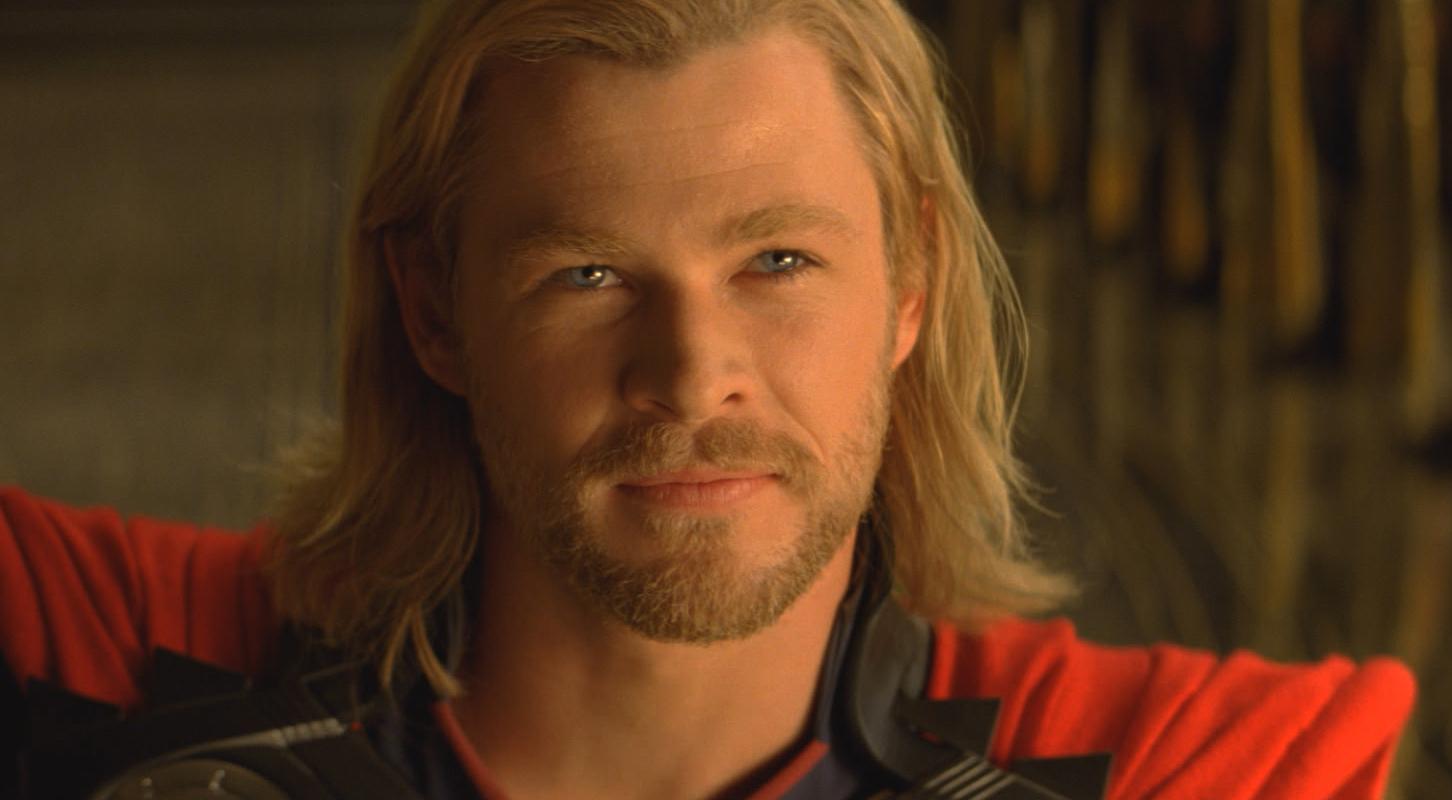
Then there’s Thor. When the character first appeared in the Marvel Cinematic Universe, he embodied a more traditional heroic archetype—strong, arrogant and seemingly invincible. Yet some of his most memorable moments emerged when the franchise allowed him to fail. The grief of losing family members, the guilt of not stopping Thanos and his struggles with depression transformed him from a mythological god into someone recognisably human.
The same can be said of Bruce Banner. Historically, the Hulk was believed to be an embodiment of unchecked masculine rage. But over time, stories began exploring the emotional complexity underneath that anger. The monster was never the point; it was the man wrestling with his emotions who was. Even Batman—a character synonymous with emotional repression—has evolved. Recent interpretations have moved away from portraying him as an untouchable vigilante and instead examined the loneliness, trauma and vulnerability that drive his mission. The cape remains intimidating, but audiences are increasingly interested in the person beneath it.
Perhaps the most striking example is Superman. For years, popular culture struggled with the idea of making the Man of Steel emotionally expressive. Strength was his defining trait. Yet contemporary versions of the character have leaned into kindness, compassion and empathy as forms of strength rather than weaknesses. The result has been a Superman who feels more relevant than ever.
What’s interesting is that these shifts haven’t made superheroes less heroic. If anything, they’ve made them more compelling. The age-old superhero fantasy was built around invulnerability. The new one is built around self-awareness. And that’s where He-Man’s evolution becomes so significant. Because no superhero seemed more firmly rooted in old-school masculinity than He-Man. He was literally designed as a fantasy of physical power. If any character could have resisted cultural change, it was him.

Instead, Masters of the Universe embraces it. The film doesn’t mock masculinity, nor does it seek to dismantle it. Rather, it expands the definition. It suggests that bravery isn’t just charging into battle. It’s admitting fear. Strength isn’t just lifting a sword; it’s carrying emotional truth. Confidence isn’t the absence of vulnerability. It’s the willingness to live alongside it. Perhaps that’s why Galitzine’s observation about “multitudes” feels so timely. Because masculinity today isn’t necessarily moving away from traditional ideals. It’s becoming broad enough to accommodate more of them. A man can be sensitive and strong. He can be nurturing and brave. He can seek reassurance and still lead. He can have “pretty sweet muscles” and complicated feelings. And if even He-Man—the patron saint of oversized biceps and heroic declarations—can embrace that idea, perhaps the rest of us can too. After all, real power has never been about pretending to be invincible, it’s about having the courage to be human.
Edited by Dayle Pereira-Alemao
(Also Read: Jisoo and Seo In-guk on romance in the age of AI)
Continue Reading