- Home
- Fashion
Where Indian menswear stood at FDCI India Men’s Weekend 2026
Staged over two days in Jaipur, the showcase featured 23 designers whose collections examined the prowess of craft, tailoring, material intelligence and excess, offering a snapshot of Indian menswear that proved impossible to ignore
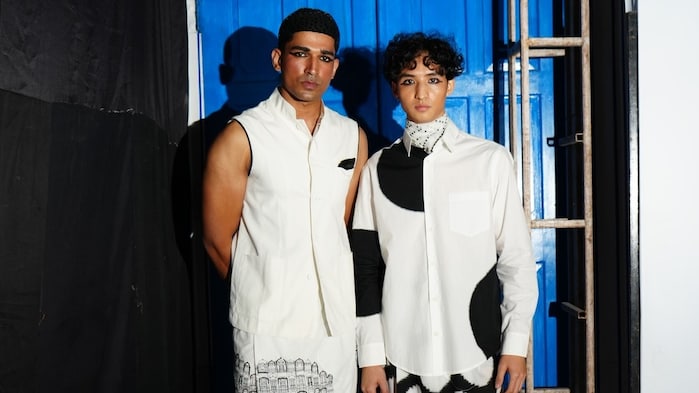

Going to a tightly packed weekend of fashion shows can feel like sensory overload: look after look, idea after idea, until distinctions begin to blur. Much of what you see is competent—some of it predictable, some of it trying too hard to be memorable. And then, gradually, something shifts. You start noticing how a jacket sits once the model stops posing, how fabric drags or snaps back when someone turns, how embroidery weighs down a shoulder or sharpens a line. By the time you’ve sat through a few shows, you’re no longer watching for novelty—you’re watching to see which clothes still make sense when the theatrics fall away.
That recalibration happened over two compressed days in Jaipur, at FDCI India Men’s Weekend. Twenty-three shows is not a generous format. The repetition does the editing for you. Ideas echo, weak ones thin out, and the stronger ones begin to insist. Being lodged at Diggi Palace only heightened that scrutiny: the clothes didn’t disappear once the runway lights went down. You saw them again—in corridors, in daylight, near water, in motion—and what held up once began to matter more than what landed theatrically the first time.
Rethinking the familiar
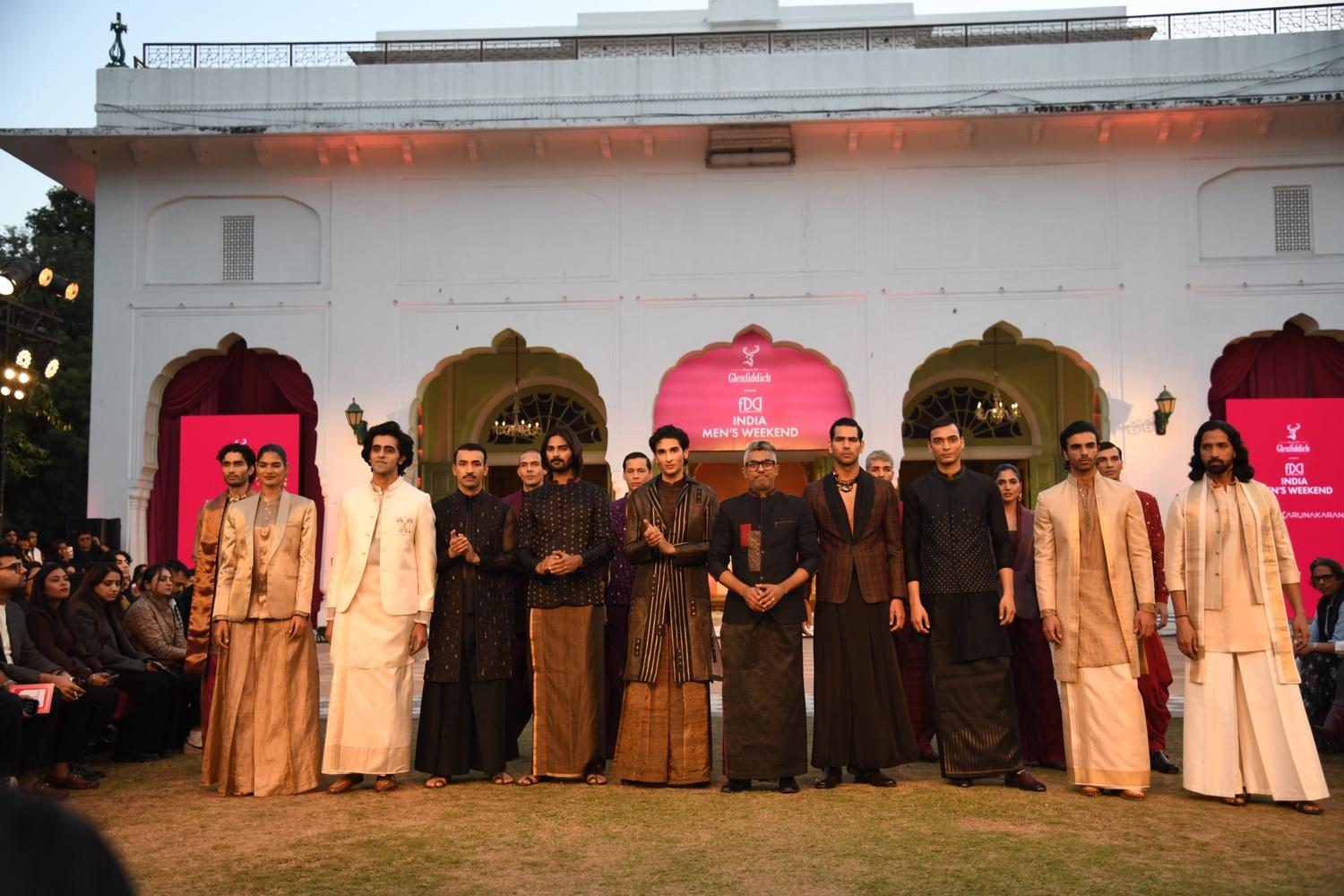
The weekend found its footing early. Vivek Karunakaran opened with featherweight indigenous silks that transformed kurtas, scrunched-up bombers and veshtis into elite objects of desire. Luxury emerged through fabric behaviour rather than flourish. From there, surfaces began to thicken.
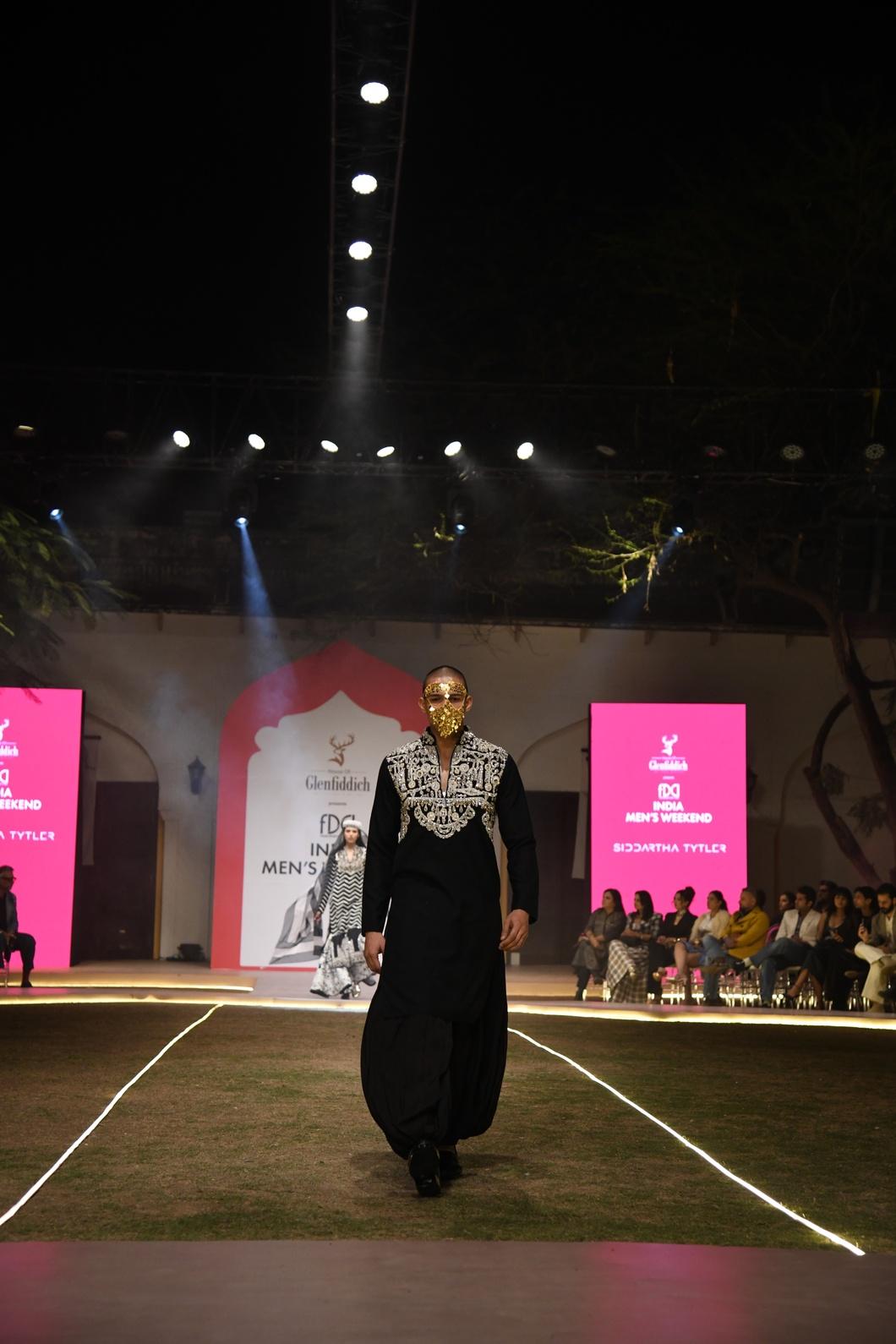
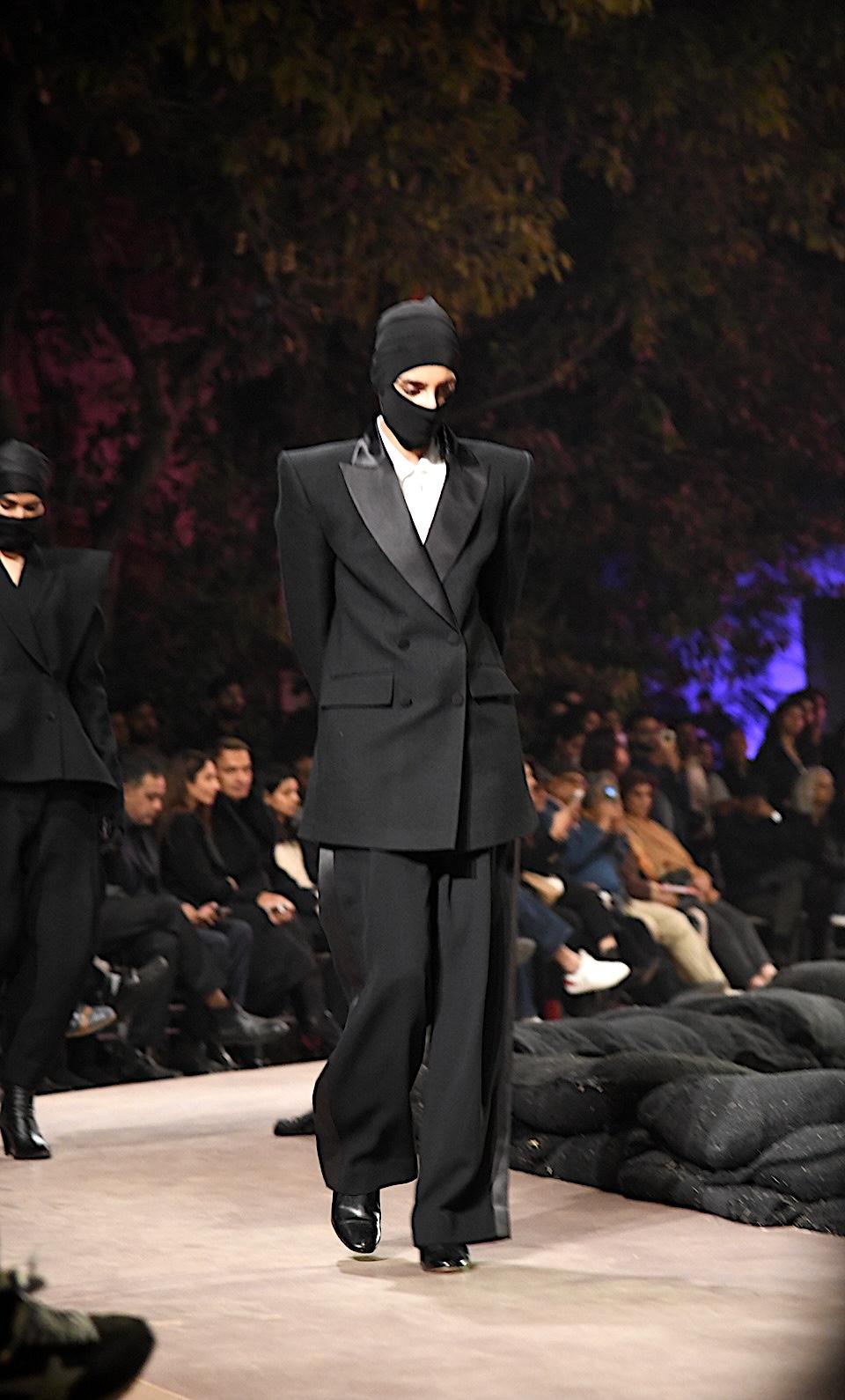
Never ever has a sehra looked so convincingly good, especially at Siddhartha Tytler, paired with cropped jackets and zippered kurtas—rendered in embroidery upon embroidery, each look building in density and excess. The moment of real clarity, however, arrived with Rajesh Pratap Singh. A really fantastic show, and the intellectual anchor of the weekend: a masterclass in how to reinvent a brand using the detritus of its own codes. Proportion shifted and then held, texture did the work, tailoring was razor-sharp, and colour appeared only when it had something to say. Nothing felt nostalgic. You could sense a designer editing himself in real time.
What remains
If that stretch established discipline, what followed tested it. TIL opened with kurtas that looked poured onto the body and twisted at the waist for a constructed effect; Antar-Agni toyed with silhouettes altogether, slashing jackets from the back and splitting shirts at the shoulders; Countrymade slowed things down with broad, straight-shouldered workwear jackets elevated through appliqué, whipstitching, patchwork, pattern and print. Here, craft revealed itself in construction—through seams, panels and fabric choices that determined how the clothes actually behaved on the body, in total obedience. But midway through the day, the pressure showed. In a few collections, the clothes leaned heavily on craft alone. Everything was impeccably made, but once you’d seen the garments a second or third time, there was little left to discover.
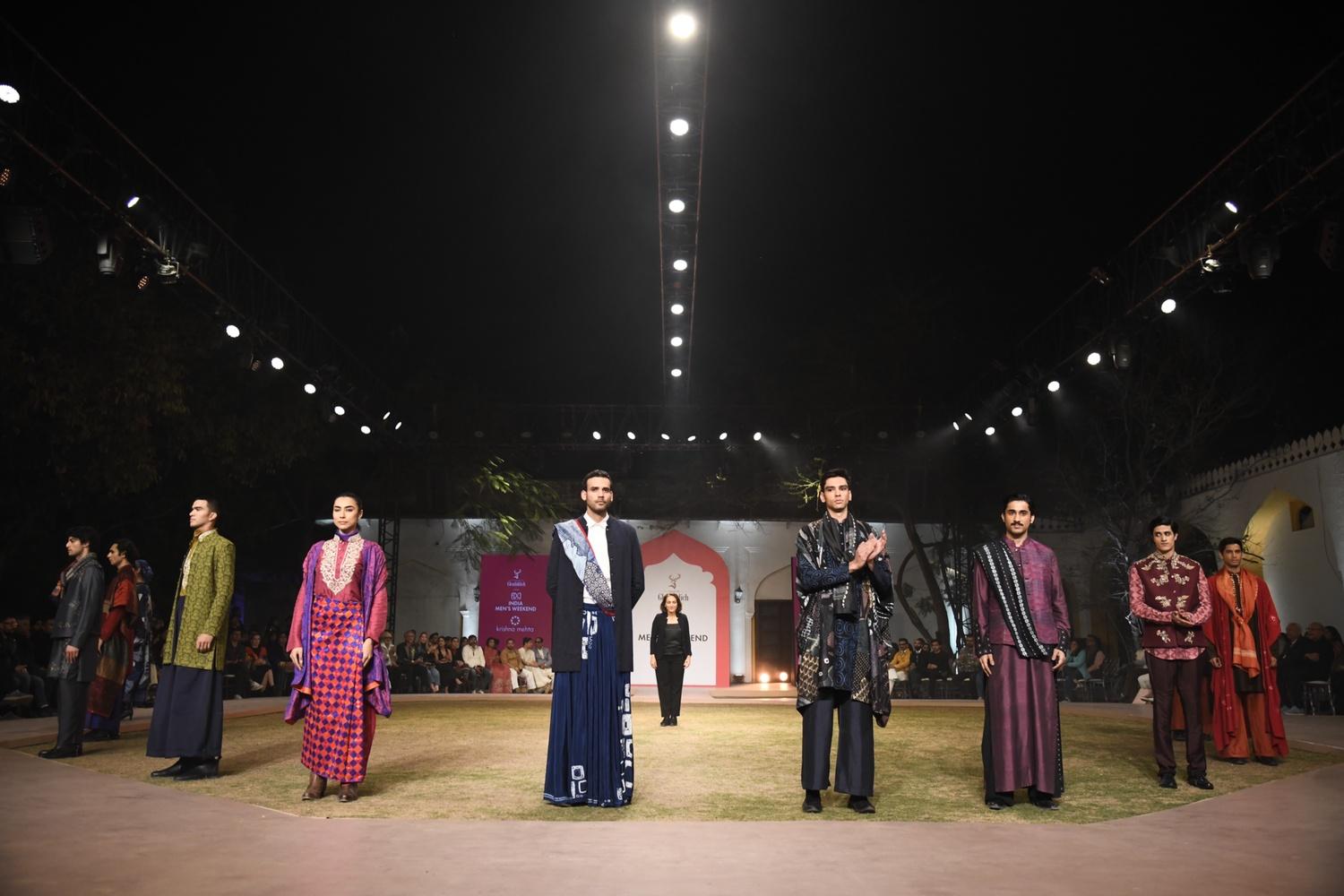
Others understood spectacle better. Sure, it’s all of the above—craft, labour, ideas—but most of all it has become entertainment. Of the blockbuster, fantasy kind. Sahil Aneja embraced that logic with faux leather and snakeskin jackets, sequined coats and dangling chains; Pawan Sachdeva collided velvet tuxedos, biker jackets and rhinestone gloves into a jazz-meets-disco-meets-cocktail fantasia; Krishna Mehta brought colour back into focus with bandhini and sheesha embroidery splashed in pink martini, indigo, moss green and raspberry. The strongest collections were the ones where the designers let their imagination go up, up and away.
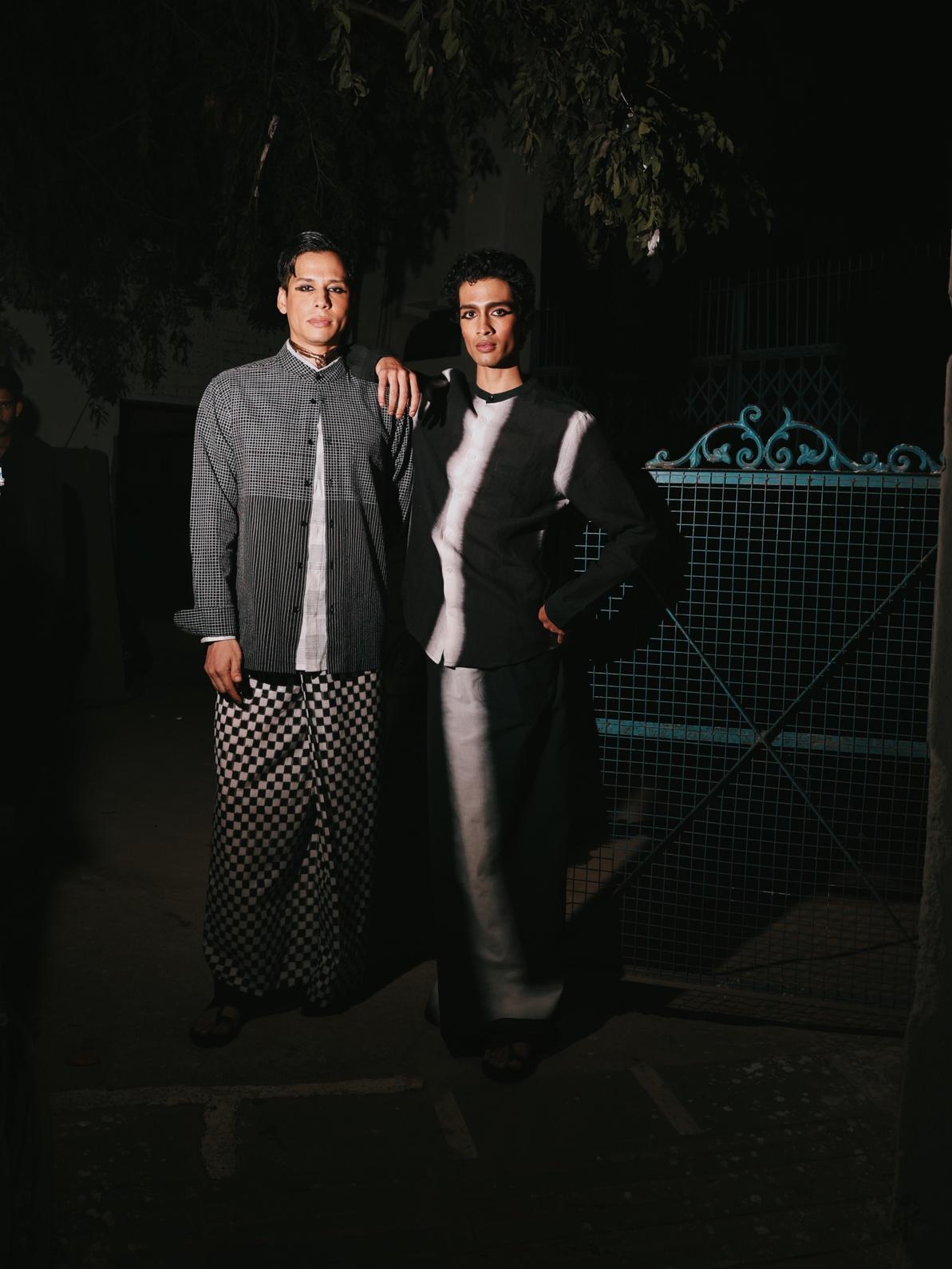
The clearest reset came with a triumphant Abraham & Thakore show. As two models emerged from a swimming pool in simple bathrobes, the provocation landed instantly. What followed was a tour de force of a collection: dhoti pants and veshtis in prints and embroidery, one pinned asymmetrically with safety pins; sequined sleeveless vests floating on the body; the monkish purity of crisp black-and-white cotton shirts; and a gold lamé suit that stopped the room. You know what menswear dressing is all about? The clothes seemed to say: think again. JJ Valaya closed the weekend on a formal note, sending out velvet blazers and gota-patti sherwanis, burnished copper angrakhas, lehengas cinched with metal belts, and turbans worn with intent.
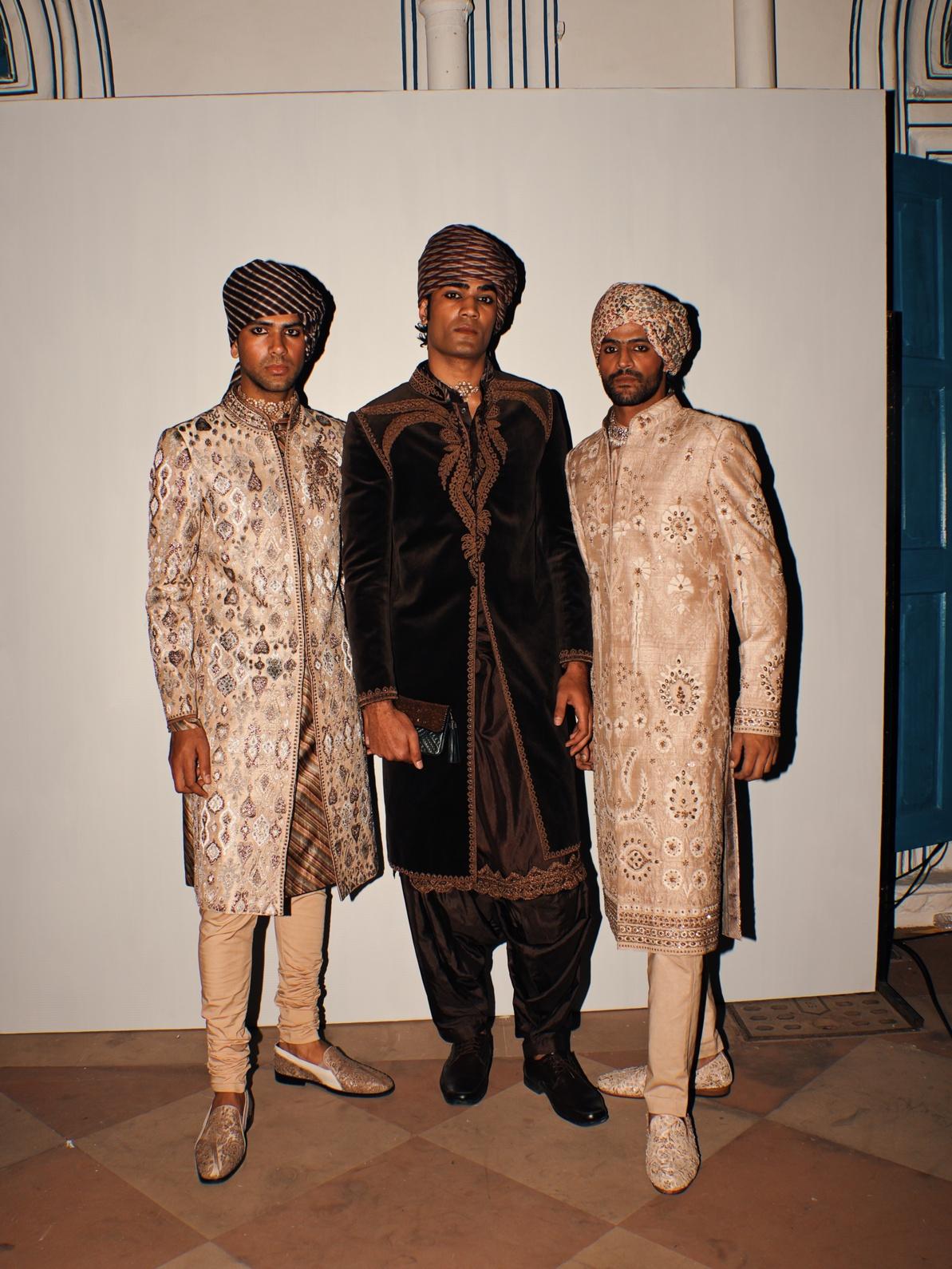
By the end, the focus had shifted. It sharpened the eye. Strip away the spectacle, and the strongest collections revealed rigour beneath excess, thought embedded in cloth, and clothes that could withstand being looked at again and again. And in menswear, right now, that feels enough.
(Also read: Hyundai India Couture Week 2025's hits and misses)