- Home
- Food
HELLO! India Exclusive: What makes Chaitanya Muppala India's very own 'Willy Wonka'
The bar has always been high for the founder of Manam Chocolate — unrestricted to the motley of just sweet, dark, and bitter. In this heart-to-heart, he shares why ‘bean-to-bar’ doesn’t suffice in the craft chocolate cycle
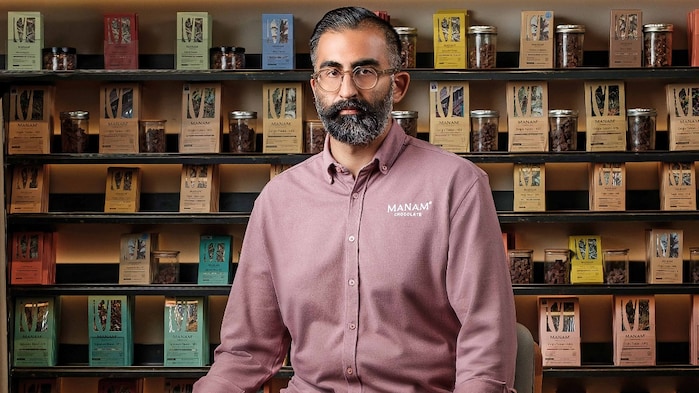

When Chaitanya Muppala travels, he hunts for what local residents consume, not what a city is “Insta-famous” for. The stereotype, he stresses, is rarely the most interesting aspect of a place. An afternoon spent with him at the cacao farms of West Godavari, Andhra Pradesh, would introduce you to the discerning gastronome in him who engages in engrossing conversations with the farm hands, often amazed at the particularities of secret recipes.
“The bhajji here tastes better than what top chefs serve. Villagers keep the stuffing simple — rustic but delicious,” he says, scrutinising a snack during a typical Andhra lunch we share at the Distinct Origins fermentary he visits in Tadikalapudi to oversee work — he’s the CEO.
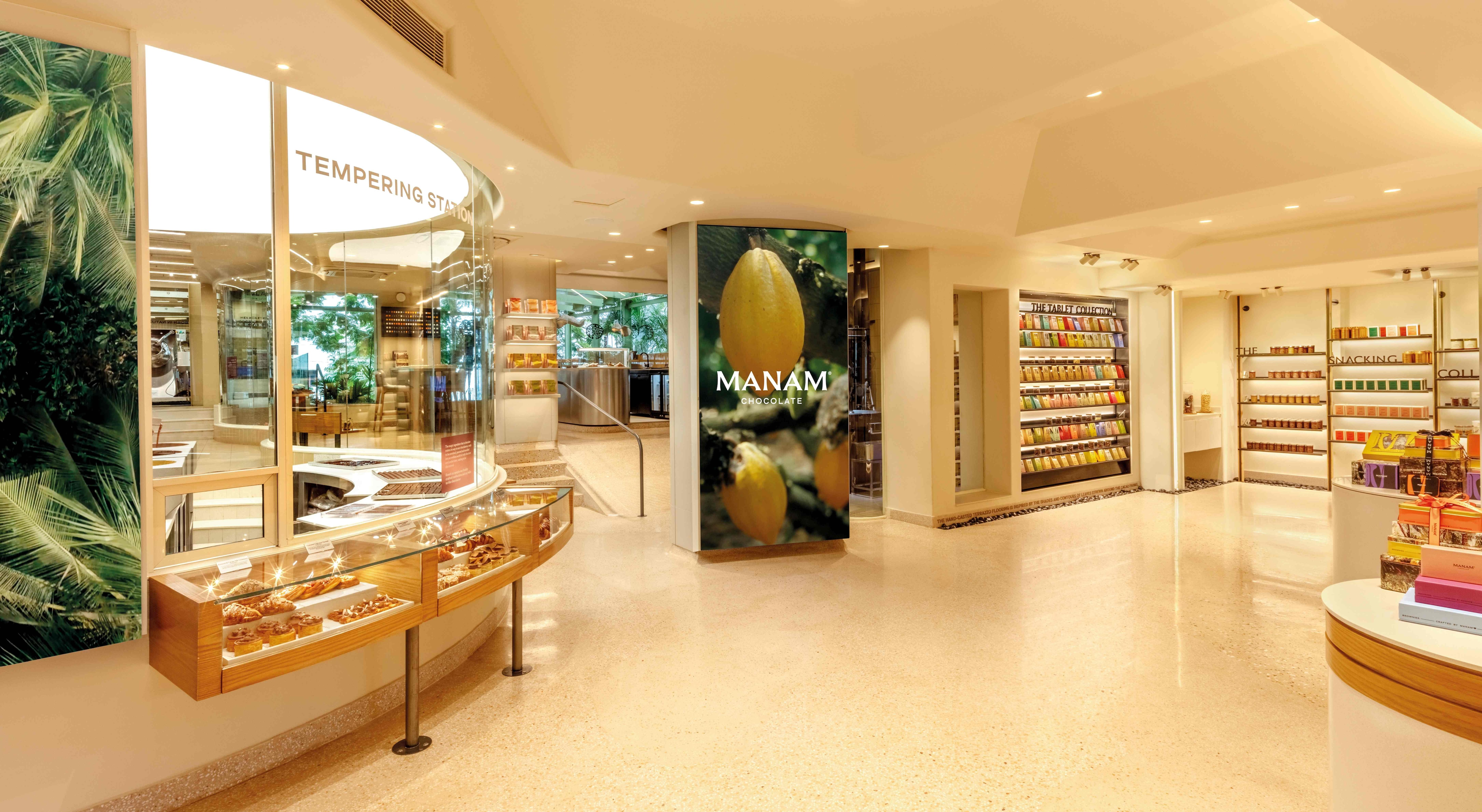
This curiosity towards culinary cultures forms the backbone of Manam Chocolate. The 34-year-old established the brand in 2023, and the very next year, its Hyderabad Karkhana — its experiential chocolate factory and café — made it to TIME magazine’s list of ‘World’s Greatest Places.’
THE MITHAI TO CACAO LEAP
Chaitanya comes from the family behind Almond House, an iconic legacy business in Hyderabad, founded by his father Nagarjuna Muppala. He is the current CEO and Managing Director. “When I took over Almond House after returning from Canada [he’s an alumnus of the Sauder School of Business], it was largely a single-store brand with deep equity in Hyderabad — beloved but local,” he recalls. “Over the next decade, we expanded the footprint, modernised the systems, and built new brands around it.” His time here taught Chaitanya the complexity of scaling up an assortment of quality sweets and savouries.
“In India, mithai isn’t a single product — it’s hundreds of socially and culturally embedded forms, made fresh and expressed through sharing across occasions. Running that kind of operation gives you a kind of pedagogy, where an ingredient becomes a platform for versatility. That method made us rethink chocolate.” While the world treats chocolate as a finished bar, Chaitanya considers it the way a mithaiwala would see milk and sugar — an ingredient that can create a plethora of culturally relevant products and experiences. “Bars, bonbons, pastries, viennoiserie, ice creams, gifting assortments… It’s all anchored in the same instinct that built mithai in India — that sweetness is fundamentally about sharing and gifting.”
In 2018, his search for quality Indian chocolate proved pivotal. Intense research led him to incorporate Distinct Origins in 2021, to establish the West Godavari region as the provenance for fine-flavour cacao beans to be imported by global craft chocolate-makers. Today, more than 150 cacao farmers are employed at the 1,500 acre plot — touted to be India’s largest cacao-growing region. “Later that year, we commenced work on Manam — an articulation of what craft chocolate could be for Indian consumers,” says Chaitanya, India’s first Level 3 Certified Chocolate Taster, the highest credential awarded by the International Institute of Chocolate and Cacao Tasting.
AN ALTERNATIVE APPROACH
Chaitanya’s research also revealed that everyone “doing chocolate” in India was buying couvertures from the same two or three multinationals, none of which utilise quality cacao beans from India. What followed was three years spent on the farms, working on genetics, fermentation, and post-harvest processes. “Only then did we light up the Manam Chocolate Karkhana in Hyderabad.” For this entrepreneur, “bean-to-bar” doesn’t cut it. Their process, he emphasises, is as extensive as pod-to-bean-to-endless chocolate-confectionery!
“What didn’t exist was a serious, vertically integrated Indian cacao story,” he adds. His fine-flavour cacao business also exports beans, not finished chocolate, to leading craft makers in the West. “Convincing Western chocolatiers wasn’t a sales pitch but a conversation on fermentation,” he laughs. “They hadn’t seen Indian cacao show up at this quality before. Once a few respected makers signed on and the bars they made with our beans started picking up awards, things shifted.” The company also showed up consistently at Amsterdam’s Chocoa trade fair, where buyers, makers, farmers, and researchers converge from the world over.
“Origin credibility is built one harvest at a time, in front of those who actually know!”
THE GLOBAL IMPRINT
Most Indian food brands going global tend to reduce themselves to one of two things. Either a chocolate-rasgulla, chocolate-samosa novelty, or they pander to the “exotic, Belgian-style” framing. To Chaitanya, “both are dead ends.”
“We didn’t make it to TIME as a European-style chocolate space. Manam was interesting globally for positioning itself as Indian, built by Indians, for Indians.” As one with a taste for the Peruvian Cacaosuyo, Royce’s Potatochip Chocolate, and the Almendra Blanca bar from Goodnow Farms, the seasoned chocolatier knows the bar is high for his brainchild. “We’re competing against centuries of Belgian, Swiss, and French chocolates, but the foundations are in place. We have the cacao, climate, makers, and a palate that’s getting sharper,” he’s optimistic.
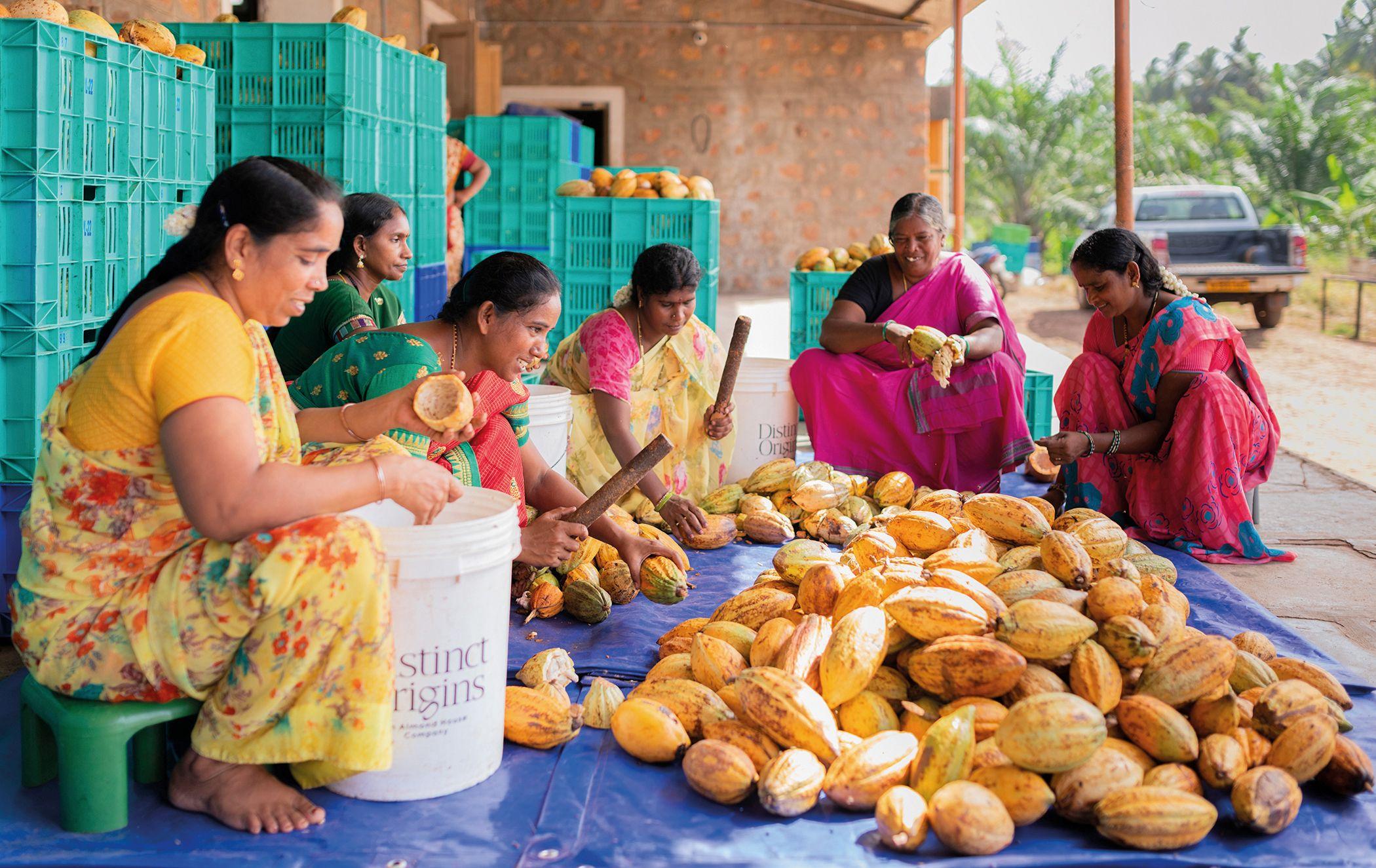
The part that matters most, however, is when a farmer from West Godavari sees their work validated on a world stage. “Chocolate has historically been a colonial commodity. Produced in the colony, consumed by the coloniser. We’re trying to flip that on its head, quietly, by being good enough that nobody can dismiss it.
IRREVERENT INDULGENCES
Given his schedule, time spent with Anjali, his six-year-old, is his reset. “I’m currently reading From Childhood to Adolescence by Maria Montessori, to understand the schooling system she’s in, though the philosophy it carries underneath extends to parenting.” At this point, we’re curious how he rations the goodies to his little one.

“She’s six. She’s going to want chocolate. Treating it as forbidden only makes it more interesting, right?” It’s also amusing to the founder that running a chocolate company means there’s a lot of it lying around the house, “so I need the most discipline!”
Exercising restraint is a task, especially when the munchies kick in at night. “This pulls up a distinct memory — digging into a snack after school, hand in the bag, eyes on the screen. It’s the reason our snacking collection comes in bags. They’re meant to be finished off in front of your favourite show, not portioned.”
Continue Reading