- Home
- Lifestyle
HELLO! India Exclusive: Understanding Tara Lal's nature-inspired design language
With the ‘Aranyani Pavilion’ at Delhi’s Sunder Nursery, this environmental conservationist has created an immersive conversation between culture and the natural world. She walks HELLO! through her thought-provoking work
to explain the world as she sees it


It’s a beautiful evening in Delhi, winter gently giving way to spring, and birdsong permeating the air. We meet Tara Lal at Sunder Nursery, one of the capital’s most breathtaking heritage spaces and home to her latest project, the ‘Aranyani Pavilion’ — a first-of-its-kind public initiative in India and South Asia.
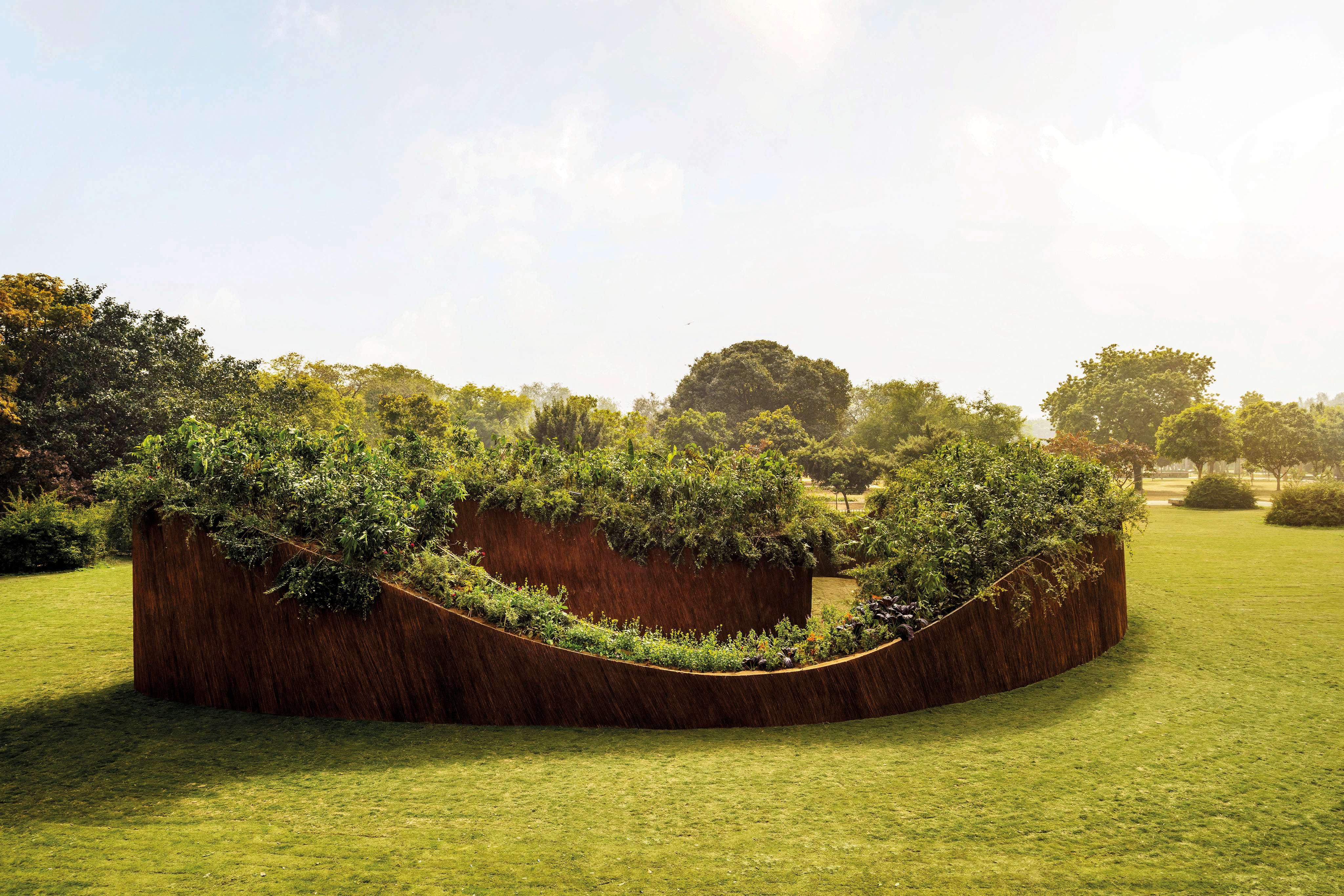
Tara’s inherent understated elegance mirrors her work — rooted in nature, history and cultural memory. Surrounded by art enthusiasts, friends, family and nature lovers gathered to experience the spiral walkthrough installation, she moves through the space with quiet assurance. Named after the forest deity of the Rigveda, Aranyani draws from the spatial logic of India’s sacred groves — ancient, community-protected forest sanctuaries that functioned as bioreserves long before modern conservation law. For Tara, the Pavilion feels like a natural extension of nearly two decades spent working across architecture, photography, design and field-based conservation.
“I spend time on land, with communities, looking at how ecosystems function over the years rather than project cycles,” says Tara, Founder and Creative Director at Aranyani Earth, an on-ground initiative that works towards protecting India’s natural heritage. “Science gave me rigour and accountability, but I kept noticing a gap between what we know and how people feel about land. Aranyani grew from that gap.” The walkthrough is rather slow, yet each step is purposeful, inviting reflection on our relationship with the natural world. “The Pavilion is designed to be experienced gradually. Architecture sets the pace, sound anchors the body, and the programme unfolds through conversation rather than instruction.”
TAPPING INTO OUR PAST
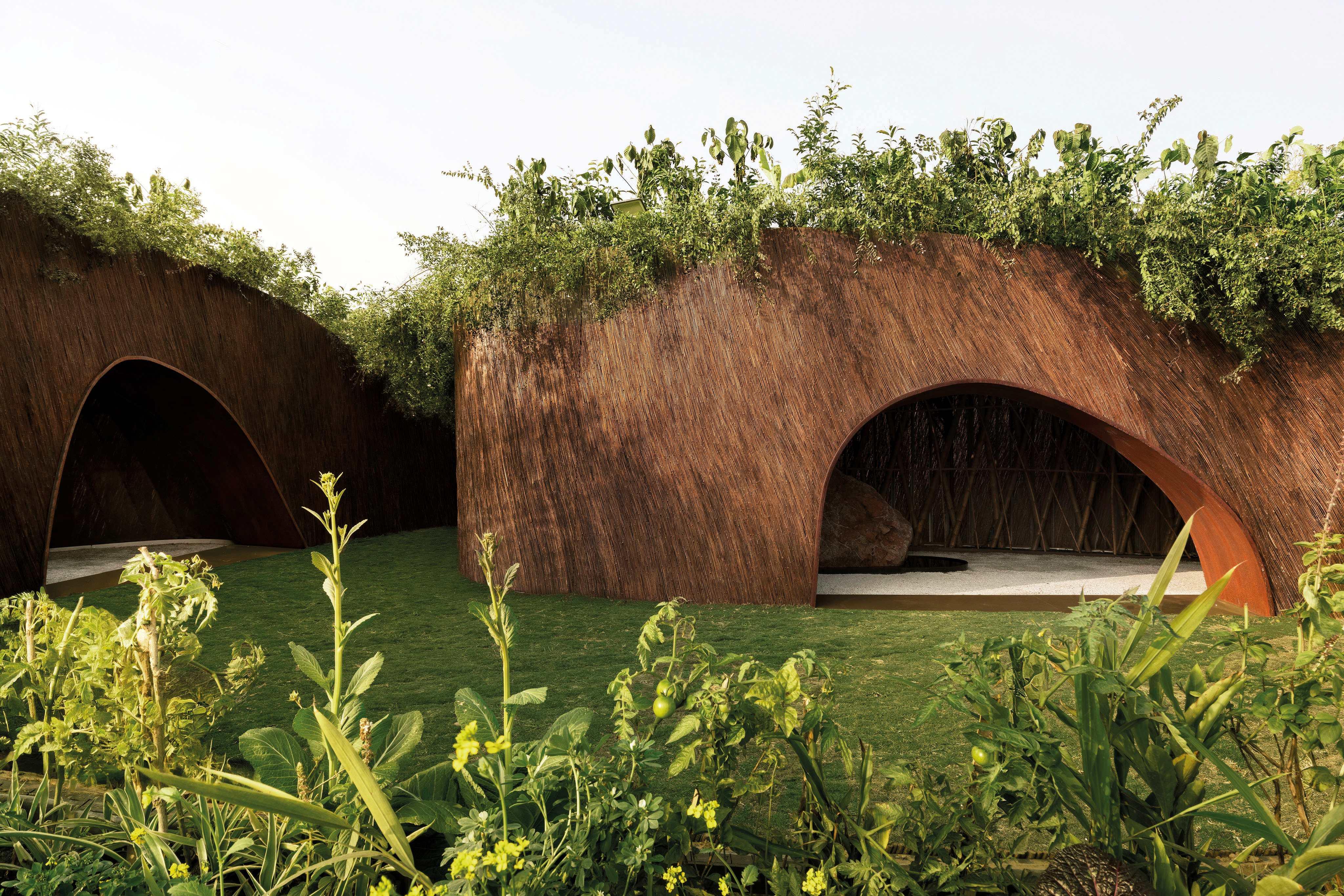
At its core lies an idea of sanctity — not as ritual, but as restraint. The spiral structure is built from upcycled lantana camara, an invasive shrub that was introduced to India through Portuguese and British colonial trade in the 18th century. Lantana now covers more than 13 million hectares and threatens nearly half of India’s forest cover.
Above this framework, a living canopy of more than 40 native plant species — a mix of edible, medicinal, and culturally significant varieties — forms a functioning micro-habitat. By layering invasive lantana beneath and indigenous species above, the Pavilion embeds restoration into its structure, recognising India’s colonial ecological past even as it gestures toward renewal.
“Sacred groves endured because people knew when to stop, when not to take, when to leave something intact,” she reflects. “By bringing invasive and native species into conversation, we hope to create space for local and global dialogue on how we might restore not only ecosystems, but the relationships that sustain them.”
An installation like this Pavilion, designed by the young architectural practice TM Space, arrives at a time when the city is rife with conversations about the environment — when breathing clean air feels like a luxury rather than a given. Perhaps that is why a walkthrough of this space feels less like spectacle and more like a study in nature and life, “to open conversation and shift attention, inviting people to listen rather than consume.”
BUILT FROM HER ROOTS
Hailing from the legacy of lifestyle brands Good Earth and Nicobar, Tara grew up travelling and spending long stretches outdoors. “So returning to nature feels less like a ritual and more like continuity,” she explains. “I return to landscapes rather than rituals. The Aravallis, forests around Manali, time spent walking without agenda… Reconnection comes from repetition and familiarity, knowing how a place changes across seasons. Listening rather than documenting. Those moments remind me why this work matters beyond outcomes, or recognition,” smiles Tara, as we observe a shrine anchored by a large stone monolith, recalling the ritual cores of sacred groves, where stone markers traditionally signified the symbolic meeting of earth and sky.
Over the years, Tara has been rather vocal about how our colonial history shaped the way ecology is perceived today. With Aranyani, she created a platform that allows conservation, architecture, art, and storytelling to coexist — an intersection, she explains, felt absent, “especially in urban India, where environmental loss is experienced daily but rarely reflected on with depth.”
After its time in Delhi, the Aranyani Pavilion will be reassembled at the Rajkumari Ratnavati Girls’ School in Jaisalmer, where it will become part of an educational landscape. “I see Aranyani evolving as a long-term practice rather than a fixed institution. Responsive to the place, shaped by collaboration, and committed to repair as an ongoing practice rather than an endpoint,” Tara concludes.