- Home
- Lifestyle
This quaint palace resort is where India truly comes alive
In the Aravalli hills between Jodhpur and Udaipur, Rawla Narlai brings together the country’s wild, wonderful and deeply rooted in one extraordinary escape
For several years now, travel has been less about simply visiting a place but more about feeling it. Experiential travel has not only changed the way we approach holidays but has also gained furore for “creating immersive experiences that forge a deeper connection with the destination than can usually be had from traditional leisure holidays”—a shift that National Geographic flagged back in 2023 as one of the industry's defining pivots.
And when Indian travellers go looking for that feeling, the compass tends to point outward: Italy for la dolce vita, Japan for ritual and restraint, Morocco for its sensory abundance, Costa Rica for wilderness, and so on. The list grows endless, and in that search for something extraordinary outside, we tend to overlook the covetable gems much closer to home—places that offer something more lasting than the familiar markers of luxury.
Enter, Rawla Narlai.
And before I tell you where it is, what it looks like or why this 17th-century fortress stands in the middle of Rajasthan's Aravallis, let me make a rather bold claim: Rawla Narlai is the sort of place that doesn't quite leave you when you leave it. It carries forward with you through time in fragments, perhaps because it just might be too hard to let it go.
Rawla Narlai possesses the rare gift of distilling the many moods of India into one extraordinary address. Its wildlife rivals Jim Corbett; its starry skies evoke Ladakh; its luxury mirrors that of the country’s most fancied properties, while its ancient architecture, soulful hospitality and untamed landscapes remain unmistakably Rajasthani.
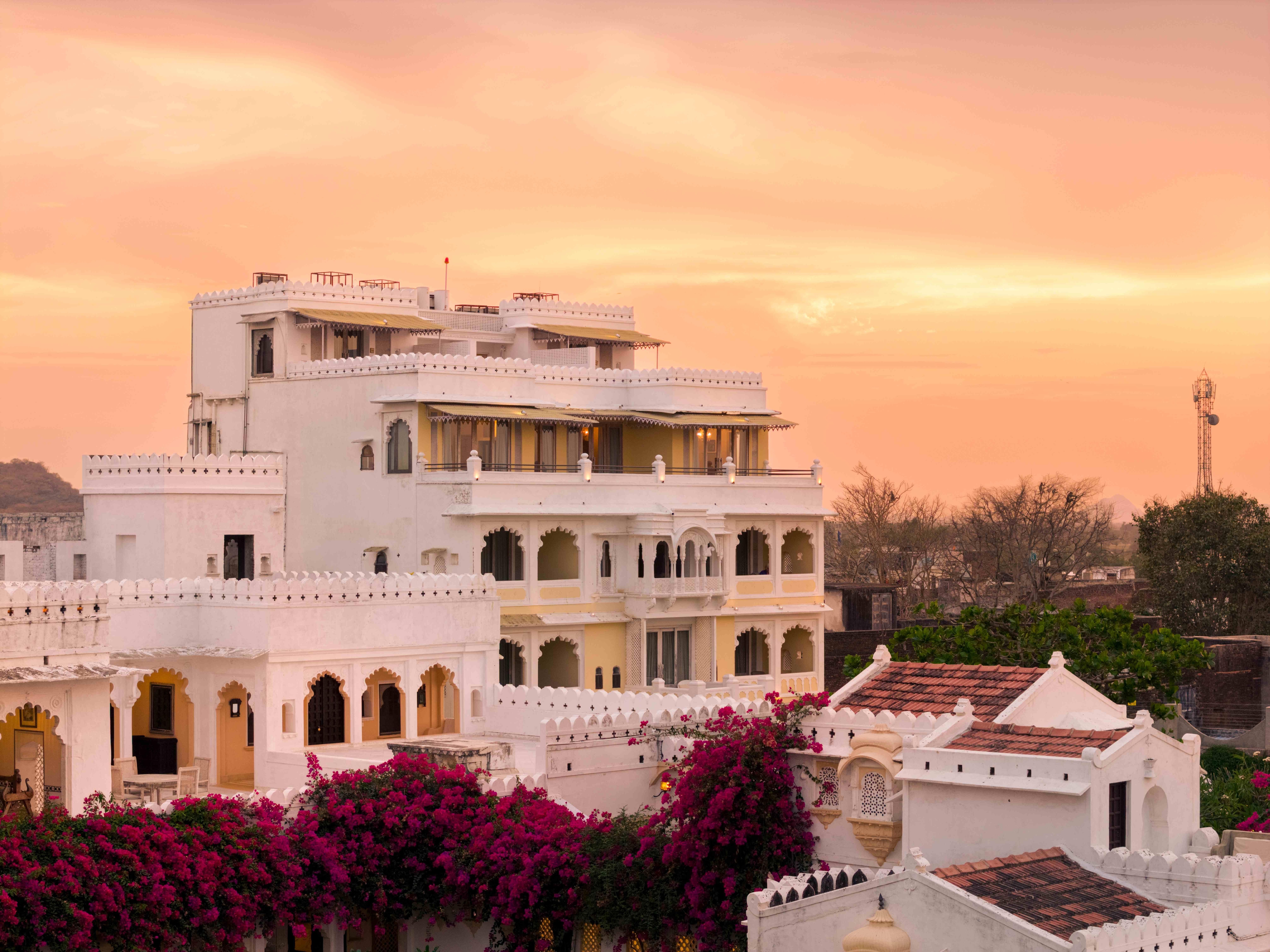
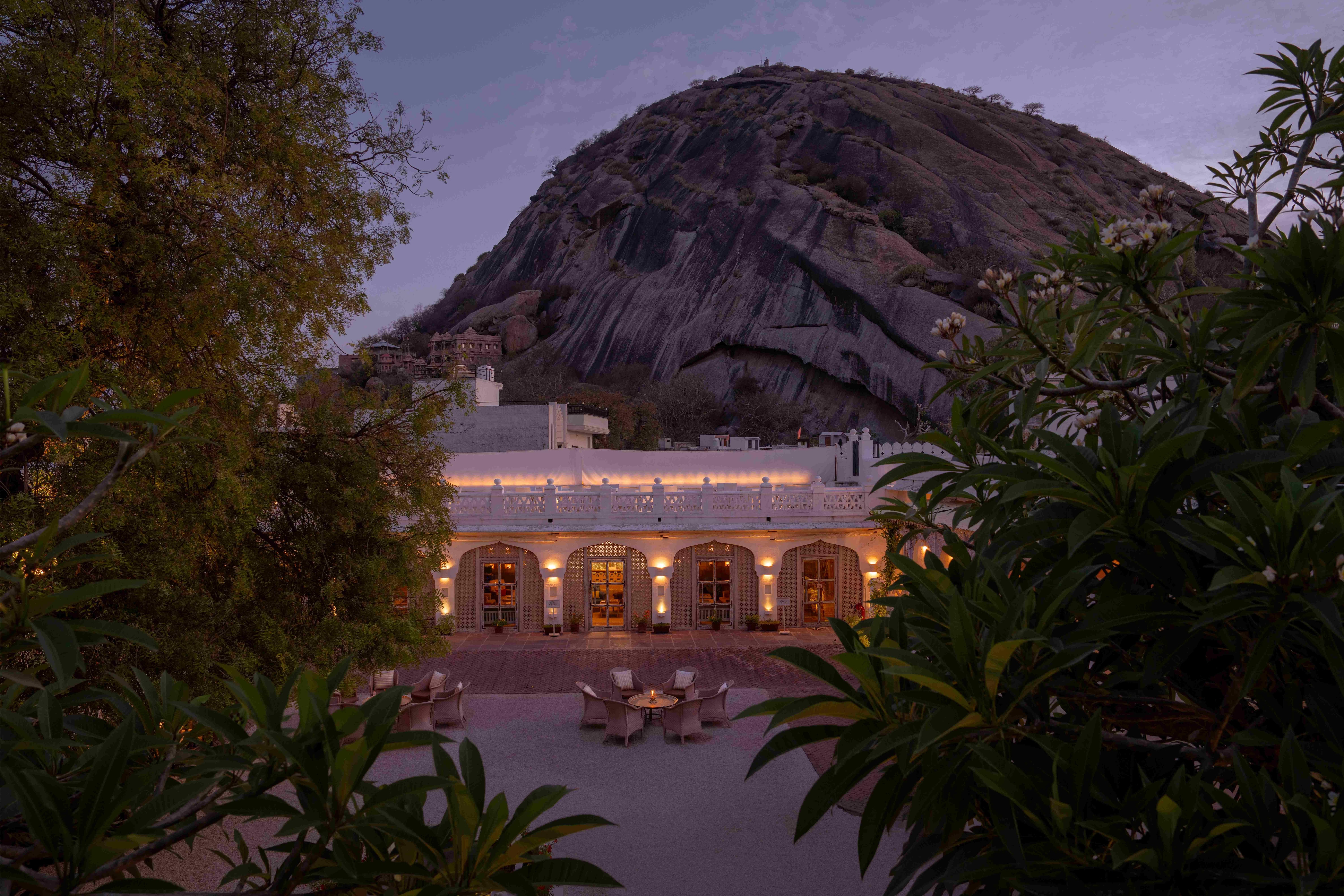
A two-and-a-half-hour drive from Jodhpur airport brings you to this restored heritage retreat, tucked away in the Godwar region between Jodhpur and Udaipur. Set against the Aravallis and overlooked by the 350-foot volcanic granite monolith known as Elephant Hill, the property is all ancient stone, bougainvillaea-draped courtyards and rooms that have distinct personalities of their own. It is, in every sense, a house that happens to take guests, and not a hotel dressed up to look like one, standing out for its ability to make people see, feel, and live the history in a way that feels authentic and experiential rather than performative.
Day One: Into the wild with leopards, candlelight and an 11th-century stepwell
Our days at Rawla Narlai were full, thanks to a team that doesn’t treat hospitality like a job. Day one opened with a leopard safari — which, on paper, sounds like the unglamorous parallel of a Jim Corbett or a Ranthambore run but in practice, outdid anything I’d expect from a dedicated big-cat reserve. We drove into the surrounding wilderness with a guide who seemed to possess an encyclopaedic knowledge of everything that moved, flew or lurked within it. The Godwar belt that Rawla backs onto is home to a thriving, if elusive, population of leopards. Our guide, visibly proud of the terrain he’s spent years reading, told us that in over a century of recorded history, a Narlai leopard has never attacked a human—a claim that felt entirely plausible by the end of the drive.
Here, the question was never whether we'd see a leopard. It was how many.
We began with modest sightings: A few water birds, some alligators sunning themselves, multiple scatterings of sheep grazing along riverbeds before the jeep drove deeper into the jungle. There she was. Standing atop a hill, surveying what seemed to be her territory below. While majestic may be an overused word when it comes to describing these species, seeing her in front of me, I could gauge why it is the first thing that comes to mind. Our guide immediately began telling us about her—her age, her temperament, her habits, her mating cycle and, seemingly, everything there was to know about her, almost as if he was talking about an old friend.
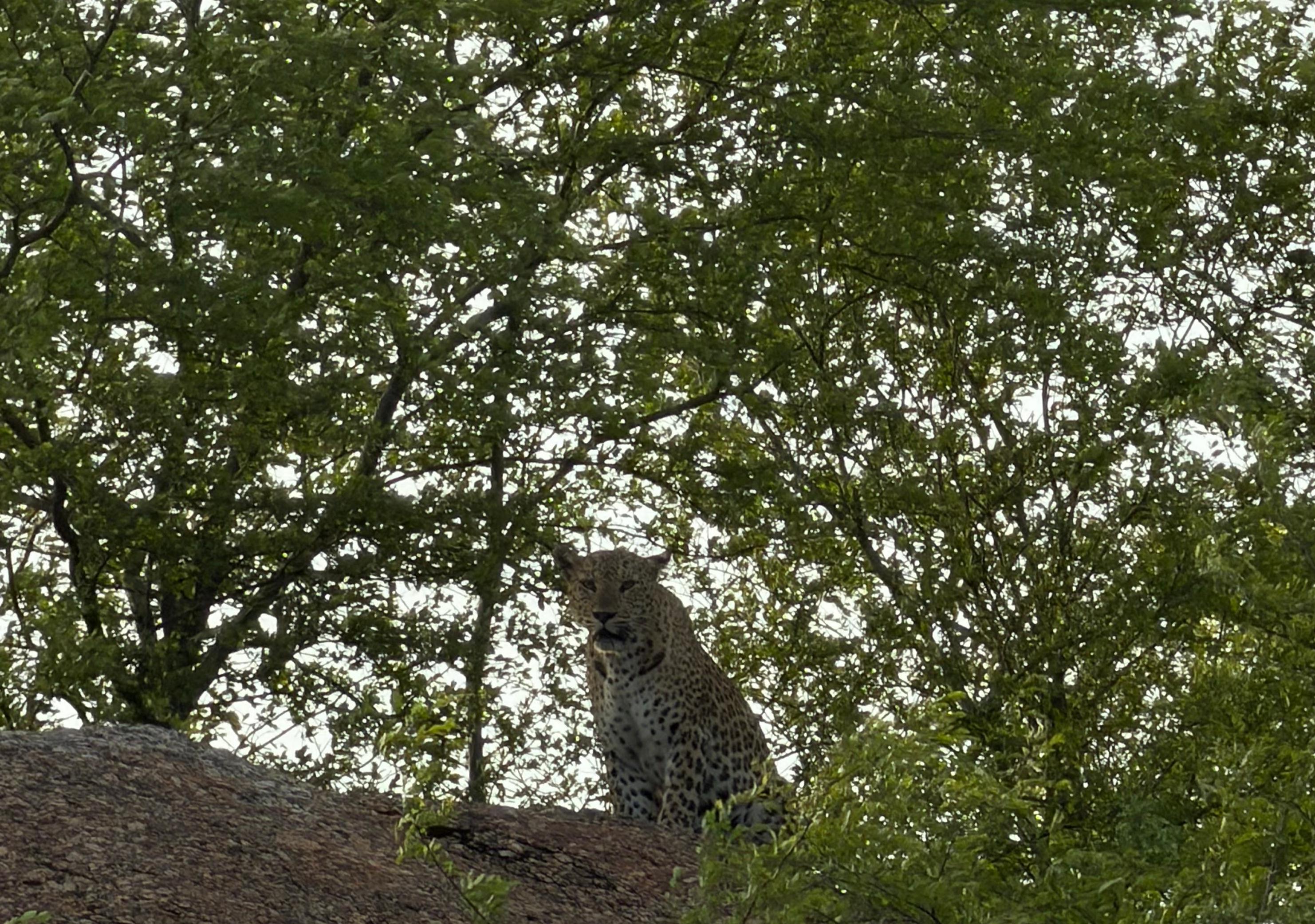
We drove on, eventually circling back in the hope that she might come down. She did.
At first, she simply watched us. Then our guide told us she was preparing to attack. We froze.
Slowly, she began making her way down the slope, never taking her eyes off us. For a few seconds, it felt as though she was walking towards us with purpose. Perhaps she was. Perhaps she was simply curious. Either way, I remember sitting very still, watching her disappear into the trees and feeling an enormous sense of relief.
We thought that was the last of her but, as our guide put it, much to our “luck,” it wasn’t. As the sun began to set, we heard her again. This time it was a territorial dispute with her own daughter, attested by the roars and whimpers carrying across the valley. Just as the light was going out, we saw the leopardess walk away, once again. And just like that, the day ended with us sitting in a jeep, witnessing the jungle unfold its true nature. Every day, our guide said, is an adventure at Rawla Narlai, thanks to the acres of land that allow nothing but the property’s own jeeps.
Just when the day felt complete, it wasn’t. Dinner that evening was to be at the stepwell. That was all we knew. The name revealed almost nothing and left plenty to the imagination.
We gathered with a few other guests in the dimly lit courtyard, where the evening began with wine and little ceremonial touches.
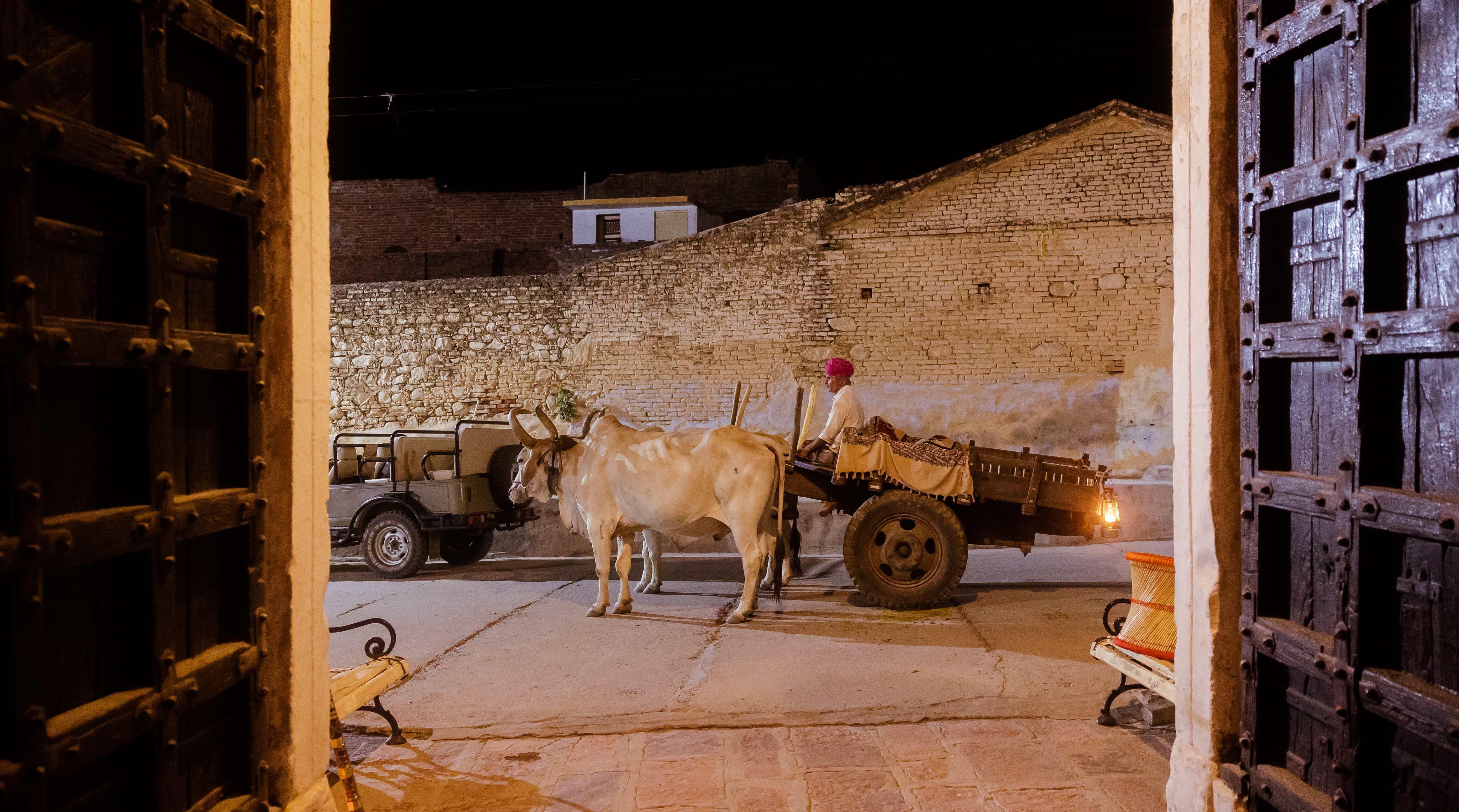
Wine was poured, a masseuse worked the day’s travel out of our shoulders, and the men among us were fitted with turbans while the women were draped in soft dupattas. We were led out to a cart pulled by a pair of oxen, and within minutes the last flickers of the village had disappeared behind us, replaced by dense, dark scrub. Amused by the sheer theatricality of it all, this time, we were praying to not see another leopard.
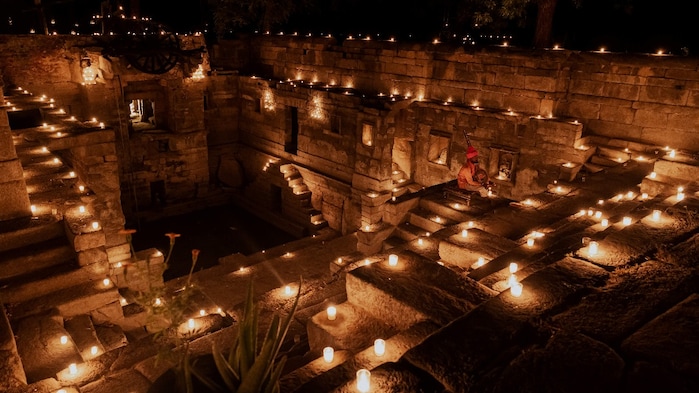
Instead, we began to see lights. Candles, one after the other, tracing what seemed like a path. What waited at the end of it was, without exaggeration, one of the most beautiful things I've witnessed: an 11th-century stepwell, its stone tiers lined edge to edge with hand-lit candles, the only sources of light for miles being that flame and the stars directly overhead.
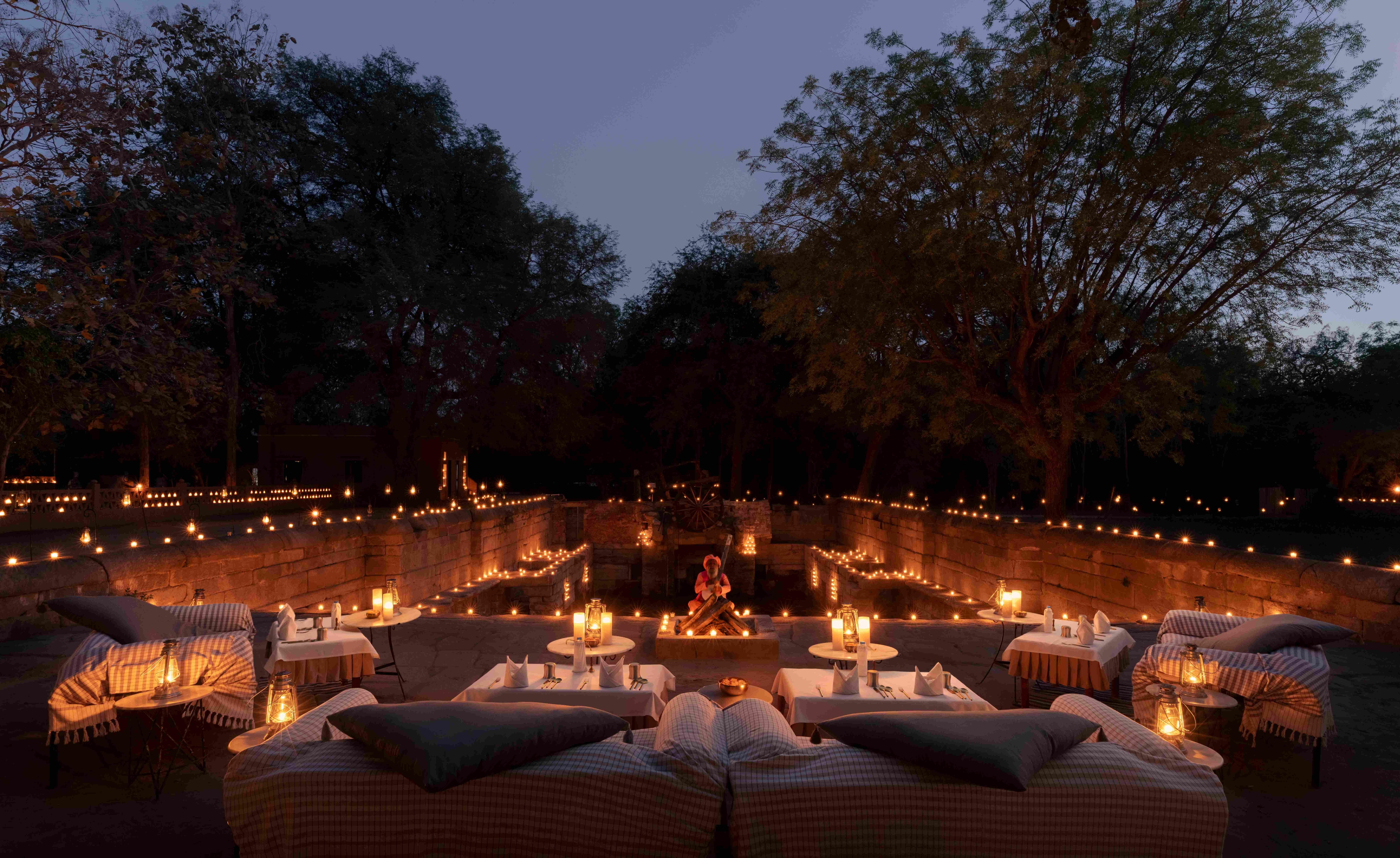
As we stepped in, an elderly Jogi began to sing old Marwari ballads, the kind that have been passed down rather than written down, his voice filling the stepwell with old tales and dohas. He told us, between songs, that he sings here most nights, and that he still finds joy in building this exact moment for strangers who will never see him again. Over a five-course dinner drawn from Rajasthan's culinary canon, plates kept arriving long after we'd stopped counting.
There are hotels that create beautiful settings. And then there are places that understand that the setting itself can become the experience. Rawla Narlai belongs to the latter.
We went to bed that night somewhere between happy tears and disbelief, already wondering how a second day could possibly follow the first.
Day Two: Chasing stillness with lakeside sunsets and dinner under the stars
The next morning began at the Jharokha Café, where a 17th-century hunting-lodge silhouette meets a breakfast spread that leans into the Godwar region's own flavours—Rajasthani aloo poori alongside eggs made to order, house granola, and local honey, eaten against a wraparound view of garden and hill. Fed and unhurried, we spent the morning touring the property itself, which turned out to be as considered as anything on the itinerary. Its rooms, courtyards and old architectural details reveal themselves slowly. The property retains the feeling of a lived-in heritage home rather than a monument converted into accommodation; its restoration allows the history to remain visible without turning it into a museum.
We spent the early afternoon at the spa, which did exactly what a spa in the middle of the Aravallis should—untangled two days' worth of travel and heat from our shoulders— before setting off again by jeep, this time waving at children along the village road and tracing the outline of hills that seem to belong to nowhere but Narlai.
And then, in what felt like ten minutes, we were somewhere else entirely.
There was water as far as the eye could see. Vast landscapes opened up around us, with pathways leading towards the lake and flamingoes appearing in the distance. The only soundtrack was the chirping of birds and the wind moving through the landscape. It was difficult to reconcile the scene with the Rajasthan I had imagined.
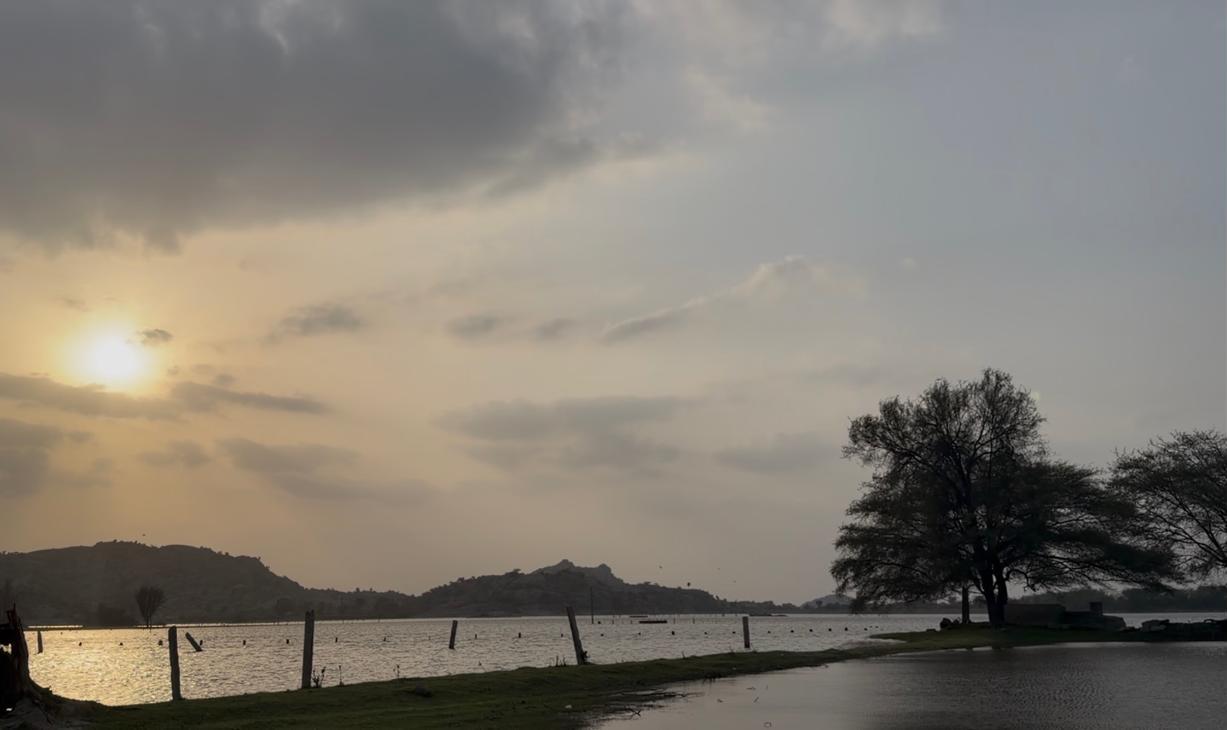
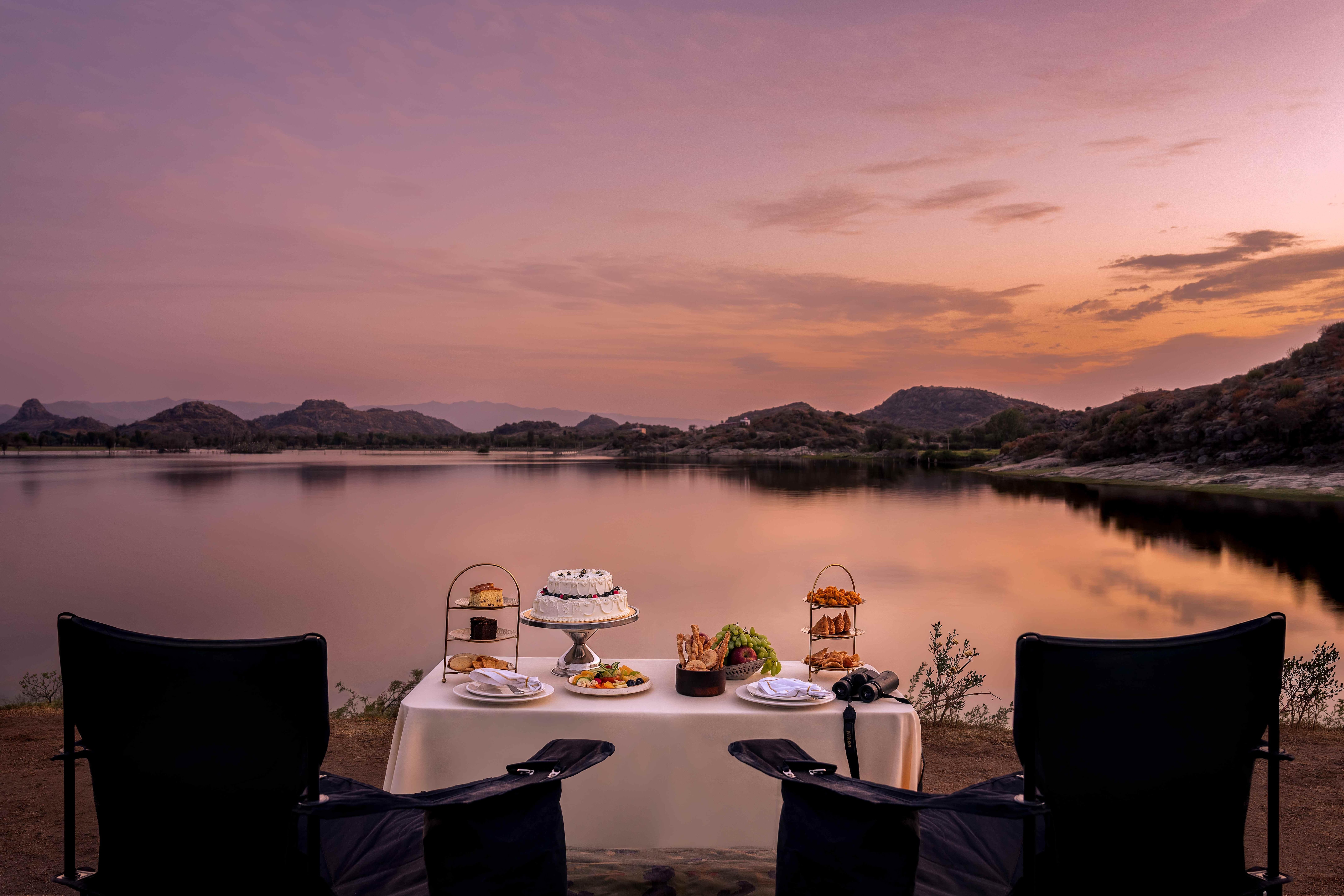
This was Tea by the Lake—a quiet, unhurried spread of tea and snacks laid out with a view built for exactly this kind of stillness. Sitting there, with the wind in my hair and the light changing across the water, it felt like an argument between the quiet of my mind and the restlessness we seem to carry from our jobs that seem trivial in front of these undulating landscapes.
Eventually, we packed up and returned to Rawla, only to get ready for another evening under the stars. By then, I had begun to realise that I had never had quite so many interactions with the night sky as I did here.
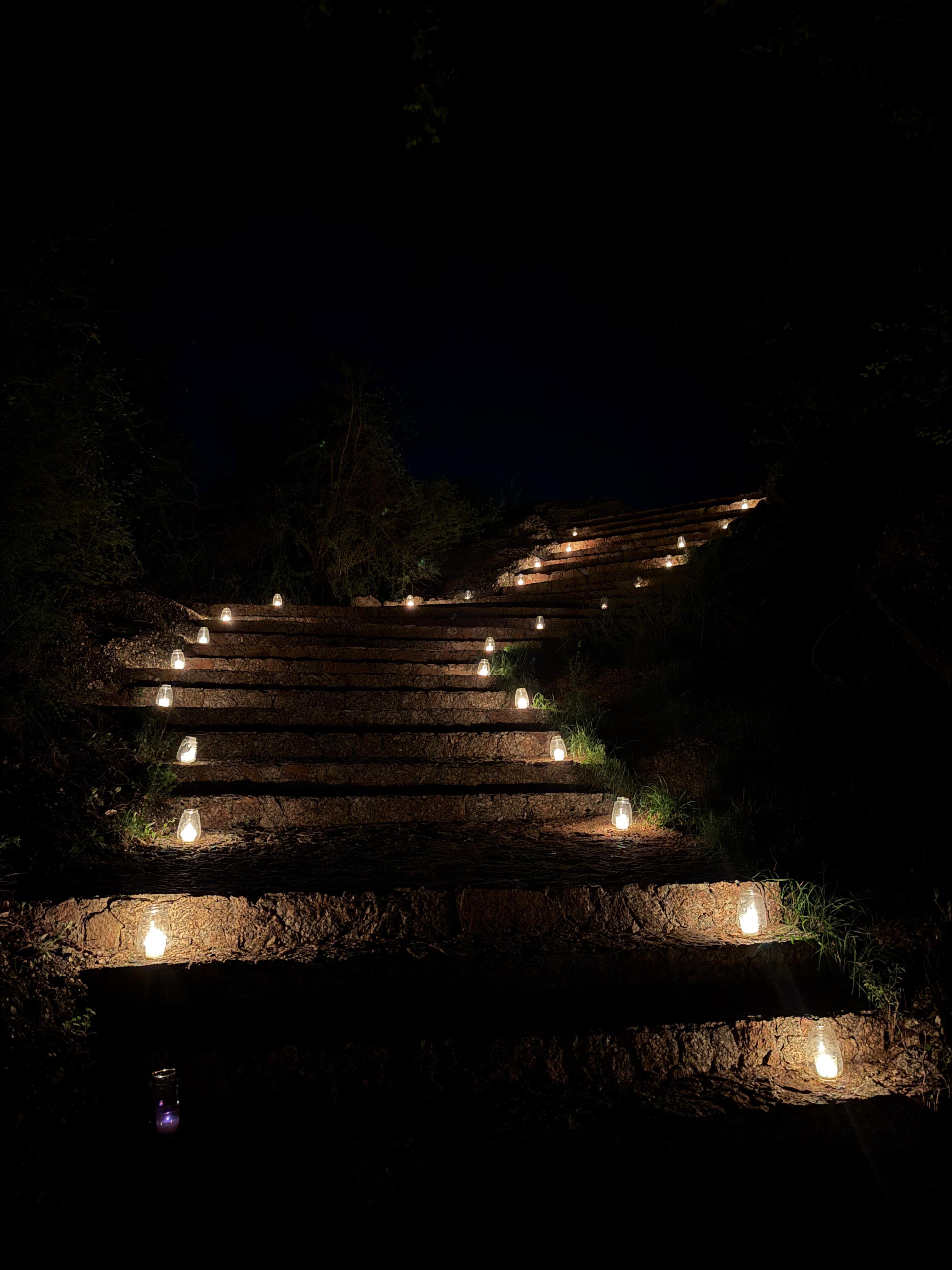
We drove through the jungle once again, this time for the Tekri, a discreet perch on the property with sweeping views of the Aravallis. We climbed a short flight of stairs to a table set just for us, lit entirely by candlelight, and ate through a barbecue spread that arrived in waves—tikkas, a Rajasthani thali loaded with condiments, and desserts we had no real room for but ate anyway.
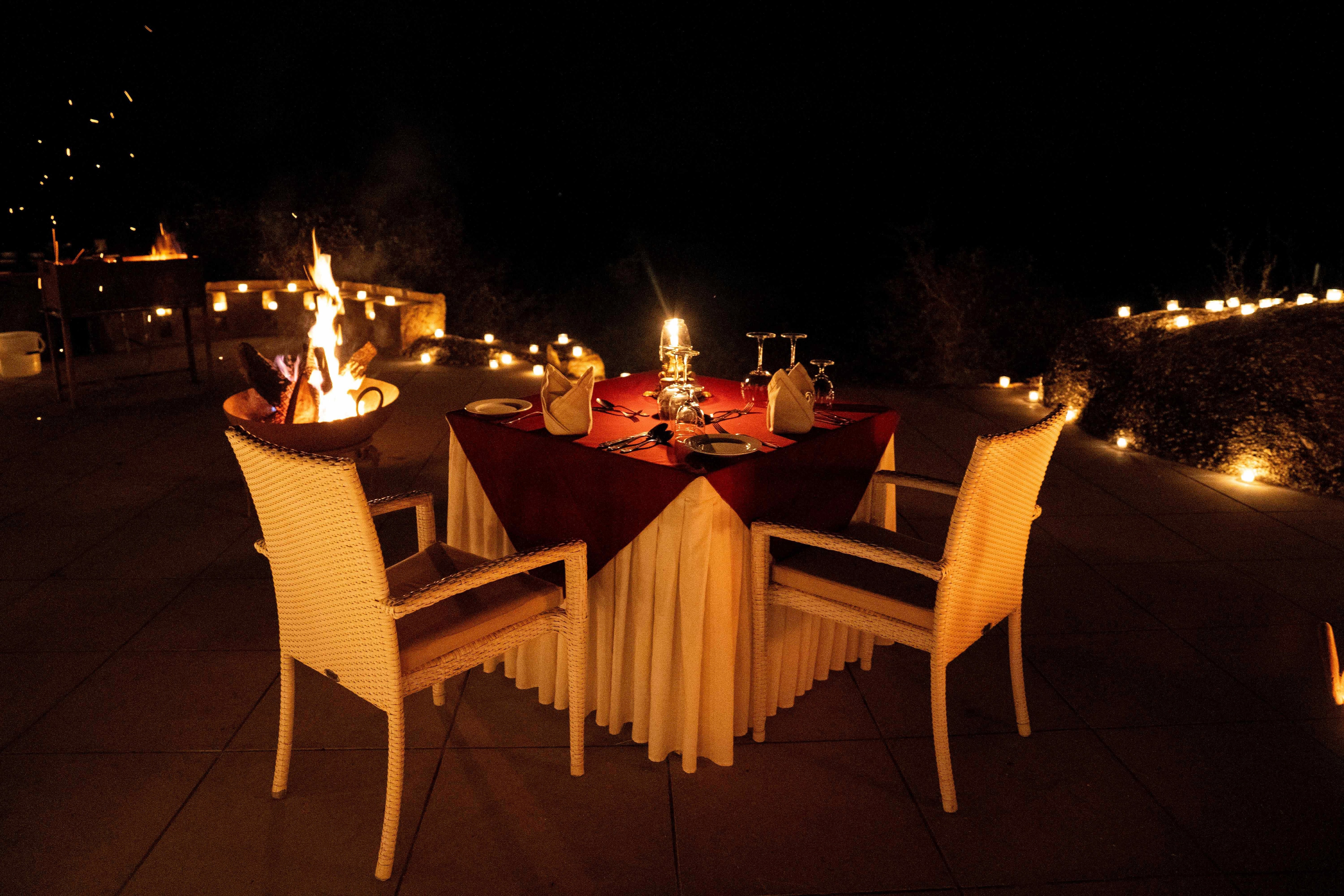
Still digesting the day, we went to bed without saying much, my mother and I seemingly occupied by our own thoughts.
Day Three: 750 steps, a sunrise and a little piece of Narlai to call my own
The final morning began early. There was an aged turtle waiting downstairs, far less intimidating than it initially looked, before we set off for the climb on the Elephant Hill, the 350-foot granite monolith that shadows the entire property and gives it its silhouette. The climb runs close to 750 hand-carved stone steps, worn smooth by centuries of local feet before ours, and by the time we reached the top, our legs and lungs had a fair few complaints.
Our last morning started early and gently—with an unhurried hello to an elderly resident tortoise on the property, considerably less intimidating than its size suggested—before we set off to climb Elephant Hill, the 350-foot granite monolith that shadows the entire property and gives it its silhouette. The ascent bears close to 750 hand-carved stone steps, worn smooth by centuries of local feet before ours, and by the time we reached the top, our legs, lungs, and a few other muscles I didn't know existed had a fair few complaints. Our guide met them with hot tea and fresh cookies, timed precisely for sunrise.
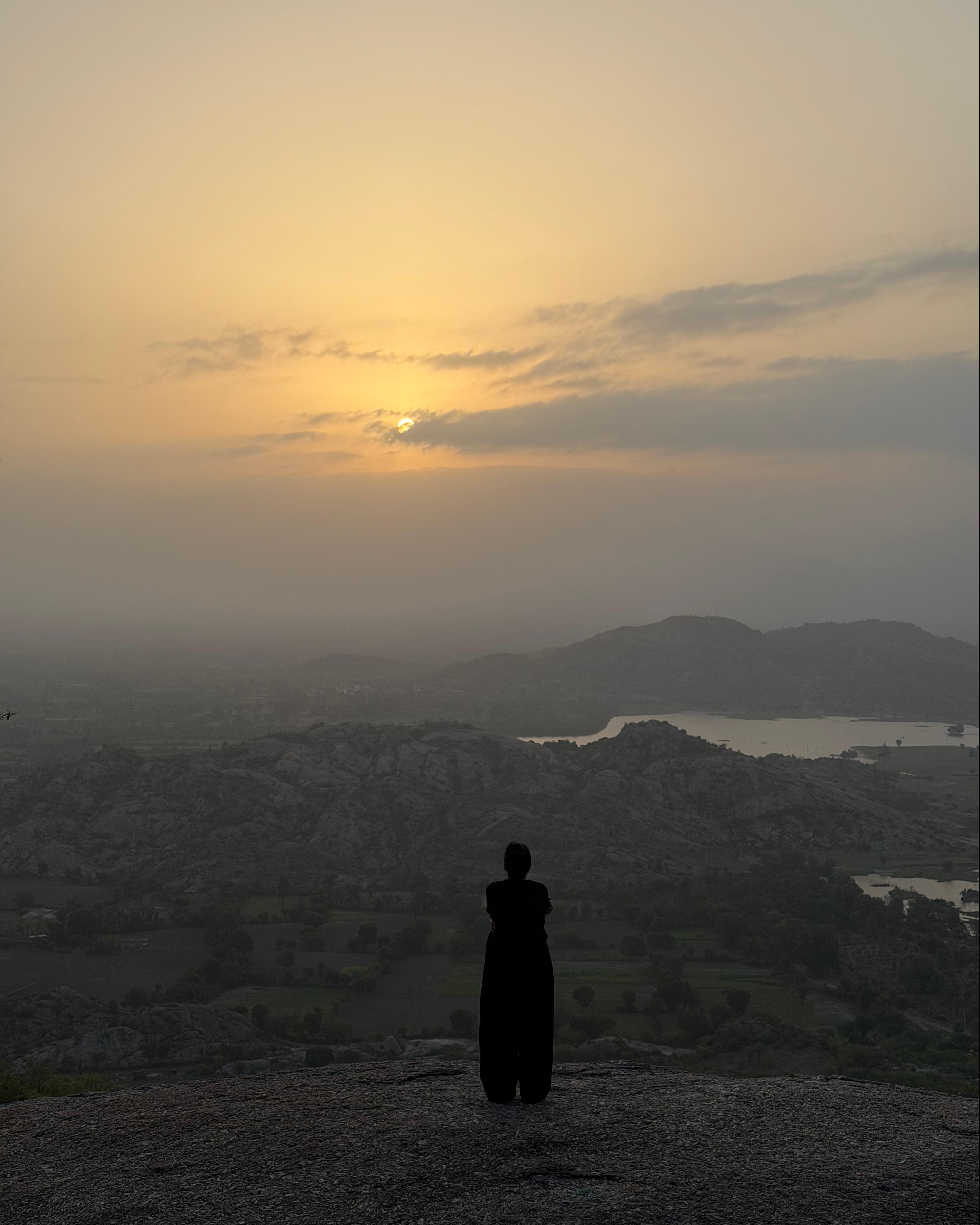
And then there was the view. The whole village laid out below us in the kind of soft gold light that makes you forget you're tired. Up there, we could move from one mountain to another, finding little pockets of silence between the rocks.
Somewhere along the way, I found mine.
The third hill at the top, with nothing in sight but the city and the trees. I decided, quite instinctively, that it was mine. If I could have one place to return to every day, that would be it.
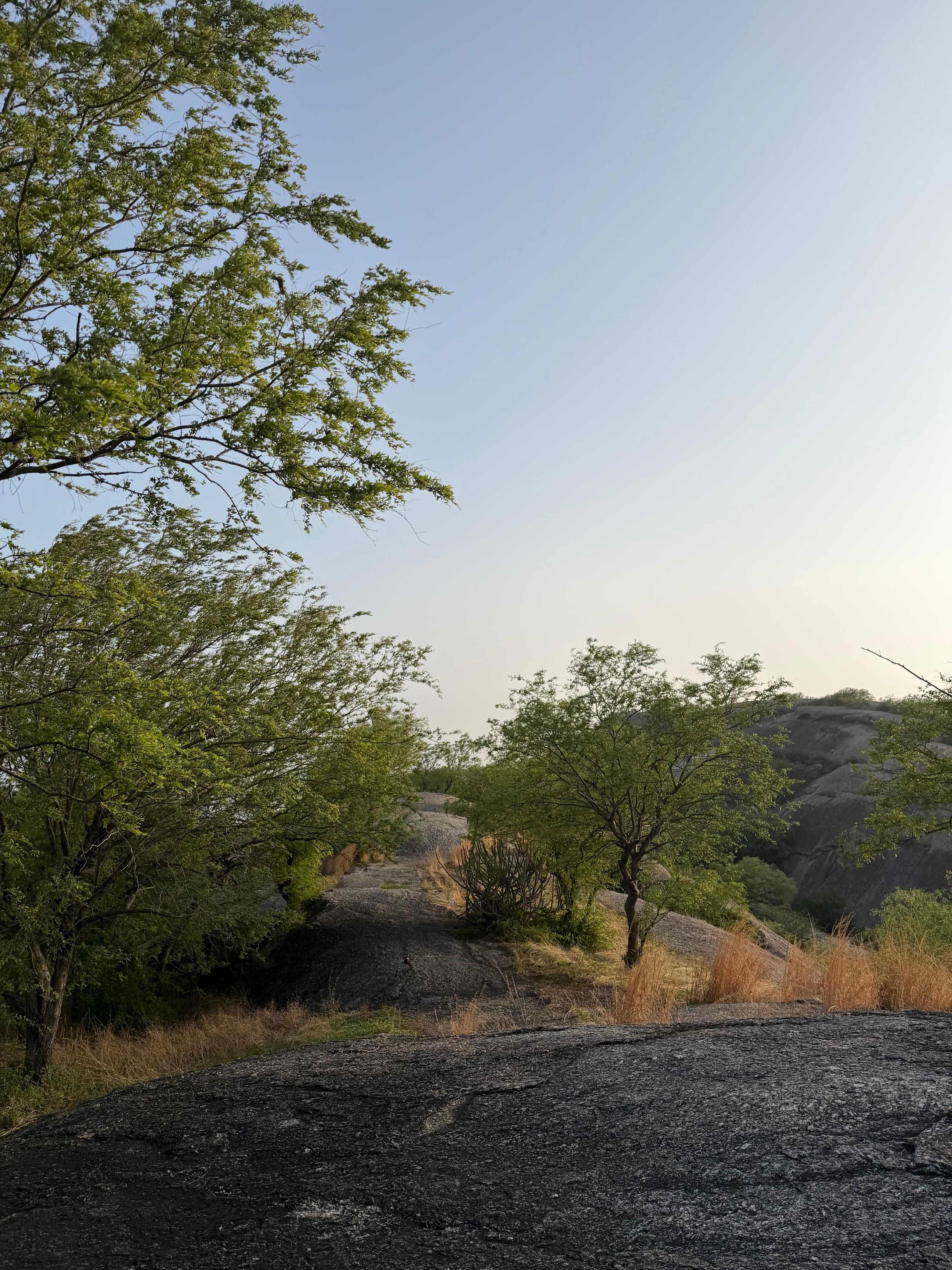
Perhaps that is what makes a place experiential in the truest sense. It isn't the number of activities you can tick off, or the number of photographs you bring home. It is the strange intimacy of finding a piece of somewhere that begins to feel like it belongs to you.
Rawla Narlai is, of course, a heritage hotel. It is a restored fortress with beautiful rooms, considered hospitality and carefully orchestrated experiences. But to describe it only in those terms would miss the point.
Somewhere between the leopard disappearing into the trees and the last light falling over Elephant Hill, Rawla Narlai stopped feeling like somewhere I had visited and became somewhere I wanted to return to.
The hardest goodbye, indeed.
Continue Reading