- Home
- Lifestyle
Three hidden Swiss escapes which are just a train ride from Zurich
Beyond Switzerland’s famous peaks and postcard-perfect lakes lies a quieter, more unexpected side waiting to be explored.
Switzerland is often seen through the lens of its snow-covered peaks and picture-perfect lakes, but there is a quieter, more interesting side to it that even seasoned Indian travellers are only just starting to discover. Just a short train ride from Zurich, these lesser-known experiences offer a new way to see the country, one that feels more personal, immersive, and far from the usual. HELLO! India explores three such experiences.
(Also Read: India’s most thoughtful eco-luxury escapes redefining conscious travel)
1. Lunch inside a cliff at Appenzell
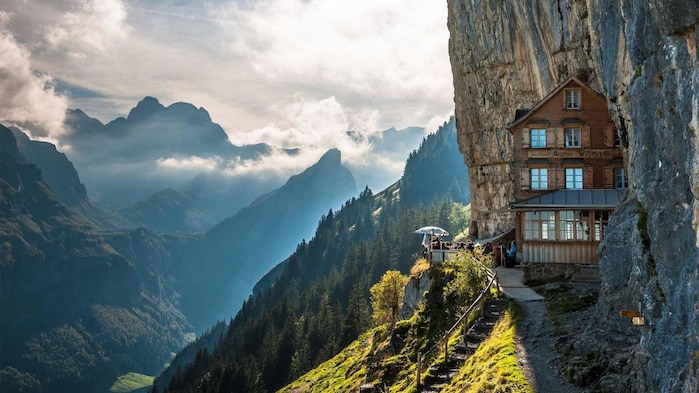
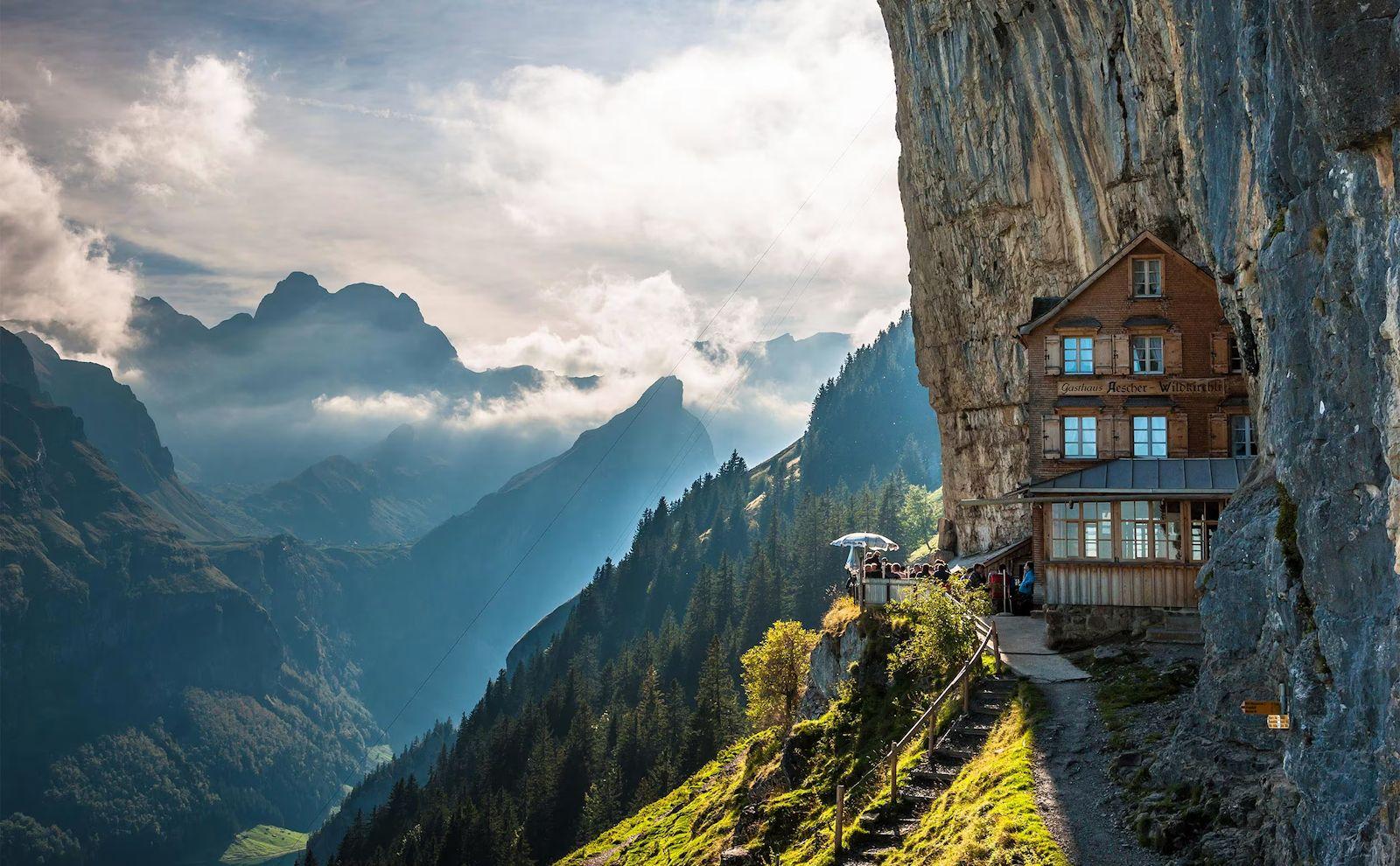
Perched precariously at the base of a 100-metre-high vertical ledge in the Alpstein mountains, the Berggasthaus Äscher cliff restaurant (also known as Aescher-Wildkirchli Mountain Inn) is an experience of a lifetime. In fact, the restaurant gained worldwide fame when it appeared on the cover of National Geographic's Destinations of a Lifetime special in 2015. In existence since the mid-1800s, on the site of a rock shelter for monks living as hermits, this legendary mountain hut is wedged into the rock wall of Ebenalp, with one of its walls made up of the cliff face itself. Access it via cable car from Wasserauen, followed by a 15-minute hike through the ancient Wildkirchli caves, perfectly manageable for multi-generational families. From Zurich, the journey takes roughly two hours by train. While there, feast on hearty traditional Appenzell cuisine, local specialties, and chicken with nettle pesto. Don’t miss their signature dessert featuring walnuts and dried petals. It is highly regarded as one of the “best brownies in the world.”
2. Europe’s highest outdoor Lift at Bürgenstock
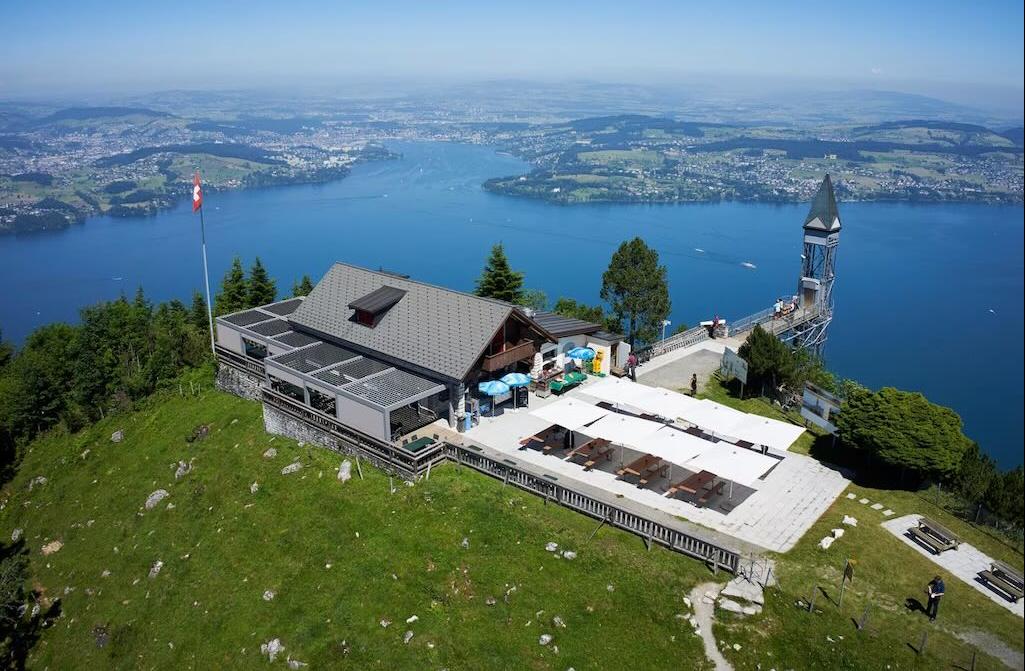
The Hammetschwand Lift on the Bürgenstock near Lucerne is the highest and fastest outdoor lift in Europe, ascending 153 metres in less than a minute. Built in 1905, it climbs to 1,132 metres above sea level and is considered a technical masterpiece of the Belle Époque. The elevator entrance, engine room, and the first 14 metres of the shaft are within the mountain, while the next 30 metres extend into the open air, offering breathtaking views of Lake Lucerne. At the top station of Hammetschwand, there are panoramic views of the lake and the Alps. From the viewing platform, you can see all of Lake Lucerne, Mount Rigi, and Mount Pilatus, and on clear days, all the way to the Bernese Alps. The original lift operated at a speed of 1 m/s and took nearly three minutes to reach the summit, carrying up to eight people in its wooden and zinc-plated cabin. In 1935, the speed was increased and the cabin was replaced with a lighter metal construction. After refurbishment in 1991–1992, the speed increased again to 3.15 m/s, allowing it to reach the summit in under a minute. For families travelling together, the glass-cabin ascent alone is worth the trip. Bürgenstock is barely an hour from Zurich by train and boat. Go in the morning for the best visibility and fewer crowds.
(Also Read: 9 popular destinations celebrities choose for a quiet escape)
3. A waterfall hotel from another era at Lake Brienz
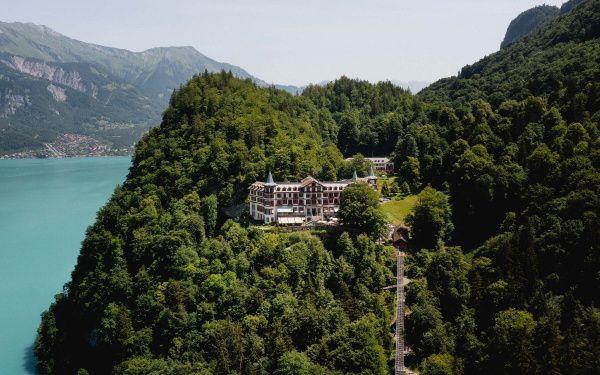
The Giessbach brook has its source in the high valleys and basins of the Faulhorn-Sägis Valley and feeds the world-famous Giessbach Falls, which tumble in 14 stages into Lake Brienz, each named after a Bernese hero. Roaring, chattering, and changing every day, the falls are illuminated by night, mystical by day, and are the heart of this fairytale location. A walk beneath the waterfall, feeling and absorbing its power, is a nature experience beyond compare. Since the 19th century, there has been a footpath leading to and under the waterfall. At the base of these falls sits the Grand Hotel Giessbach. Built between 1873 and 1874 and located in a 22-hectare park and garden complex, this Belle Époque residence carries the timeless charm of over a century of alpine hospitality. Now in its 150th year, it offers restful interludes in its historic spaces, dining rooms, and even its natural swimming pool, purified by circulating the bathing water through thick layers of gravel in the regeneration zone. From April to October, the Giessbachbahn, the oldest funicular in Europe, takes guests from the landing stage of the falls to the Grand Hotel on a nostalgic ride used mainly by tourists.
(Also Read: This new spa in Jim Corbett blends French knowledge of botany with Indian wellness rituals)
Continue Reading