- Home
- Royalty
HELLO! India Exclusive: The canvas of the princely era through the Karaulis
Prince Vivasvat Pal of Karauli takes HELLO! on a tour of two art-filled palaces that tell tales of his family lineage — the 14th-century Karauli City Palace and the Colonial-meets-Art Deco style Bhanwar Vilas Palace
Tucked away in the verdant greens of Brij Bhoomi lies a historic kingdom ruled by Yaduvanshi kings, who trace their lineage directly to Lord Krishna — they were the last family to rule over Mathura before it turned into a spiritual shrine of the shepherd God. A significant princely state that was accorded the 17-gun salute at Imperial durbars, Karauli, ruled by Jadon kings, is a visual and spiritual feast, immersed in a natural way of life. A mere two hours from Jaipur, Agra and Gwalior, it’s tucked away in the much revered Delhi-Agra-Jaipur golden triangle. Yet, once you arrive at the sleepy town, you feel that time stands still, and the ancient era is still in play.
The residence of Maharaja Krishna Chandra Pal and Maharani Rohini Kumari, the palace is also a very gracious homestay handled by their children, the young and dashing Prince Vivasvat Pal and the petite and pretty Princess Anshika Kumari. The palace, with its horses, vintage cars, orange fruit orchards and an entirely hidden swimming pool, also plays home to the two babies of the family, Brijambika Kumari and Brajeshwar Pal.
A MIX OF INFLUENCES
Built in 1938 using red sandstone or Karauli stone, Bhanwar Vilas Palace is a typical colonial bungalow, its interiors an eclectic blend of different styles incorporating the geometric lines of Art Deco furniture, with chrome and glass Bauhaus chandeliers, Lalique shades and colonial pieces set with Peranakan inspired Minton decorative tiles.
The palace also has a fine collection of Meissen and Wedgewood porcelain, European tapestries, along with 18th century Indian art, and miniature paintings. Many of the doors feature reverse glass paintings, or verre églomisé, of Lord Krishna and other elements of Indian mythology, by artist Govind Sahai, who was one of the chief artists in the court of Karauli state; he also painted portraits of the royal family of Karauli.
CUSTODIANS OF THE ARTS
A stylish, beautiful couple immersed in the art, culture and history of their lineage, Vivasvat and Anshika call themselves history keepers, for they have been taking numerous strides to keep the glory of this spiritual yet valiant kingdom alive.
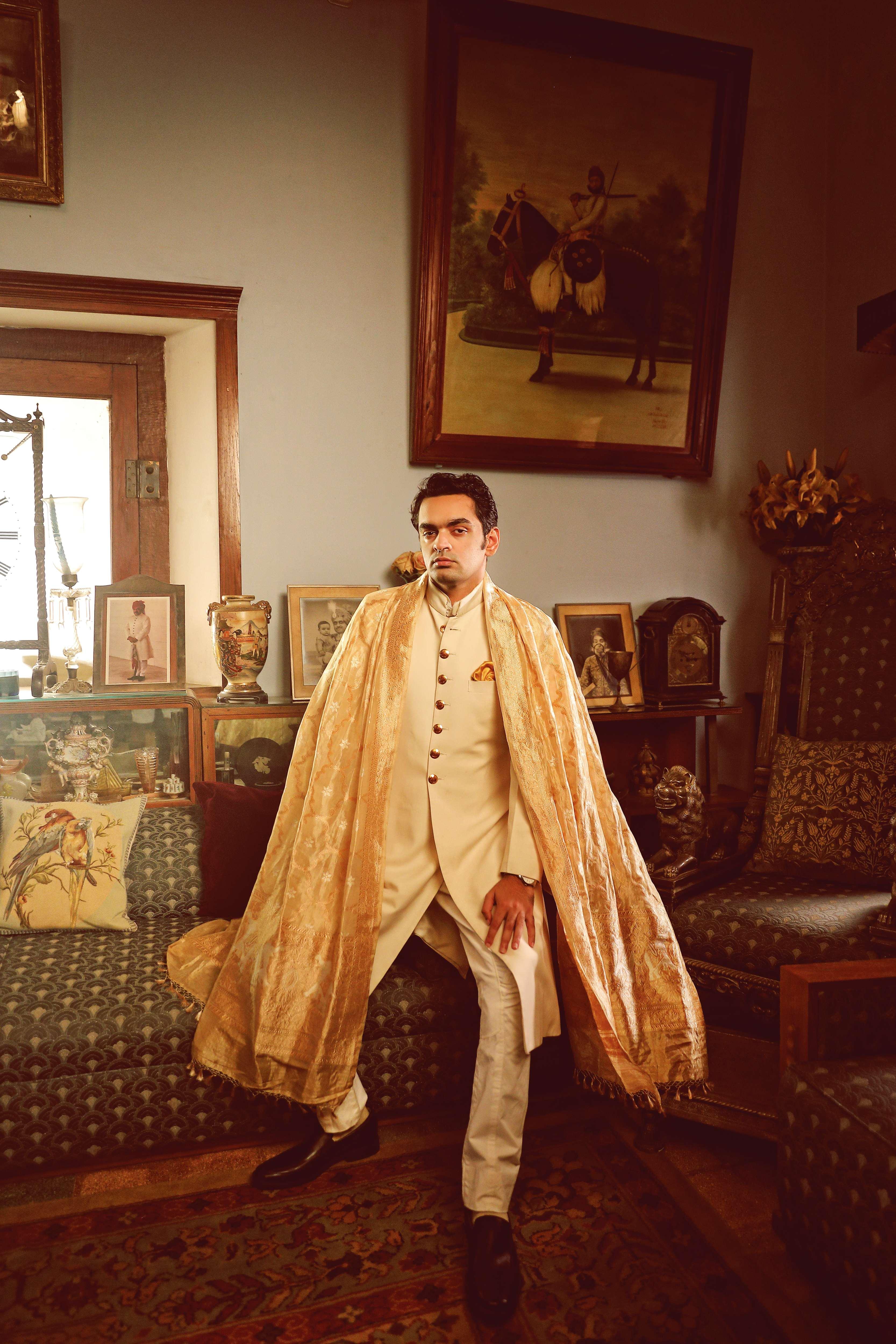
Anshika, an English Literature graduate from Delhi’s Lady Shri Ram College, belongs to the Rampur-Dhameri royal family, who were talukdars of Awadh. She inherits her feisty, spirited persona from a long line of freedom fighters and her maternal grandfather, Digvijaya Singh, who — besides being the Raja of Raghogarh — is also a front-running Congress leader and former Chief Minister of Madhya Pradesh.
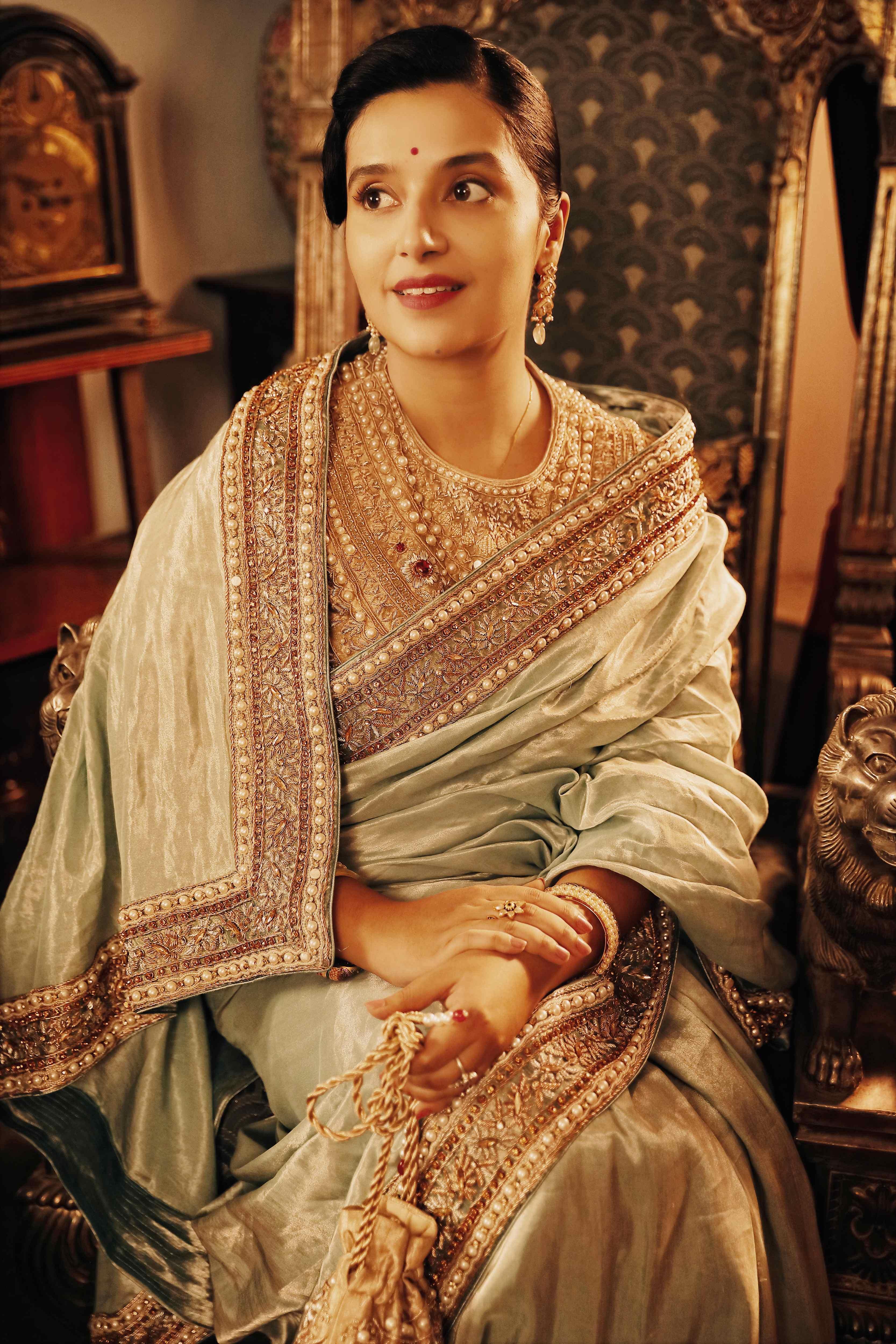
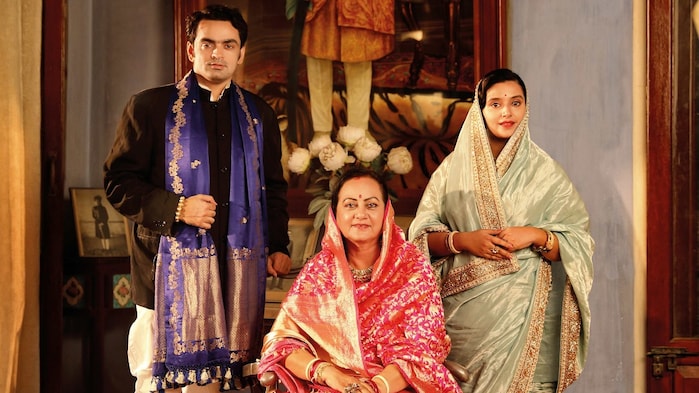
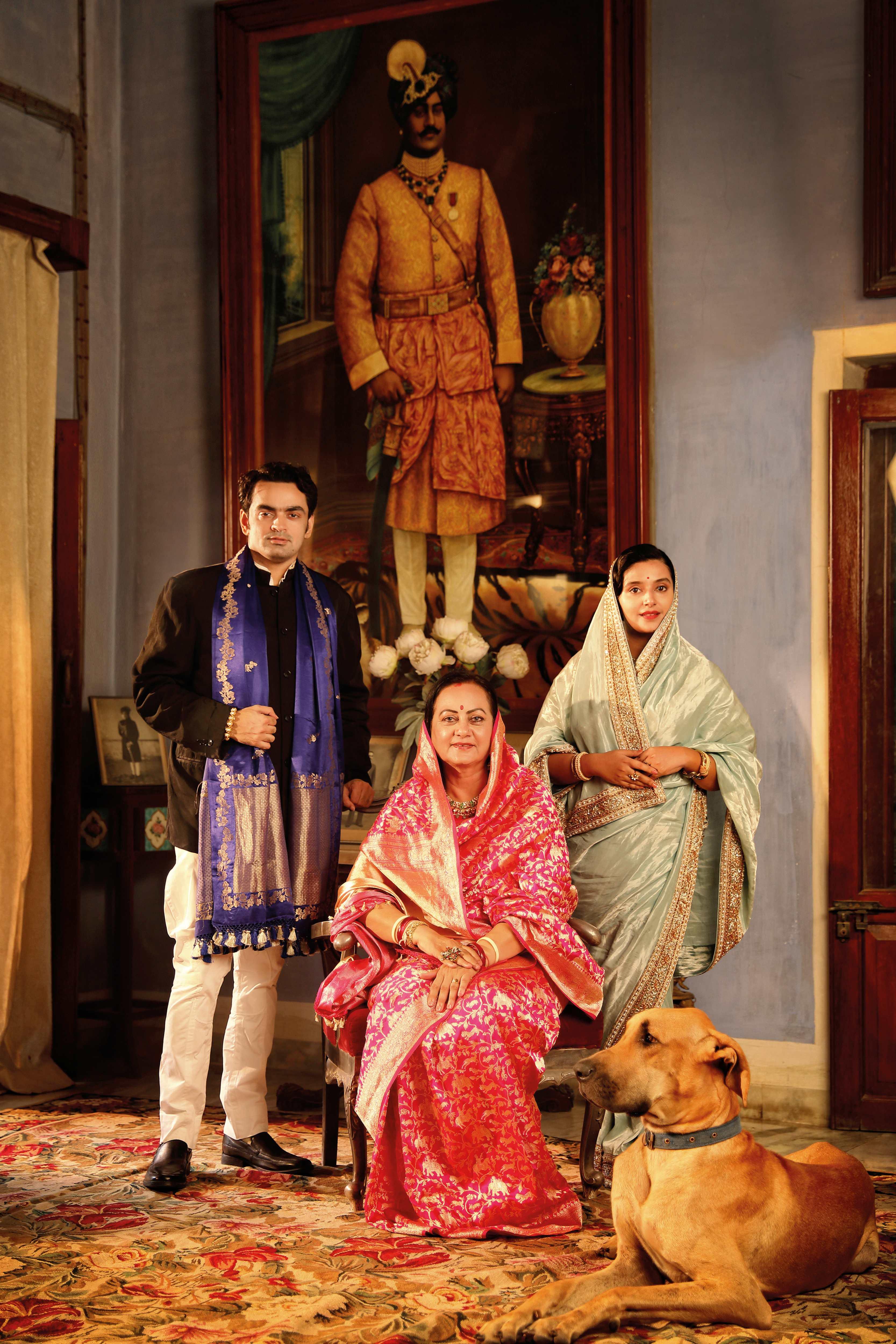
We catch Anshika and Vivasvat at the majestic Karauli City Palace, built in 1348, in the midst of a shoot, as they play muse to textile conservationist Shilpi Gupta, who is reviving Varanasi gold looms. They pose for royal portraits with their beautiful mother Rohini, who looks as spectacular as they do in the brightly hued silk sarees, chaddars and doshalas.
“Patronage of heritage design is second skin to Rajput rulers,” says Vivasvat. “Our family has supported the local artisanal practices of bangle-making and chintz printing. We are also patrons of a unique form of miniature art that combines the roundness of Bundi miniatures and the finesse of the Shekhawati school.”
The original Karauli school of art was patronised by Maharaja Bhanwar Pal (1899-1927). Vivasvat was pleasantly surprised to discover a portrait of the former ruler on display at the Kunsthistorisches Museum, Vienna’s renowned museum of art and history.
“I discovered the portrait while I was exhibiting my art in the same museum,”he adds. “This portrait was especially interesting as it incorporates several European elements even though it was done by the hereditary chateras.”
A student of London’s Heatherly School of Art, Vivasvat paints art that combines spiritual forms of miniature art with sketches and water colours. Part illusionist, part neo-real, he captures the feline beauty of horses, the divine grace of Goddesses and the sheer aura of Rajput kings and queens. His portrait of the legendary Gayatri Devi still lies in the possession of the family. “She was truly thrilled to see her portrait and told my mother that whatever I might do, art must remain in my realm.”
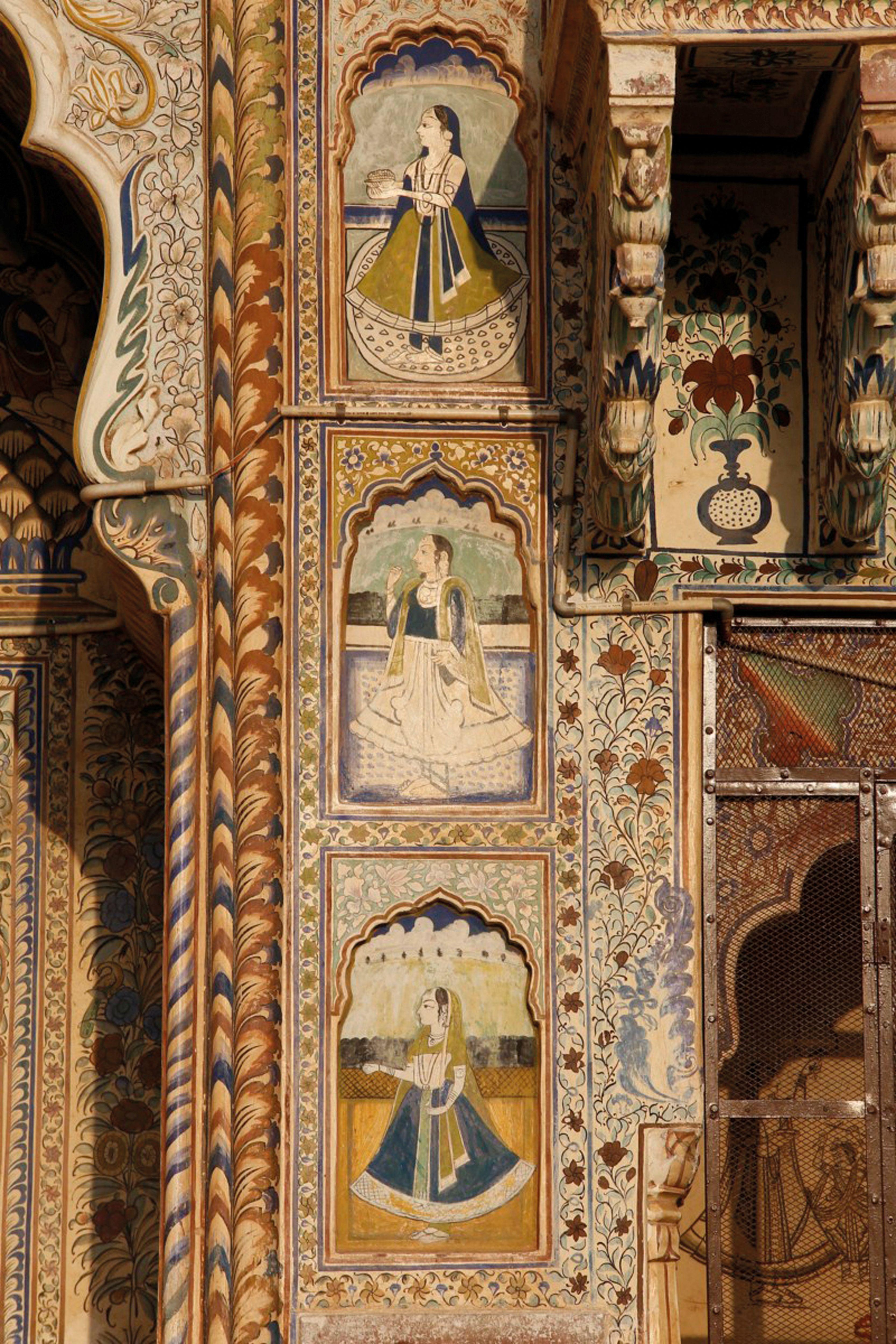
Besides spending hours painting in the quietest quarters of his home, Vivasvat uses his knowledge to conserve the many miniature paintings still found on the many walls of Karauli City Palace. With help from the few surviving miniature and fresco artists, he’s reviving the murals, frescoes and paintings that fill the walls.
THE GRAND ABODE
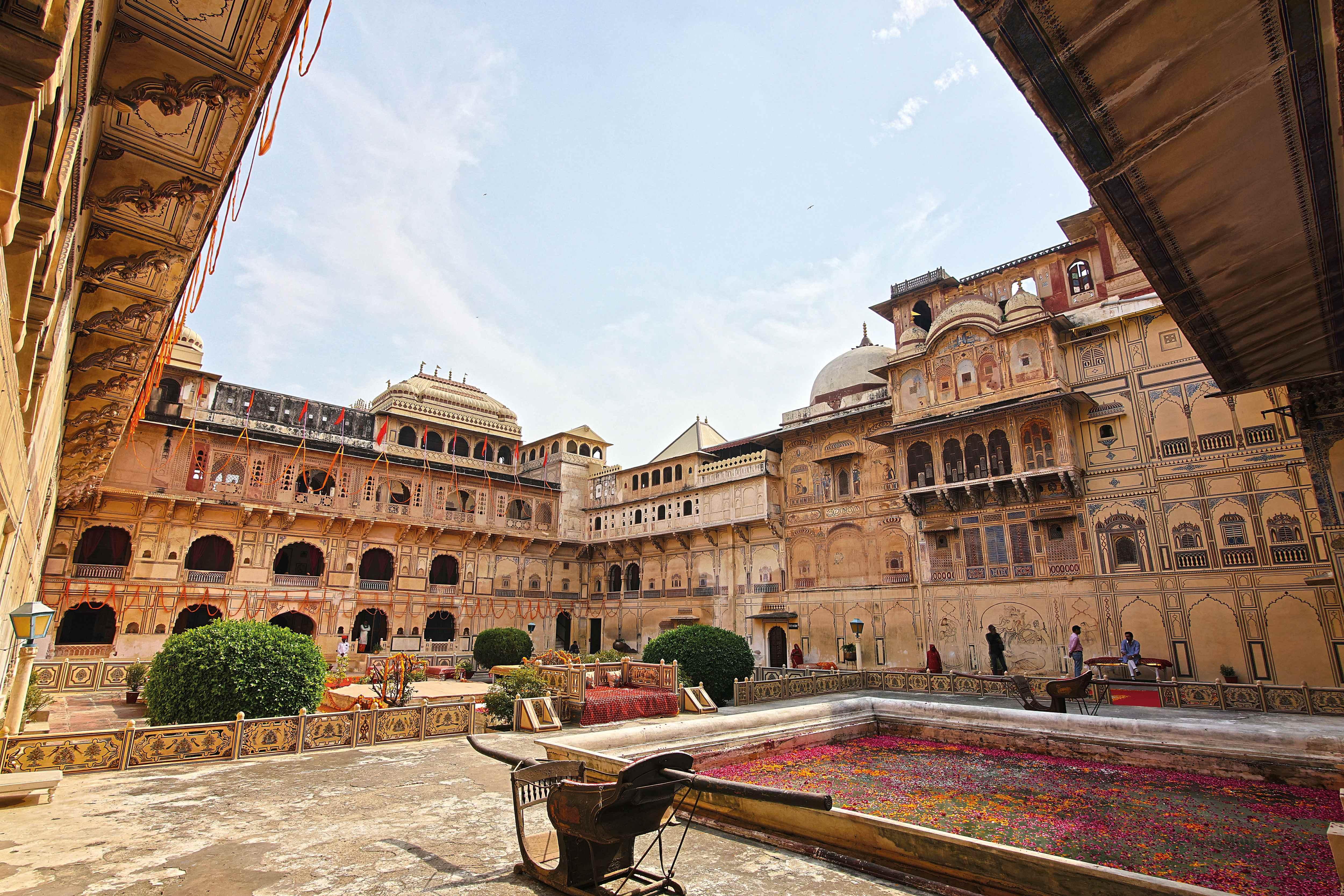
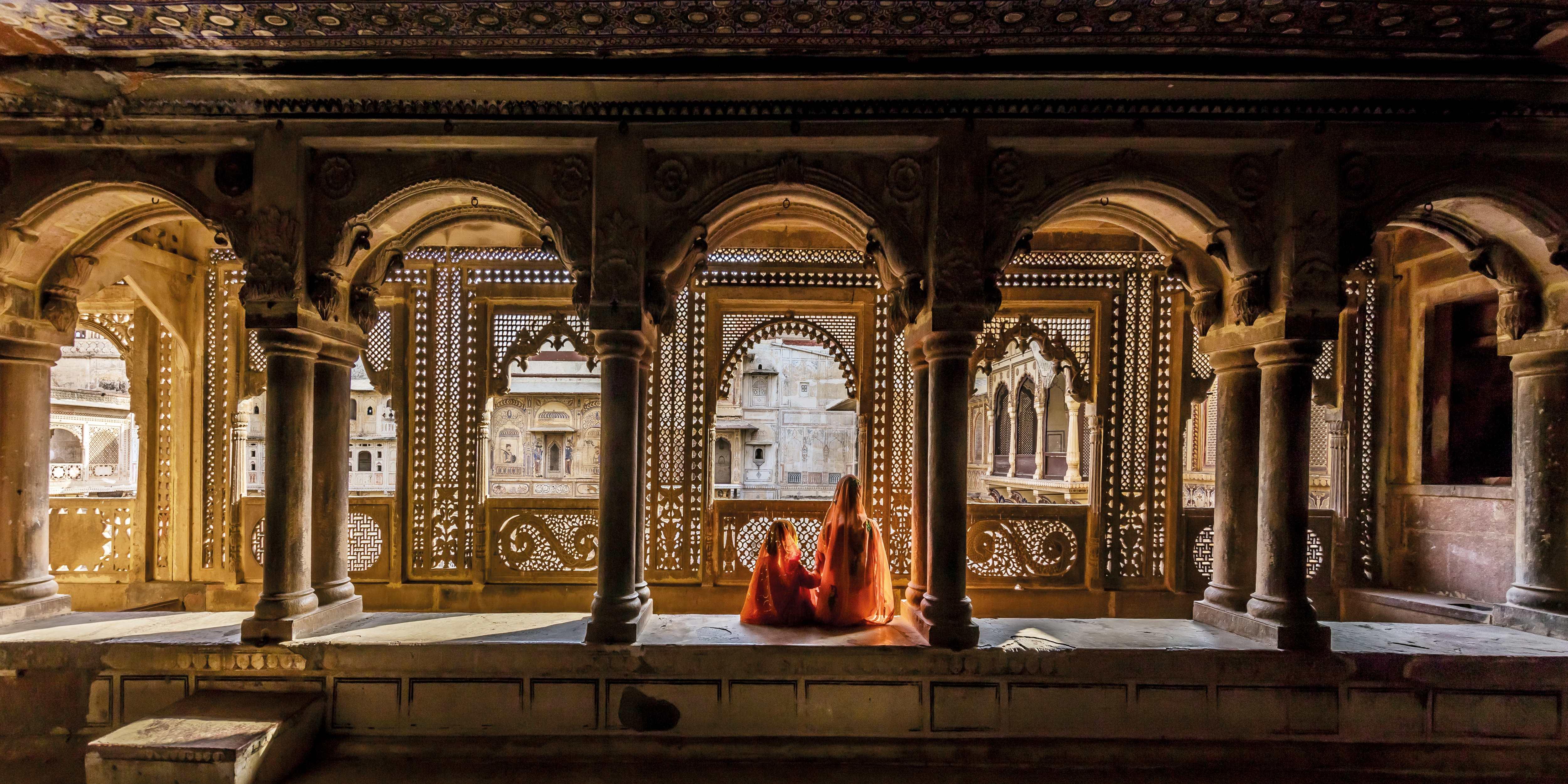
Built in 1348 AD, Karauli City Palace, the oldest city palace of Rajasthan, has stood the test of time.
To reach the citadel, you must first trudge through the old city, along quaint shops selling lacquer work bangles and continual processions of Krishna bhakts on their way to the Madan Mohanji Temple that’s enshrined within the palace.
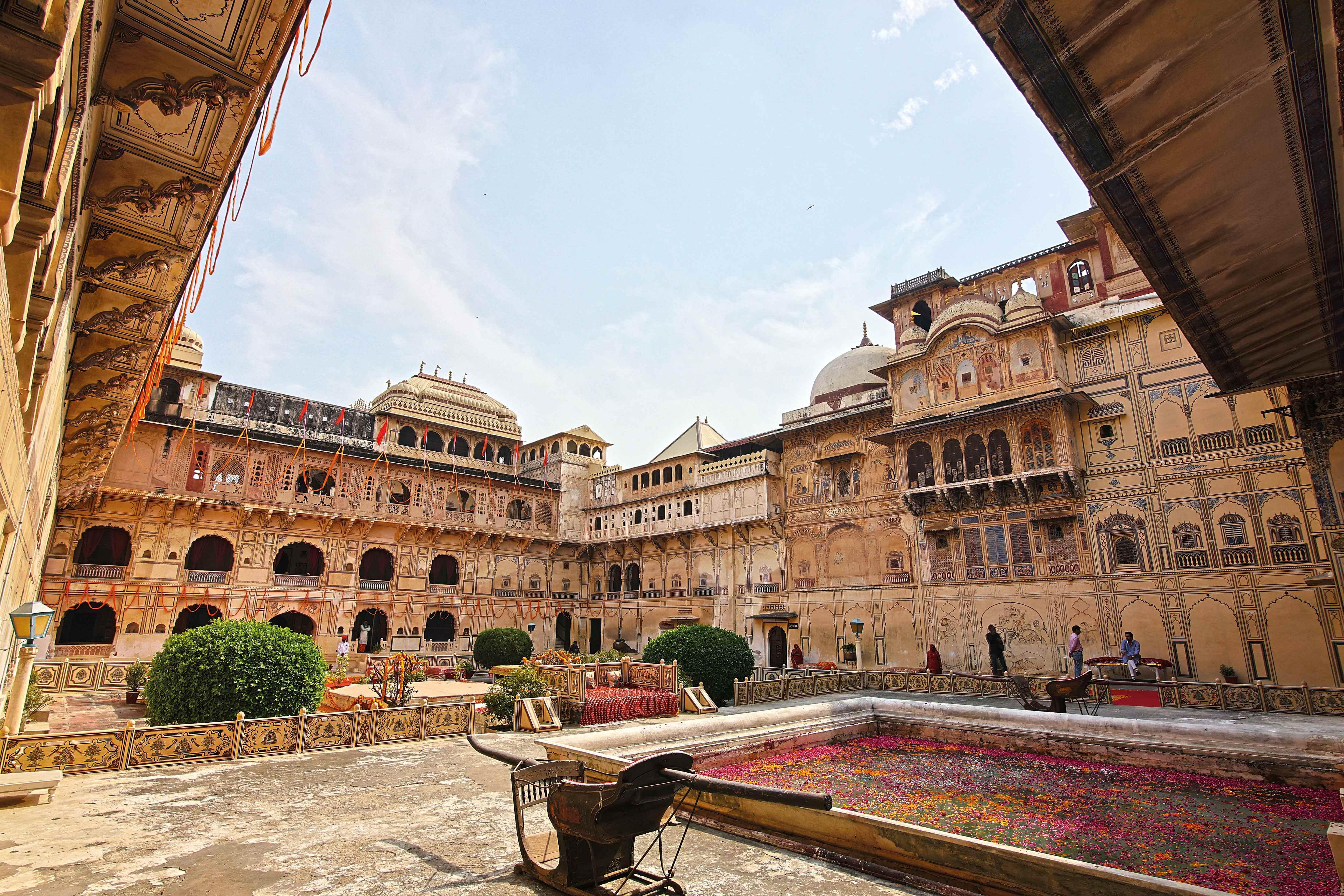
As you walk through the exquisitely painted gates of the Tripoliya Dwar, you step into the immense courtyard that served as the Diwan-e-aam. In the centre, is a square-shaped pool, with a carved decorative pavilion jutting just above it.
From here, you enter the Durbar Hall, which has often been described as one of the most spectacular courts of any ancient palace in India. Its vast expanse is completely covered in fine gulkari or f loral motifs on aaraish. Enormous gilded mirrors surround the durbar, and on either side of the upper levels of the durbar, carved lattices mask the zenana balconies that hold the quarters where the women of the house once resided.
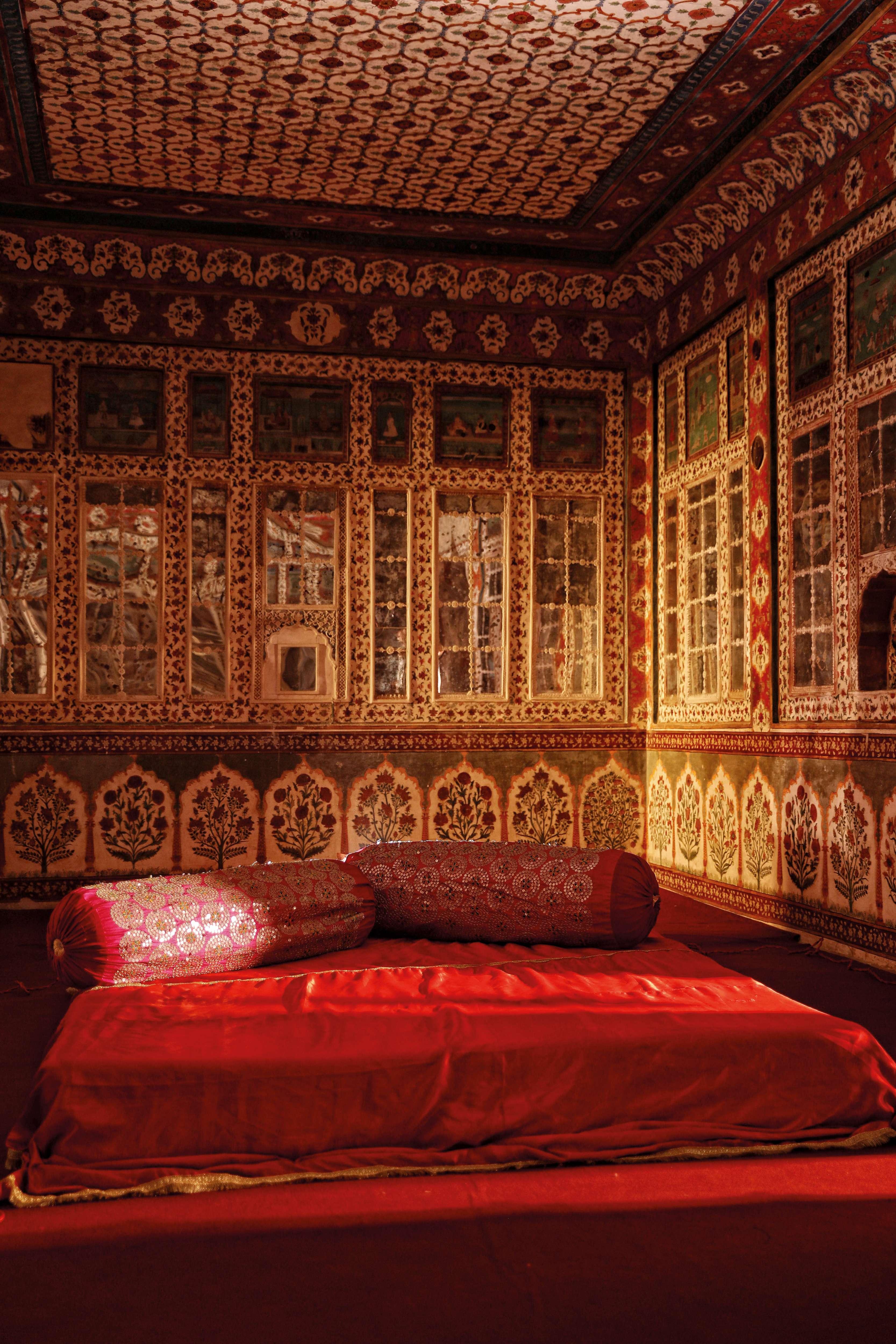
It’s here that one of the most unique paintings seen anywhere is housed — the entire floor is carpeted with painted aaraish. These painted jewel boxes certainly made a befitting background for the equally bejewelled wives of the maharaja and their attendants, who once filled these quarters. The palace features not one but many rooms with intricate work, including a spectacular rang mahal bathed in coloured glass carvings and a sheesh mahal.
One of the most remarkable features of the palace is the underground sauna, or bathhouse. A complexly painted corridor with a frieze of grape vines covering the ceiling will lead you down to an underground room with a two-level bath. Also part of the Karauli City Palace complex is the royal akhada, complete with paintings featuring pahalwans. Interestingly, the sand bed of the akhada still remains moist with the dollops of ghee the pahalwans would bathe their body with, to make it slippery enough for their opponent to struggle to grab them
PRESERVING THE PAST
The city palace is undergoing the finest restoration process overseen by the student of art, Vivasvat himself. He is aided in the process by his dynamic mother — Rohini Singh has served as the MLA of Karauli and is a vociferous exponent of women’s issues in the region. Offering a perfect backdrop to couture campaigns, the city palace has featured in cameo shoots by leading designers like Sabyasachi and Siddartha Tytler.
A cordon-bleu design afficionado himself, Vivasvat is known for his dapper inherited sense of style. “My ideal era in design and style is definitely the India of the 1930s, where the skill and technical perfection that went into making traditional Indian textile, clothing and jewellery blended with the streamlined and innovative designs of the Art Deco period, to create a modern, yet essentially Indian style,” he shares. This, in a nutshell, describes the evolved aesthetic sensibility of this accomplished yet understated princely family.
This story was featured in the Vol 1. Issue 6 of HELLO! India. For more exclusive stories, subscribe to the magazine here.