- Home
- Lifestyle
HELLO! India Exclusive: Sanjoy K Roy on his new book that discusses life and the afterlife
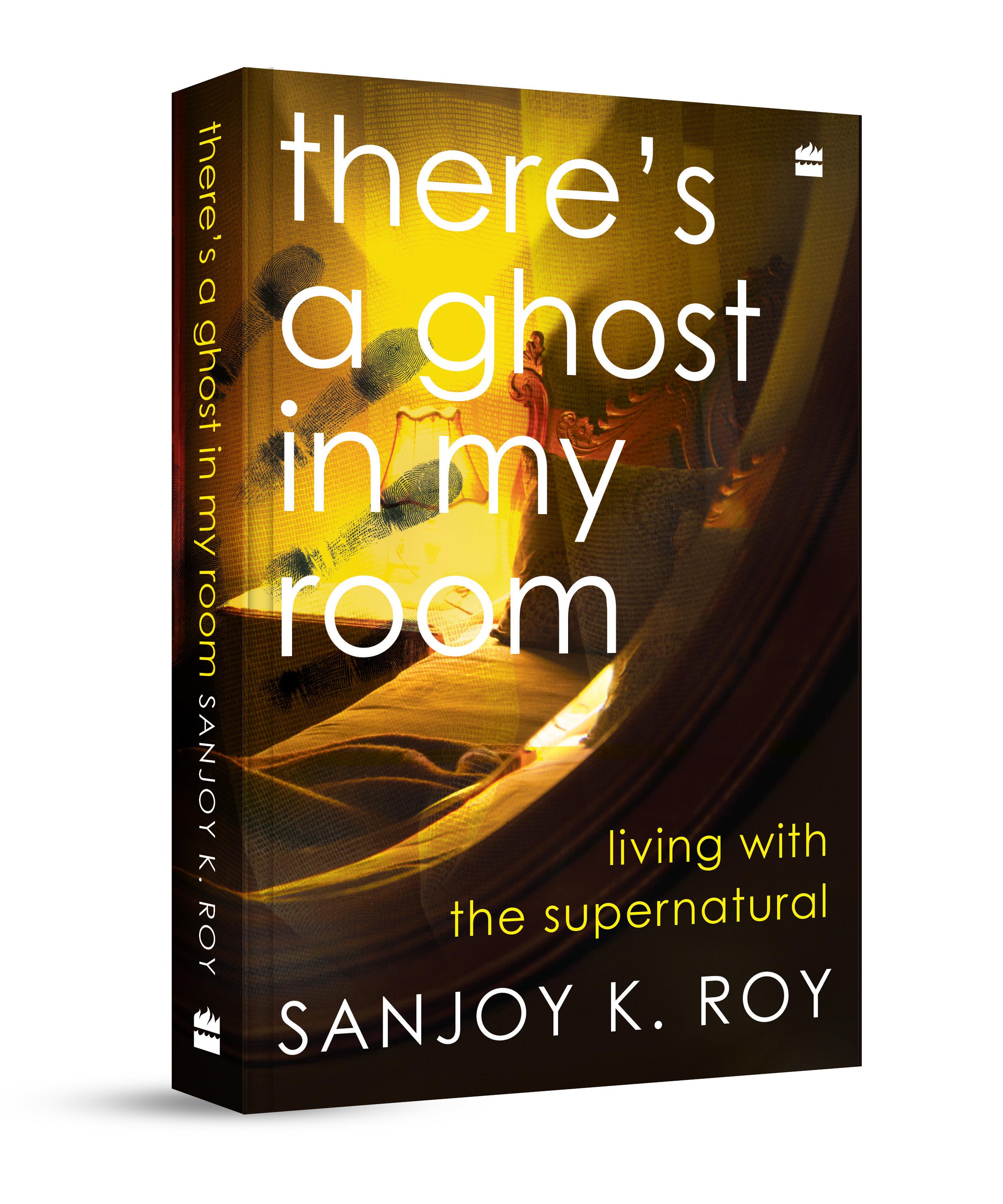
Sanjoy K Roy, Managing Director of Teamwork Arts and curator of over 30 festivals across 40 cities and 19 countries, turns author with A Ghost in My Room—a debut that chronicles his encounters with apparitions and phantom souls across both everyday spaces and historic landscapes, shaped by a rich cultural vocabulary of ghosts
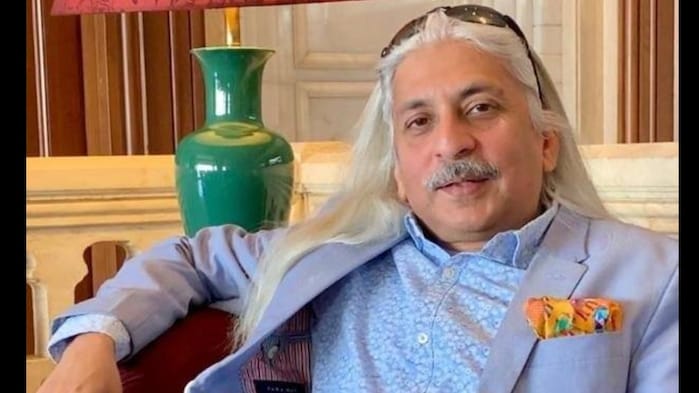

When Teamwork Arts' Managing Director, Sanjoy K Roy, who has travelled the world as a founder of many festivals, including the Jaipur Lit Fest, was coaxed to write a book by his publisher Harper Collins, he initially felt he had no great story to tell. Slowly, it dawned on him that many non-terrestrial souls had crossed his globe-trotting path; from phantom goddesses walking through his ancestral home, to accident victims, to soldier ghosts marching up and down on the roof of his Safdarjung Enclave office in Delhi, and many times, lost souls hovering over places of historic trauma. From Kolkata to Rishikesh, New York and Bali to Boulder, right up to even Jerusalem… the spirits were sometimes keen to possess him, while others caused things to vanish.
(Also Read: From Taylor Swift to Beyoncé, 5 of Hollywood's most lavish homes)
In this HELLO! India interview, the Bengali raconteur shares vignettes from his book, A Ghost in My Room.
HELLO! India: It is fascinating to note that Bengali culture actually has a vocabulary for ‘genres’ of ghosts. Please can you run us through some ghost archetypes? Have you encountered any that fall into these descriptions?
Sanjoy K Roy: Bengali culture is wonderfully taxonomic about the supernatural, as if even the afterlife requires filing. You have petni, shakchunni, brahmadaitya, mehni — ghosts differentiated by gender, social status, religion, and temperament. I haven’t met any of these in my many sightings.
HELLO! India: Your ancestral home, Gooptu Bari in Jorasanko, Calcutta, had a Devi temple (Thakorghor) with its own pundit. Your story shares how the spirit of this goddess was once heard as the sound of ghungroos roaming the corridors at night, with the priest discovering that he had forgotten to remove the payals from the idol at bedtime.
Sanjoy K Roy: Given our education and general liberal worldview, which trains us to scoff at anything that can’t quite be explained in rational terms, being a sceptic is really part of my mental make-up. The stories at Gooptu Bari have been related to me by my mami — Indrani Gooptu — and my cousin Arpita Gooptu. I have a deep connection with the spiritual and do believe in universal energy, etc.
HELLO! India: Spirit possession is something one usually associates with medieval times or bone-chilling films like The Exorcist. But you actually experienced an episode of possession by the spirit of a dead man floating down the Ganges in Rishikesh. Do you sometimes feel that mental health issues like depression and suicidal thinking could be traced to invisible spirits influencing us? Even nightmares?
Sanjoy K Roy: That episode in Rishikesh was mystifying and terrifying. I don’t really have a memory of much of what transpired, and this was related by our friends and Puneeta, who were on the bus with me. I would be very cautious about attributing mental health struggles to spirits. Depression and suicidal notions need clinical intervention, empathy, and holistic treatment.
We have, over the years at Salaam Baalak Trust, developed a strong mental health program led by Dr Amit Sen of Children’s First, which has helped our kids hugely to address deep-seated issues and become successful in their own right. Clinical depression, schizophrenia, and personality disorders are real issues and need the intervention of medical practitioners and support from family and friends, and should not be left to the vagaries of faith healers.
HELLO! India: You say you rarely encounter spooks in places of old provenance — the Temple of Thebes, the Pyramids of Giza, or the caves of Cappadocia — but in more ordinary places like a vacant plot of land or a tree outside the window. If ordinary places have such a high spook population, do you feel we should do ghost tours in India, especially in haunted palaces in Rajasthan?
Sanjoy K Roy: There is the famous haunted village in Rajasthan which is peopled by spirits and, in recent times, has been a great tourist attraction. The world over, you have ghostly tours — be it in Edinburgh or Santa Fe. The catacombs in Alexandria are creepy, as is the cemetery on Park Street, Kolkata, and there are a number of night walks through Mehrauli, Delhi, in search of spooks. Eric Chopra has dedicated a whole book to this aspect.
HELLO! India: You say you are still terrified when in front of an uninvited apparition. But perhaps you are a medium, being asked to convey messages to unsuspecting folks. Can you share an example of a time you relayed a message from a departed soul and helped someone?
Sanjoy K Roy: Messages don’t necessarily come from spirits or departed souls. Most of my messages tend to pop into my head when I am with a person or in conversation with them. My duty, as described, is to convey the same unedited, which I find challenging.
Messages can be about a person’s health, the need to heal, or about holding on to grief. In some ways, the messages I have conveyed, without necessarily knowing the context, have triggered a thought or memory in the person and occasionally helped them find resolution.
HELLO! India: In Khajuraho, after Puneeta’s bizarre undulating levitation, your Gurudev put her through a past life regression and found she had tried to challenge you as a head tantric in a former life, losing her mind in the process. It is fascinating that you, she, and your friends have all come together to heal and grow collectively.
Sanjoy K Roy: It’s been a step-by-step discovery, where answers to our many questions have been revealed over a period of 40-odd years. It seems we have been able to resolve our karmic issues in this lifetime, which is the lesson we hoped to learn. Puneeta has also resolved her karma with our spirit group.
HELLO! India: Our cities often grow over land peopled by ghouls never gone into the light — like Safdarjung Enclave, where your office has them. You also encountered your spirit guides as skeletal hands in your bathroom mirror. Yet, there seems to be a matter-of-fact acceptance in your sightings of departed soldiers and prisoners in chains. Didn’t you and Puneeta want to try and release them through prayers and healing?
Sanjoy K Roy: I have always accepted the sense of duality that exists around us, without necessarily questioning the what and why of this deeply. I don’t always feel obliged to heal or send folks into the light. Where I can (i.e., when I am not frightened out of my wits), I do so, or nudge Puneeta to do so in her half-sleep mode.
HELLO! India: What do you hope is the main takeaway of A Ghost In My Room for humanity at large?
Sanjoy K Roy: I wrote it without any thought of a greater principle or message. I didn’t think it was revolutionary in any way. Post publication, so many people have come forward with their own stories, which I will be compiling into a new anthology of lived experiences.
This isn’t about believing as much as it is about realising that we don’t have all the answers — and may never do so. Each day, science and research are discovering new aspects of the universe and the power of the human mind to traverse time and space. These are lived experiences and, in many ways, it is what it is… sort of like a Believe It or Not series.
HELLO! India: One was highly amused to read about ghosts in your Edinburgh residence at 1 Meadow Place being told off by Puneeta to behave and stop making things disappear — and how leaving a glass of whisky on the mantlepiece and making peace with them created harmony. One is also surprised that, knowing you read and hear spirits, you were willing to brave ghost tours and catacomb walk-throughs.
Sanjoy K Roy: I have always loved adventure and the sheer thrill of it. Take me to Six Flags and I will jump onto the most stomach-churning roller coaster ride. Take me on a trek and I will find alternative paths to enhance the sense of adventure. Take me to a restaurant with the most bizarre food and you will have me happily chomping on smoked worms, fried cockroach wings, frog legs, pickled snakes, or fried scorpion.
(Also Read: HELLO! India Exclusive: The dynamic ladies keeping 'Art Deco Alive!')
Continue Reading